
A call from jail usually comes in the middle of something ordinary. You're at work, getting kids settled, or trying to finish dinner, and suddenly someone you care about says they've been arrested in Clayton County. Most families ask the same questions first. Where are they? Can I get them out tonight? What do I need to do right now?
The hard part is that "Clayton County detention center" can mean different places, and that confusion wastes time when time matters most. If you don't know whether your loved one is at the county jail in Jonesboro or at the state correctional institution in Lovejoy, you can end up calling the wrong facility, asking about the wrong rules, and waiting on answers that don't apply to your situation.
A calm, practical approach works better than rushing from one rumor to the next. Start with location. Then confirm whether bail is even part of the process. Then gather the information needed for release or contact. If this is your first time dealing with an arrest, this step-by-step guide on what to do when someone gets arrested is a good companion while you're handling the immediate next steps.
Your First Call After an Arrest in Clayton County
The first mistake families make isn't caring too much. It's trying to solve everything at once.
When someone calls from custody, get the basics before the line disconnects. Ask for their full legal name, date of birth, where they were told they're being held, and whether they've already been booked. If they know the charge, write it down exactly as they say it. Small details matter because jail staff and court records usually search by exact identifying information.
What to ask right away
Use a short list and keep it in front of you:
- Full name as it appears on ID
- Date of birth
- Arresting agency if they know it
- Current location if they were told one
- Any bond amount already mentioned
- Any medical issue or urgent concern
If you don't get all of that, don't panic. You can still move forward with a name and date of birth in most situations.
Practical rule: Don't rely on secondhand details from friends, social media, or scanner chatter. The fastest path is always verified jail or court information.
What helps and what doesn't
Some things speed the process. Others only increase stress.
| What helps | What slows you down |
|---|---|
| Writing down exact identifying details | Guessing at charges or location |
| Calling the correct facility | Calling multiple wrong numbers repeatedly |
| Asking whether the person is booked yet | Demanding release before booking is complete |
| Staying organized | Sending several relatives to get conflicting information |
Families often want an immediate release answer in the first hour. Sometimes there isn't one yet. If the person has just been arrested, staff may still be processing intake, and records may not show up right away. That doesn't mean they're lost in the system. It usually means the paperwork hasn't caught up yet.
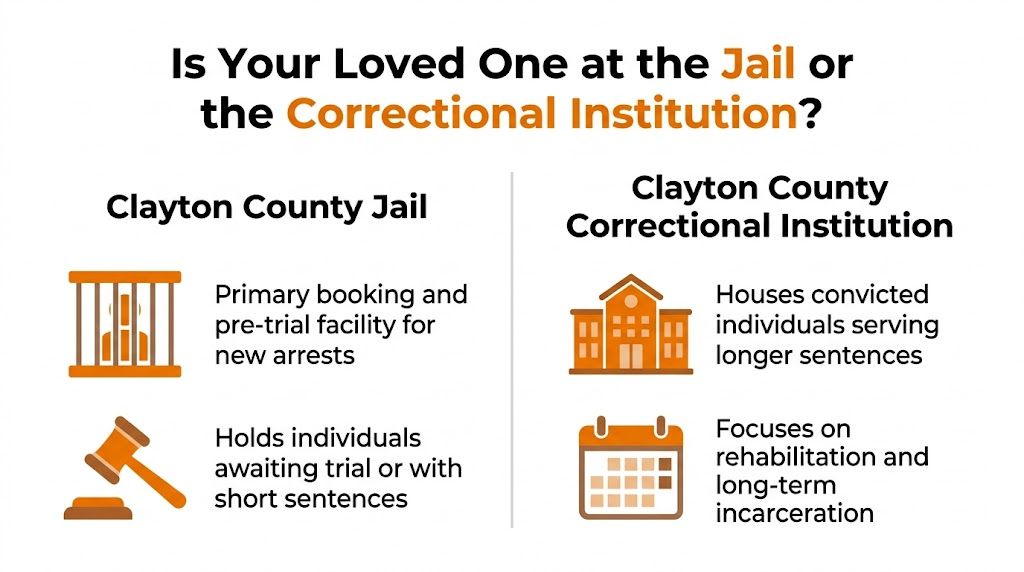
Is Your Loved One at the Jail or the Correctional Institution?
Many people lose valuable time. In Clayton County, the main jail and the correctional institution are not the same place, and they don't serve the same purpose.
The difference that matters
The Clayton County Jail in Jonesboro is the local booking and pretrial center. The Clayton County Correctional Institution in Lovejoy is a separate medium-security facility that houses state offenders serving sentences and providing labor support, as described in this FOX 5 Atlanta report about Clayton County facility confusion and jail conditions.
That distinction tells you what to do next.
If someone was just arrested, they usually start at the jail, not the correctional institution. The correctional institution is tied to sentence service for state offenders, not first-stop arrest processing.
How to figure out where they are
Start with the simplest question: Was this a fresh arrest, or has the person already been sentenced in a state case?
Use this working guide:
- Fresh arrest, DUI, warrant pickup, probation issue, new criminal charge. Start by checking the county jail side first.
- Already sentenced and serving time for the state. The correctional institution may be the relevant facility.
- Family says "Clayton County detention center" but nobody knows more. Treat that as unconfirmed and verify before making plans.
Public county correctional records also separate the facilities. They identify the correctional institution as distinct from the main Clayton County Jail and from the Clayton Transitional Center, and list the correctional institution with a recorded inmate population of 237 in a 2020-vintage Census dataset, near its stated 242-bed capacity, in Georgia inmate population records for Clayton County. That matters because it confirms you're dealing with different systems, not two names for the same building.
If a person was arrested in Clayton County and you need to know about bail, release, or booking, your first assumption should usually be the jail, not the correctional institution.
What the correctional institution actually is
The Clayton County Correctional Institution is a Georgia Department of Corrections facility in Lovejoy with a core physical capacity of 242 inmates. It was constructed in 1991 and opened in 1992. It is medium security, serves adult male felons, and its housing includes four dormitories with 60 beds each plus six isolation or segregation cells, according to the Georgia Department of Corrections facility page for Clayton County Correctional Institution.
That mission is different from a county jail. It's designed to house state offenders and supply labor support for county and municipal governments. Families who confuse the two often ask the wrong questions. They ask about same-day release when they should be asking about sentence status, communication rules, or visitation under state corrections standards.
Understanding the Clayton County Booking and Intake Process
Once a person arrives at the jail after an arrest, the family usually enters the hardest phase. Waiting without updates.
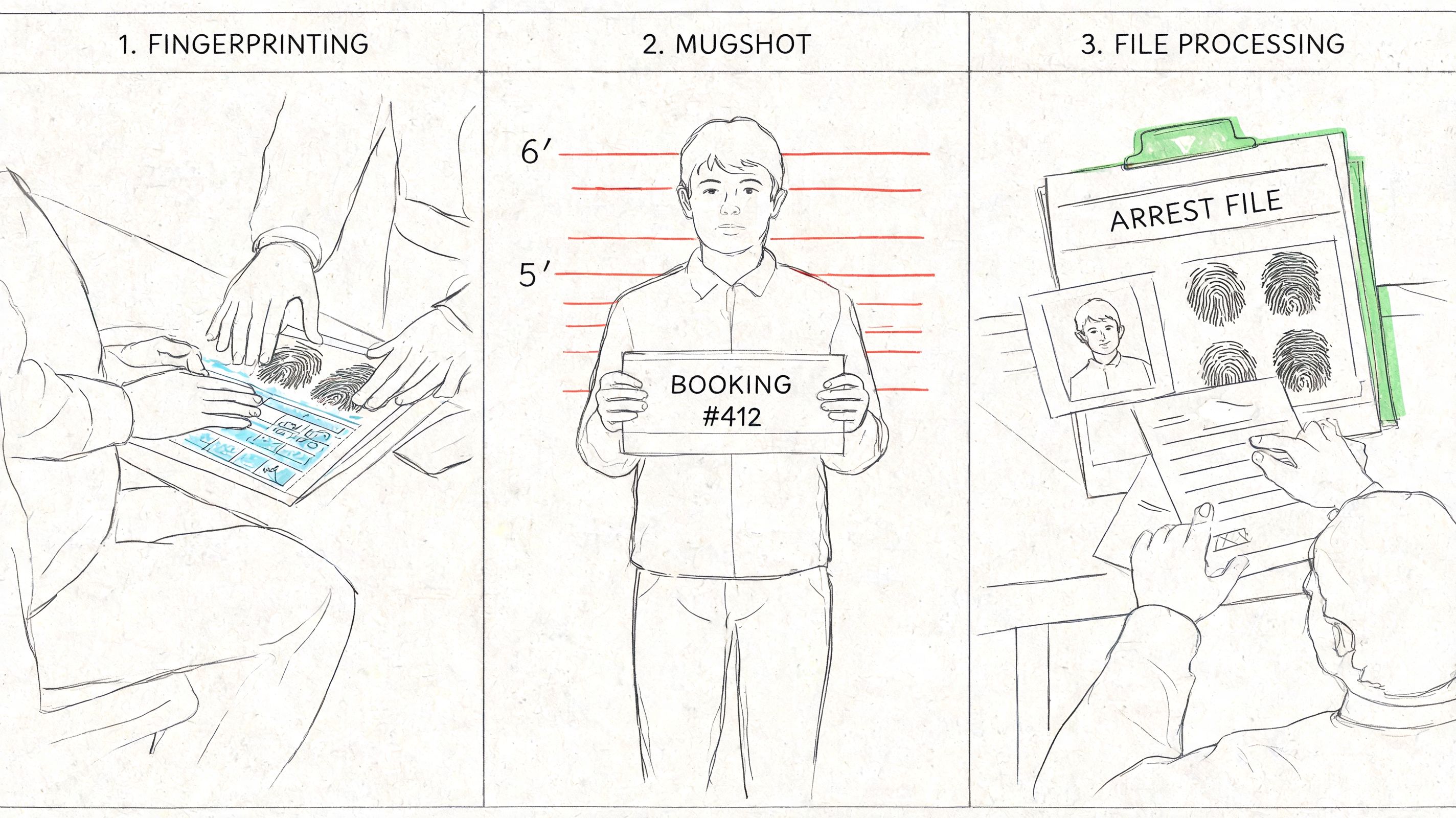
Booking isn't one single event. It's a chain of steps. Staff have to identify the person, collect fingerprints, take photographs, enter charges, check records, and assign housing. Until those pieces line up, families may have trouble confirming where someone is within the jail.
Why location updates can take time
The Clayton County Justice Complex uses a multi-pod design with four octagonal housing pods containing 768 cells. The facility's total capacity is 1,536 beds, and that design supports direct supervision, but it also means inmates can be moved between pods and may take longer to locate during busy periods, as described in the PCI Journal profile of the Clayton County Justice Complex.
For families, that shows up as a familiar frustration. One deputy may confirm a person is in the system, but another call later may still not produce a clean answer about exact placement. That's not unusual during intake.
What usually happens during intake
A practical way to think about booking is this:
- Identity comes first. Staff need to confirm who they have.
- Charge entry follows. The arrest has to match the records system.
- Background checks happen behind the scenes. This can affect bond holds and release eligibility.
- Housing assignment comes later. The person may move as staff place them where they belong.
Booking feels slow from the outside because the family only sees silence. Inside the jail, several separate checks are happening before the record looks complete.
What you should do while waiting
Don't call every few minutes asking for release if the person hasn't finished booking. Instead:
- Verify booking status first. Ask whether the person has been fully entered into the system.
- Keep one point of contact. One organized family member prevents crossed wires.
- Write down every answer. Staff names, times, and what you were told matter if delays pile up.
- Be ready for movement. A person may not stay in the same holding area through the whole process.
That approach saves energy and usually gets better results than repeated pressure during the earliest intake window.
How to Post Bail and Secure a Fast Jail Release
When people ask about the clayton county detention center, this is usually what they mean. How do I get my person out?
The answer starts with one basic question. Has bond been set? If it hasn't, nobody can post it yet. Once bond is set, the next step is choosing how to satisfy it.
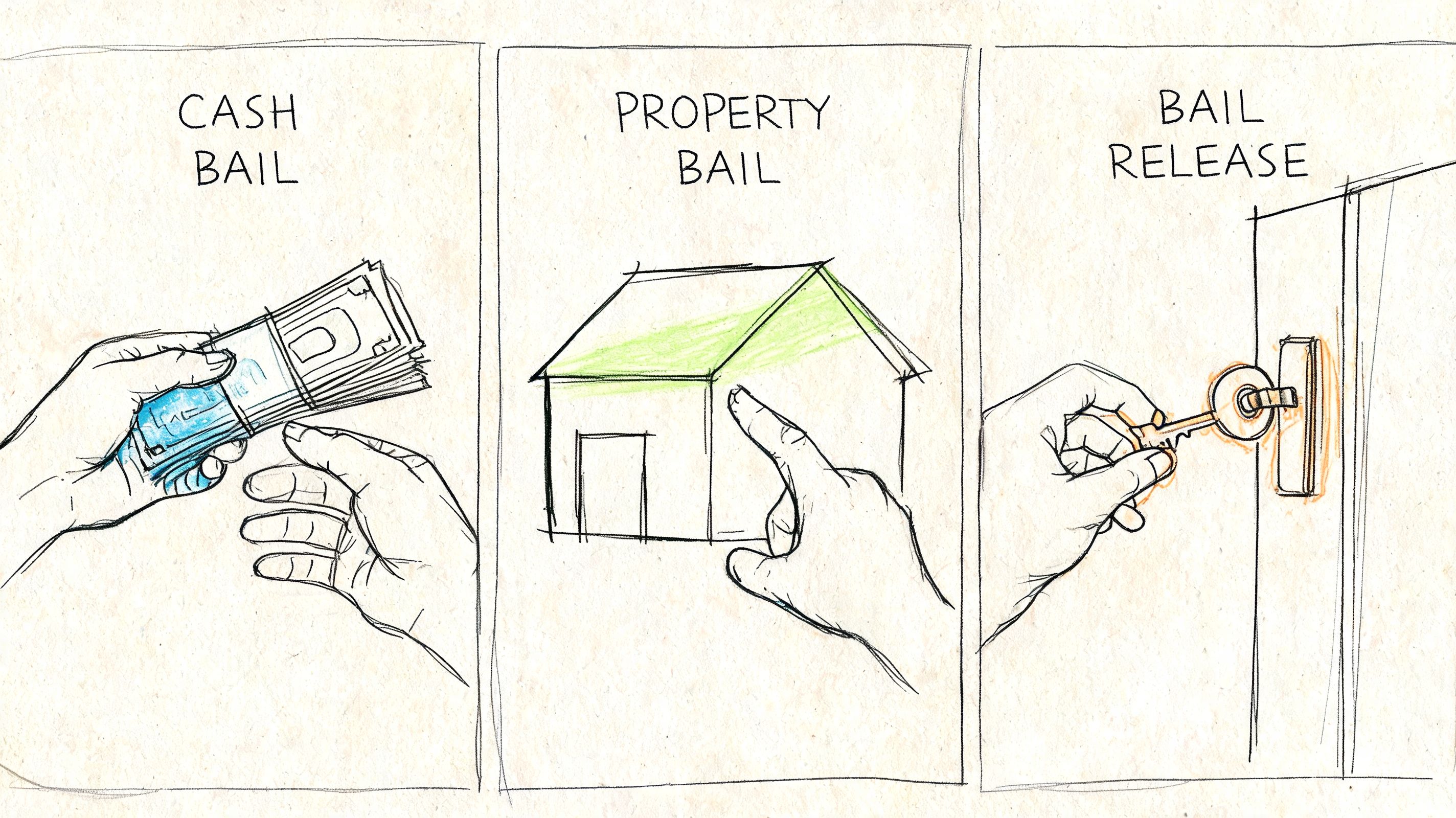
Common ways bail is handled
Families usually look at three paths.
Cash bail
This means paying the required amount directly if that option is available. It can be straightforward, but not every family has immediate access to that much money on short notice.Property-based arrangements
In some situations, property may be part of the solution. This tends to involve more paperwork and more review, so it's not usually the first route families choose when speed is the priority.Using a bail bond company
Many people choose this because they want help navigating the process, documentation, and communication around release.
If you're new to this, this guide on how to post bail for someone gives a clear overview of what you'll usually need.
What to gather before you start
Release moves faster when you have the right information ready. Put together:
- The defendant's full legal name
- Date of birth
- Jail location
- Booking information if available
- Charge details
- Bond amount if one has been set
- Your identification
- A reliable phone number for updates
Families often lose time by trying to start paperwork with partial names, nicknames, or uncertain charges. Exact information beats fast guesses.
Why release doesn't always happen right after bail is posted
This is one of the most important realities to understand. Posting bail is not the same thing as walking out the door immediately.
Recent jail system failures in Clayton County left inmates waiting for release for hours or even days after bail was posted. Those technology problems can delay warrant verification, and what is normally a 2 to 4 hour release can stretch to 8 to 12 hours or more, according to WSB-TV's report on failed technology at the Clayton County jail.
That changes how you should plan.
Release advice: After bail is posted, ask whether the jail is processing releases normally or dealing with system issues. That one question can save hours of confusion.
What works when delays hit
When the system is moving normally, patience and good paperwork go a long way. When the system isn't moving normally, families need a contingency mindset.
Use this checklist:
| If things are moving normally | If there are release delays |
|---|---|
| Confirm bond is posted | Confirm bond is posted and entered |
| Ask for expected release window | Ask whether a system issue is affecting release |
| Keep your phone available | Keep one person available for updates |
| Wait for discharge processing | Prepare for a longer hold even after payment |
What doesn't help is assuming payment guarantees immediate release. It doesn't. The jail still has to clear the person for discharge, and if verification systems are down, the wait can become unpredictable.
Clayton County Jail Visitation Rules and Inmate Contact
You post bond, then a relative asks the next question right away. Can we go see him tonight, or at least get a message to him?
Start by slowing that part down. In Clayton County, families lose time and get turned away because they treat the jail and the correctional institution like the same place. They are not. If your loved one is at the county jail, ask about jail visitation, phone access, and mail rules for that building. If he has already been moved to the correctional institution, expect a different system and different restrictions.
That distinction matters because the county jail handles recent arrests, court movement, and release processing. The correctional institution follows a different custody structure. A rule that works at one location can get a visit denied at the other.
What to verify before anyone leaves home
For the Clayton County Jail, the practical questions are simple:
- Is the person still in booking, medical, classification, or another housing status that limits visitation?
- Are visits currently in person, by video, or suspended for a housing unit issue?
- Does the jail require the visitor's name to be approved in advance?
- What ID will staff accept at check-in?
- What time does visitor check-in stop, not just when visitation starts?
That last point trips people up all the time. A facility may list visitation hours, but cut off check-in earlier. Showing up late usually means no visit that day.
If you need help sorting out who to call and what to ask, this Clayton County bail bonds guide lays out the basics families usually need in one place.
Clayton County Jail contact advice that saves headaches
For the jail itself, use a one-person system. Have one family member confirm the current rules, write them down, and text the details to everyone else. That prevents three relatives from hearing three different versions of the policy.
Bring a physical, valid photo ID. Do not rely on a phone image or assume staff will make an exception.
Keep clothing conservative and simple. Leave extra property in the car unless the jail specifically says it is allowed. Phones, bags, and personal items are common reasons for delays at the door.
For inmate contact, ask about these items in plain terms:
- How the inmate can place phone calls
- Whether video visitation is being used
- How mail must be addressed
- Whether commissary deposits are accepted online or by kiosk
- Whether any hold, classification status, or discipline issue is limiting contact
If the normal contact process is not working
Technology problems do not just affect release times. They can also affect phone systems, kiosks, and account posting. If money was sent for calls or commissary and nothing is showing up, do not assume the inmate is ignoring the family. Confirm whether the payment posted, whether the inmate has access to the service, and whether the housing unit has restrictions.
A rejected visit or failed contact attempt usually comes from one of four problems. Wrong facility, wrong time, wrong ID, or a temporary housing restriction.
Handle it step by step. Confirm the exact location. Confirm the current visitation method. Confirm the visitor name and ID requirements. Then ask whether anything about the inmate's status is blocking contact that day. That approach is boring, but it prevents wasted trips and keeps the family focused on what can be fixed.
Why a Clayton County Bail Bondsman Can Accelerate Release
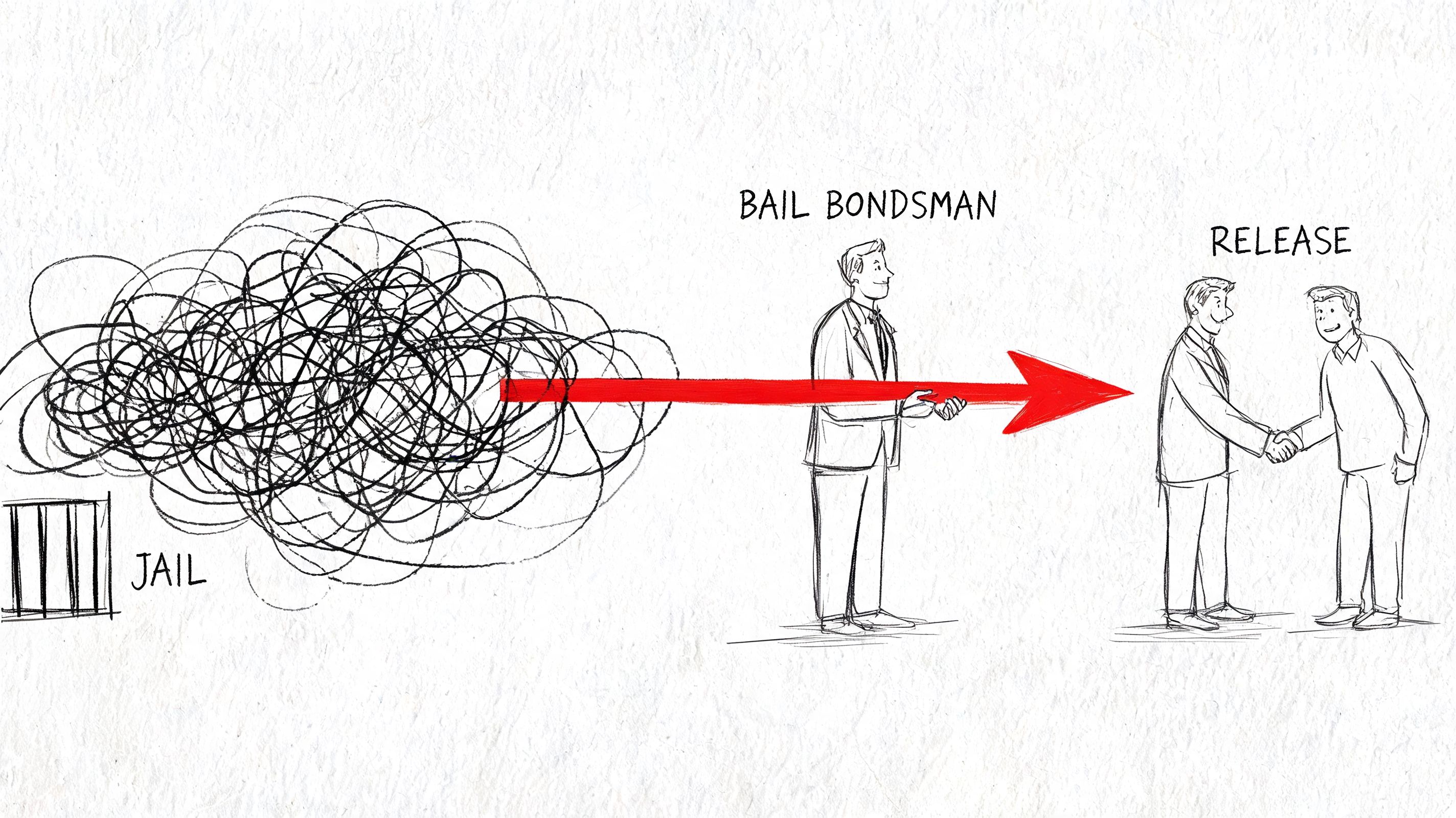
A good bail bondsman doesn't control the jail. Nobody can promise that. What a professional can do is reduce avoidable mistakes, move paperwork faster on the outside, and give families realistic expectations instead of false hope.
Where families lose time on their own
Most delays outside the jail come from confusion, not bad intentions. Families may not know whether bond has been set, which facility has custody, what information is required, or whether a hold is blocking release. They may also assume a clerk, deputy, and court process all move on the same timeline. They don't.
A bondsman helps by narrowing the problem quickly. Is this a jail case or a state custody issue? Is there a bond to post? Is the person still in booking? Is the release side of the jail operating normally?
What experienced help actually changes
Professional help is useful because the process has trade-offs.
Speed versus completeness
Families want to move immediately. A bondsman knows that moving with missing information often creates more delay than waiting a few extra minutes to verify the file.Urgency versus accuracy
In a panic, people misstate names, birthdays, or charge details. That can derail paperwork. An experienced agent slows the right part of the process down so the rest can move faster.Hope versus expectations
The worst service is someone saying "they'll be out soon" with no basis for it. The better approach is honest timing based on the actual status of booking, bond, and release.
Good bond help isn't just about payment. It's about translating jail procedure into plain language so families stop wasting effort.
When professional guidance matters most
Some situations almost always benefit from experienced help:
| Situation | Why outside help matters |
|---|---|
| First arrest in Clayton County | The family doesn't know the local sequence yet |
| Confusion about facility location | The wrong assumption can waste hours |
| Bond posted but no release yet | Someone needs to distinguish payment from discharge processing |
| High-stress family communication | One informed point of contact keeps everyone aligned |
If you need local help focused specifically on this area, Clayton County bail bond support from 24-7 Best Bonding is built around exactly these kinds of urgent release situations.
Common Questions About the Clayton County Detention Center
How much does a bail bond cost
The court sets the bail amount, but the cost of working with a bail bond company depends on the bond terms and the agency handling it. Because this article can't assume facts that vary case by case, the best move is to ask for the exact amount due, what documents are required, and whether any additional conditions apply.
Can someone still be held after bail is posted
Yes. As covered earlier, posting bail doesn't automatically mean immediate discharge. Release still depends on the jail completing its verification and release procedures, and system issues can slow that process.
What if my loved one is at the correctional institution instead of the jail
That usually means you're dealing with a different kind of custody status. The correctional institution houses state offenders serving sentences, not the usual first-stop booking population. In that situation, you should shift from asking about immediate bail release to confirming sentence status, visitation rules, and communication procedures.
What's the best way to help right now
Do three things in order:
- Confirm the exact facility
- Find out whether bond has been set
- Keep one organized family contact handling updates
That simple structure prevents the most common mistakes. It also makes every conversation with jail staff, court personnel, or a bond professional much more productive.
When you need fast, steady help, 24-7 Best Bonding is available around the clock to help families understand the bail process, start the right paperwork, and work toward release with clear communication. If you're dealing with an arrest and need answers now, call 770-888-4585 or visit them at 110 Samaritan Dr, Suite 112, Cumming, GA 30040.