
That call usually comes late. A spouse, parent, friend, or employer says someone has been arrested far from home, and the first questions hit all at once. Which jail are they in? Can they get out tonight? Who handles bail when you're not even in the same state?
Panic makes people reach for the first number they find. That's where delays, bad advice, and scams start. An out of state bail bondsman can help, but only if you understand who has authority near the jail, what information matters first, and what steps move release forward instead of sideways.
If your loved one is sitting in a county jail and you're trying to arrange a fast release from another state, stay focused on the next right move. Get the jail location, confirm the defendant's full legal name, find out whether bail has been set, and speak with a licensed bondsman who works where the case is being processed. Once those basics are in place, the situation becomes manageable.
The Urgent Call You Never Expected
The first few minutes matter because families often lose time chasing the wrong problem. They search for a bondsman near their own home, when the primary issue is the jail where the defendant is being held. Bail is local. Jail procedures are local. Clerk expectations are local.

If you're handling this from another state, don't start by guessing. Start by collecting the details a real bondsman will need right away.
What to gather before you call
- Defendant identity: Full legal name and date of birth, if you have it.
- Custody location: The exact jail, county, and state.
- Charge status: Whether the person has already been booked and whether bail has been set.
- Caller role: Whether you're a spouse, parent, sibling, employer, or friend, because that affects paperwork and financial responsibility.
- Urgency factors: Medical issues, travel deadlines, work obligations, or whether the arrest happened late at night or on a weekend.
A calm, prepared call gets a better answer than a frantic one. A good bondsman won't just quote a fee. They'll first confirm whether the case is bondable, whether the jail is ready to accept the bond, and whether any hold or warrant issue could delay release.
Practical rule: The fastest way to help someone in jail is to stop repeating the story of the arrest and start confirming the booking, bail amount, and location.
What usually slows families down
Most delays at the beginning come from one of three mistakes:
- Calling a company that isn't local to the jail
- Sending money before verifying licensing
- Assuming release starts the second bail is mentioned
Release depends on paperwork, jail intake, and local processing. Even when a bond is approved, the jail still controls the release timeline. That's why experienced local handling matters so much, especially in a smaller county where remote systems may be limited and where staff follow local procedures closely.
The good news is that this problem has a path. Once you understand how interstate bail works, the confusion starts to clear.
How Interstate Bail Works and Its Challenges
An out of state bail bondsman arrangement usually works through a transfer bond. That means one bondsman coordinates the case, but a licensed agent in the arrest state handles the actual local filing required to get the defendant released.
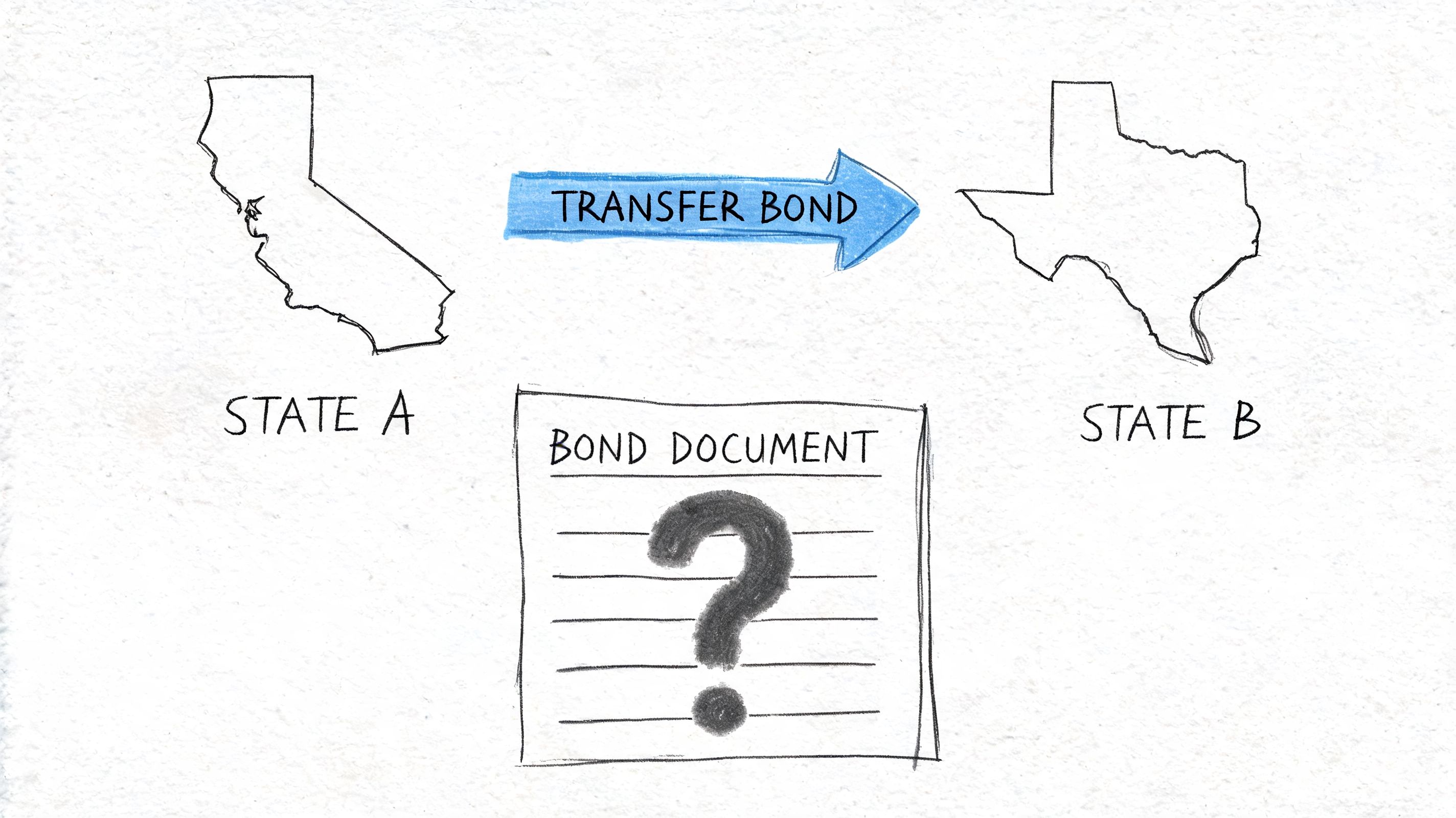
That setup exists because licensing does not travel cleanly across state lines. Most states, including Georgia, require out-of-state agents to coordinate through local authorities, and a 2019 American Bar Association study found that 68% of out-of-state bond attempts involved delays of 24-48 hours due to these verification processes, according to Forsyth County bonding background and related guidance.
Why your hometown bondsman can't always post directly
A bondsman near your house may be perfectly legitimate and still have no authority to post directly in the county where the arrest happened. That's the part families don't see at first. They assume bail works like a wire transfer. It doesn't.
Bail is tied to:
- state licensing rules
- county acceptance procedures
- local court or clerk filing requirements
- jail release processing after the bond is accepted
If the arrest happened in Georgia, the county decides how bonds are handled there. If it happened in another state, that state's local rules control. The farther the bondsman is from the jail, the more coordination has to happen before anything gets filed.
For a basic Georgia overview, how bail works in Georgia helps explain the local side of the process.
Where interstate cases get messy
The challenge isn't just legal authority. It's communication. One side is gathering information from the family. Another side is confirming the booking and bond. Another may be waiting on signatures, indemnity documents, or jail acceptance.
A smaller jurisdiction adds another layer. National chains often know how to answer the phone, but they may not know how a specific county handles after-hours bonds, what local paperwork gets rejected, or who processes the release once the bond reaches the jail.
Here's the practical trade-off:
| Option | Strength | Weakness |
|---|---|---|
| National hotline | Broad reach | Often depends on handoffs and outside partners |
| Home-state bondsman | Familiar to the family | May need a local runner or transfer partner |
| Local jail-area bondsman | Knows county process | Best when reached directly and early |
The closer the bondsman is to the jail, the fewer moving parts stand between approval and release.
That doesn't mean every interstate case is doomed to drag. It means you should expect verification, ask who will post the bond, and avoid any company that gives you a fast promise before confirming where the defendant is and what the jail requires.
Finding and Vetting a Trustworthy Bondsman
When people search bail bonds near me, they often mean “near me emotionally,” not geographically. They want someone to answer now and fix the problem. But if the jail is in another county or another state, the right search is closer to bondsman near the jail.
That urgency is exactly why scammers target families in this moment. Bail bond scams targeting out-of-state families have surged, with the FBI reporting over 14,000 complaints in 2023. A key tell-tale sign of a scam is an unsolicited call demanding payment through a digital app; legitimate agents never operate this way, as explained in this warning on bail bond scams.
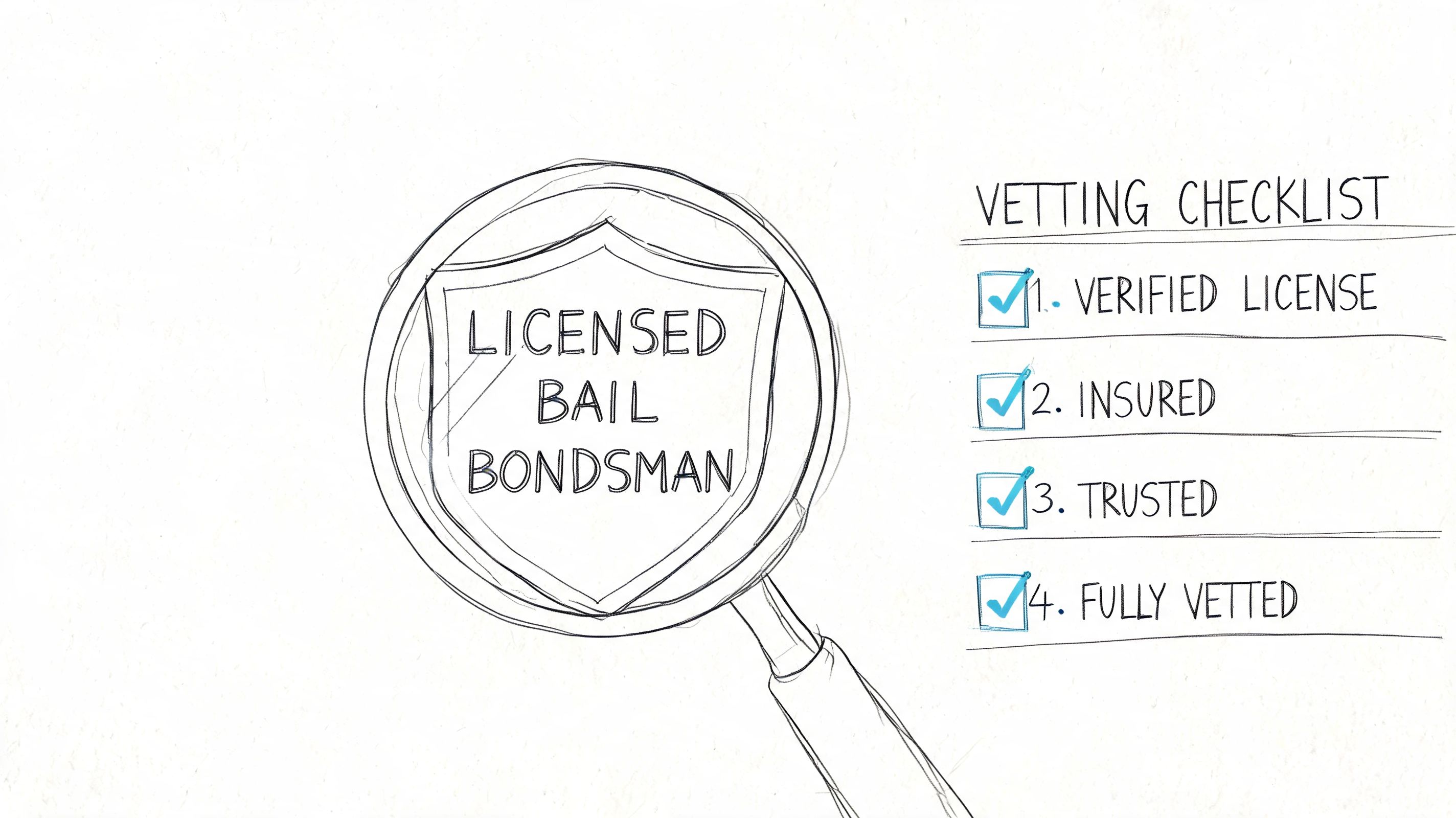
The vetting checklist that matters
Don't judge a bondsman by how confident they sound. Judge them by what they can verify.
- Check local approval: Ask whether they are approved to write bonds in the county where the person is jailed.
- Ask who posts the bond: If it's a transfer, get a straight answer on which local agent will file it.
- Confirm the jail first: A real company verifies the booking before discussing payment.
- Watch payment behavior: Be cautious if someone pressures you to send money immediately through a digital payment app after an unsolicited call.
- Request clear terms: You should understand what the premium covers, whether collateral may be required, and who the indemnitor is.
A real explanation beats a sales line every time. If the person on the phone skips straight to “send money now,” slow the call down.
Questions worth asking on the first call
A useful call sounds more like an intake than a pitch. Ask:
- Are you licensed where this bond will be posted?
- Has the jail booking been confirmed?
- Is bail already set?
- Will this be a transfer bond?
- Who is financially responsible under the bond agreement?
- What could delay release after the bond is accepted?
If you need a plain-language breakdown of the profession itself, what a bail bondsman does is worth reviewing before you sign anything.
Quick warning: A scammer wants urgency without verification. A legitimate bondsman wants verification before urgency turns into paperwork.
Good signs and bad signs
| Sign | What it usually means |
|---|---|
| They ask for the jail and booking details first | They know process comes before payment |
| They explain local filing and release steps | They understand the county workflow |
| They answer who the posting agent is | They're not hiding the transfer setup |
| They cold-call you demanding app payment | Treat it as a major red flag |
| They avoid explaining responsibility after release | They may be skipping the hard part of the deal |
The right bondsman should lower confusion, not raise it. If the conversation feels slippery, move on.
The Transfer Bond Process Step by Step
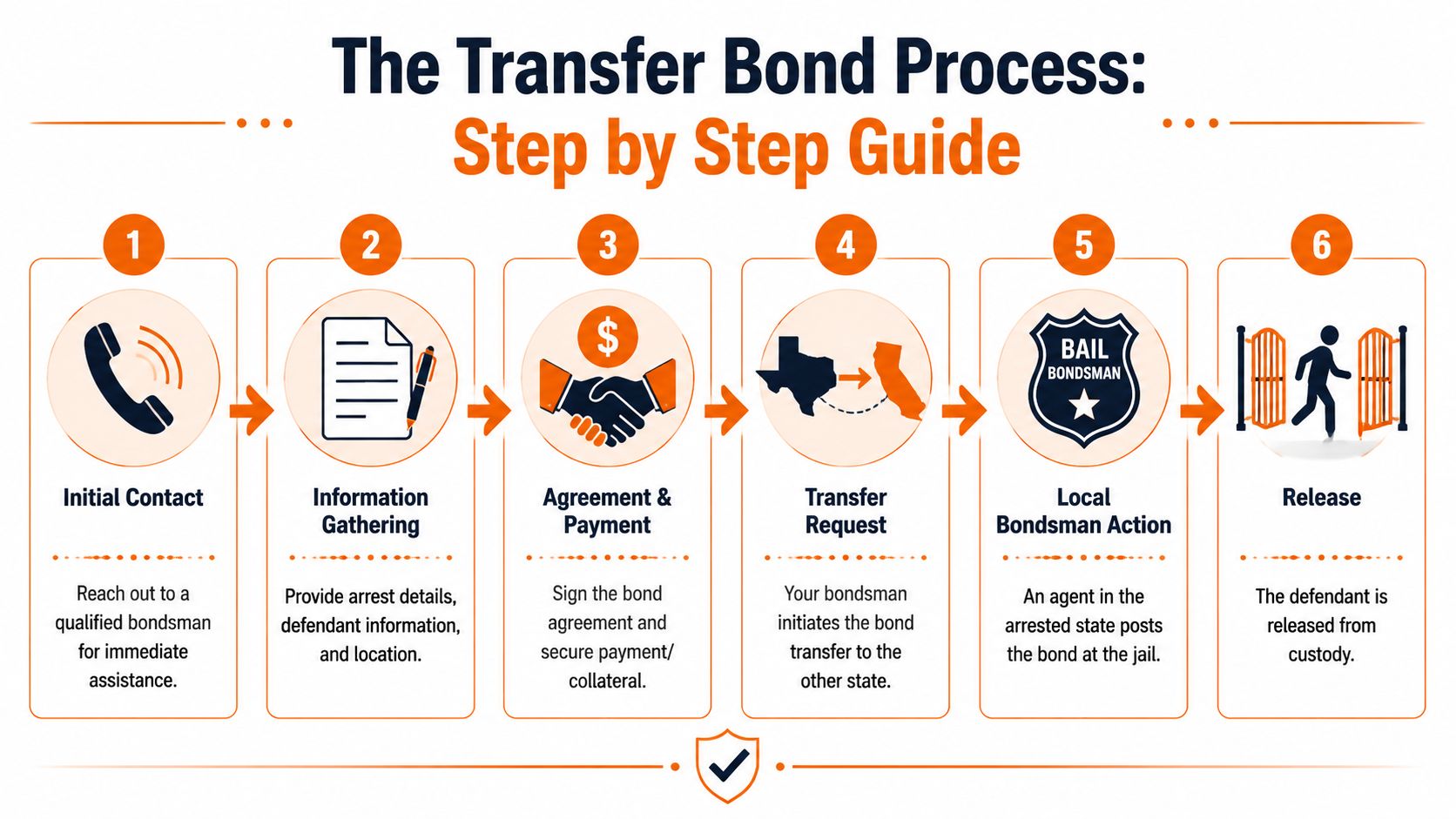
Once the defendant has been booked and bail is set, the transfer process becomes a sequence of tasks. It's not mysterious, but it does require accurate information and clean handoffs. The transfer bond process involves your home-state bondsman coordinating with a local agent in the arrest state. The home bondsman wires the premium, typically 10-15% of the total bail, to the local agent, who then files the surety bond with the court to secure the defendant's release, according to this overview of how transfer bonds work.
Step 1 through Step 3
The first phase is intake.
Initial contact
You call with the defendant's identifying information, arrest location, and any known bail amount. If the person hasn't been fully booked yet, the bondsman may have to wait for the jail system to catch up.Information gathering
The bondsman confirms the jail, the charges, and whether bail has been set. If the case involves multiple holds, warrants, or a court appearance before bond, that has to be identified before money changes hands.Agreement and payment
The indemnitor signs the bond agreement. This is the person taking financial responsibility if the defendant fails to appear. Depending on the facts, the bondsman may discuss premium, collateral, or both.
Families often focus only on the fee. The more important issue is understanding the obligation attached to the signature. If you sign as indemnitor, you're promising more than payment. You're standing behind the defendant's appearance in court.
Step 4 through Step 6
The second phase is coordination and release.
- Transfer request: The coordinating bondsman reaches the local agent in the arrest state and sends the case details.
- Local posting: The local bondsman files the bond where it must be filed. That could involve the jail, clerk, or court process tied to that county.
- Release: After the bond is accepted, the jail begins its own release procedure.
Some families think posting the bond and walking out happen at the same moment. They don't. Bond acceptance starts the release process. The jail still has to complete it.
What you should have ready
A smoother transfer usually depends on how quickly you can provide clean information and signed documents. Keep these ready:
- Legal identity details: Full name, date of birth, and jail location
- Basic case details: Charge information if known, bail amount if known
- Indemnitor information: Your identification, contact information, and relationship to the defendant
- Financial documents if requested: Proof of funds or collateral documentation when required
- Reliable communication: A phone number you'll answer and an email you check
Where people lose time
The biggest practical slowdowns tend to be avoidable:
| Delay point | Why it happens | Better move |
|---|---|---|
| Wrong jail information | Family has partial arrest details | Confirm county and facility first |
| Unsigned paperwork | Everyone is rushing | Read, sign, return promptly |
| Unclear indemnitor | Multiple relatives assume someone else is signing | Decide who is responsible early |
| Collateral confusion | Family assumes none will ever be needed | Ask about it before payment |
| Poor follow-up | Missed calls and emails | Keep one decision-maker on the case |
Some cases move cleanly. Others stall because the family has three callers, two versions of the story, and nobody authorized to sign. One point of contact works better. One decision-maker works better. One local posting path works better.
After Release Navigating Court Dates and Extradition
Release is relief, not closure. Once the defendant walks out, the case shifts from jail logistics to court compliance. That's where many families make a costly mistake. They think the hardest part is over, so they stop paying attention.
A missed court date can damage the defendant's case and put the indemnitor at risk under the bond agreement. If the defendant lives in another state, every hearing takes more planning. Travel, work schedules, reminders, and attorney communication all matter. None of that is optional.
Why local accountability matters after the release
The distinction between a local working relationship and a disconnected national handoff is clear in these situations. Data from Bail Project (2025) reveals a 40% default rate on remote bonds handled by disconnected national agencies due to interstate enforcement issues, as discussed in this article on states without private bail.
That number tracks with what experienced bail agents see in practice. Distance creates sloppiness unless someone is actively managing the obligations. A defendant who misses a hearing doesn't get a pass because they live far away.
What families need to stay on top of
- Court dates: Put every date in writing and verify it with counsel if a lawyer is involved.
- Travel planning: Don't wait until the week of court to figure out transportation or time off work.
- Address and phone changes: Report them promptly if the bond agreement requires it.
- Communication with the defendant: Make sure the person released understands that “I forgot” doesn't help anyone.
- Warrant risk: Missing court can lead to a bench warrant and a much harder problem than the one you started with.
If you need a direct look at the consequences, what happens if you miss court lays out why compliance matters so much.
The bond gets someone out of jail. Their own follow-through keeps them out.
Extradition is the issue families underestimate
Extradition becomes relevant when a defendant has to answer charges across state lines and doesn't handle the case properly. Families often assume that going home means the matter stays local. It doesn't. Courts can still require appearance, and failure to comply can trigger a chain of consequences that becomes harder and more expensive to solve.
The safest approach is simple. Treat release as the beginning of a schedule, not the end of a crisis.
Arrested in Forsyth County GA? Your 24-Hour Local Solution
Forsyth County is exactly the kind of place where out-of-town families can lose time if they rely on a generic nationwide script. The person calling may be in North Carolina, Florida, or Tennessee. The arrest may have happened while traveling, visiting family, driving for work, or staying in a hotel near Cumming. The jail, however, still runs on local process.
That local piece matters because a 2025 Georgia DOJ report notes that 15% of arrests in Forsyth County involve non-residents, yet most online bail resources fail to provide specific guidance for this scenario, as noted in this discussion of bail for out-of-state defendants. Families dealing with an inmate release in Forsyth County usually need direct answers tied to this county, not broad advice written for a major metro market.
What works best in Forsyth County
A local bondsman near Forsyth jail can usually answer the questions that matter in real time:
- whether the defendant has been booked
- whether bail has been set
- what paperwork is needed now
- whether a DUI bail or other criminal bail issue has any local complication
- what the likely release path looks like once the bond is posted
That's the difference between 24 hour bail bonds in practice and a call center that takes a message. In a smaller county, familiarity with local booking flow and release handling often matters more than broad branding.
For families in Cumming and nearby cities
If you're searching for Forsyth County bail bonds, bail bondsman in Cumming, 24 hour bail bonds near me, or emergency bail bonds from Dawsonville, Alpharetta, Suwanee, Buford, or another North Georgia community, the best move is usually the same. Contact someone who works this county every day, can verify the jail status directly, and can explain your next step without bouncing you between offices.
That applies whether the issue is a first-time arrest, a DUI bail situation, warrant assistance, or a general question about how to post bail for a traveler arrested away from home. Fast jail release starts with local control of the process.
If you need immediate help with Forsyth County bail bonds, 24 hour bail bonds, or an out of state bail bondsman situation involving Cumming or nearby North Georgia communities, contact 24-7 Best Bonding. Their team serves Forsyth County around the clock, explains the process clearly, and helps families move quickly when every minute counts.