
Your phone rings late. The caller is scared, talking fast, and all you catch at first is that someone you care about has been arrested in Forsyth County.
That’s usually when the questions hit all at once. Where are they? What is bail? How is bail determined? Can they get out tonight? Do you need cash? Do you need collateral? What do you do first?
The good news is that this process feels more confusing than it is. Bail has a structure. Release has a sequence. If you know what information matters and what decisions move things forward, you can stop guessing and start acting.
Families in Cumming, Alpharetta, Suwanee, Buford, and Dawsonville usually don’t need a law school answer in that moment. They need a clear one. They need to know what affects bail, how Forsyth County handles it, and what steps lead to the fastest possible release.
That Urgent Call and Your First Steps
A lot of families make the same first mistake. They start calling everyone except the people who can confirm the basics.
If your loved one has just been arrested, slow the situation down for a minute and focus on facts. You need the defendant’s full name, date of birth if you have it, where the arrest happened, and what charge you think they’re facing. If the caller was picked up on a DUI, a warrant, or a probation-related issue, say that clearly when you ask for help. Small details matter early.
What to do in the first few minutes
Start here:
- Confirm the jail location: Make sure the person is being held in Forsyth County and not in a neighboring jurisdiction.
- Get the legal name right: Nicknames slow everything down. Use the full name exactly as it appears on identification if possible.
- Ask about the charge: You may not get a perfect answer right away, but even a rough answer helps.
- Find out whether bail has already been set: Sometimes families call before booking is complete. Sometimes bail is already listed. Those are very different situations.
- Keep your phone close: The next call may come quickly, and missed calls create delays.
The fastest families are not the ones who panic less. They’re the ones who gather the right information first.
What not to do
Don’t argue the case over the phone with jail staff. Don’t assume the arresting officer decides everything. Don’t promise the defendant that they’ll be out immediately if you don’t yet know whether bail has been set, whether the charge is bondable, or whether a hearing is required.
And don’t let shame slow you down.
Arrests happen to first-time offenders, working people, parents, college students, and out-of-town visitors every day. If someone was arrested near Cumming, while passing through Alpharetta, or after a stop around North Georgia, the immediate issue isn’t the whole case. The immediate issue is stabilizing the situation and learning the release path.
The Core Factors That Influence Bail Amounts
When people ask how is bail determined, they usually want one simple rule. There isn’t one. Bail is shaped by a mix of legal factors and practical judgment.
A judge or magistrate generally looks at the charge itself, the defendant’s background, and whether release creates a concern about safety or missed court.
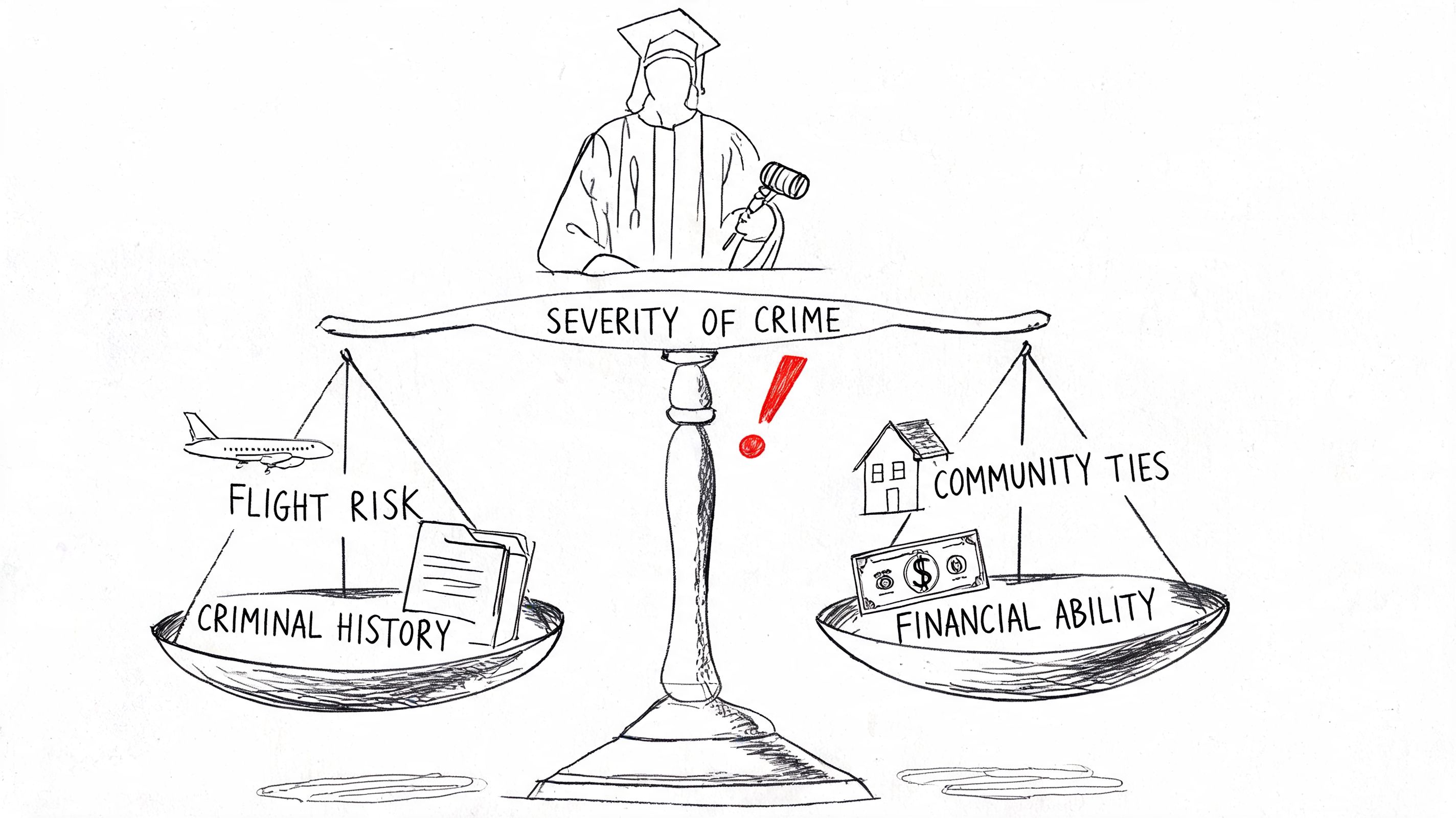
The factors that usually matter most
Some issues carry more weight than others:
- The alleged offense: More serious charges usually bring more scrutiny than lower-level charges.
- Criminal history: Prior arrests or convictions can affect how the court views risk.
- Past court attendance: If the defendant has missed court before, that matters.
- Community ties: Stable housing, local family, and steady work can help show the person is likely to return to court.
- Safety concerns: If the court believes release may create a risk to someone specific or to the public, bail can be set higher or conditions can become stricter.
A DUI arrest, for example, may be handled differently from a low-level misdemeanor that doesn’t involve safety concerns. A person with deep roots in Forsyth County may be viewed differently from someone who was only passing through and has no local contacts.
Why the process can feel opaque
Part of the confusion comes from the fact that some jurisdictions increasingly use bail algorithms. According to this discussion of common factors judges consider when setting bail, bail algorithms are increasingly used to mathematically determine bail, considering factors like charges, age, and criminal history. That same source notes that the proprietary nature of these systems can make recommendations difficult for defendants to challenge without experienced guidance.
That matters because families often assume bail came from one person’s simple decision. Sometimes it didn’t. Sometimes a recommendation was shaped by a system that isn’t fully transparent from the outside.
Practical rule: If the bail amount feels out of line with what you expected, don’t assume there’s no path to review. Ask whether the amount came from a preset schedule, a magistrate’s decision, or another recommendation process.
If you want a better sense of what happens when the court reviews release conditions, this overview of what happens at a bail hearing helps explain the decision point.
What actually helps
Families often want to tell the court the defendant is a good person. That’s understandable, but it’s not enough by itself.
What helps more is concrete information. Local address. Employer. Family support. Medical needs. A history of showing up when required. If a lawyer is involved, those facts can become part of a stronger request for reasonable bail or better release conditions.
What doesn’t help is emotional venting, attacking the arrest, or assuming the bail amount was pulled out of thin air. There is usually a logic to it, even when that logic is frustrating.
How Bail Is Handled in Forsyth County Georgia
The local process matters. A family searching for bail bonds Cumming, inmate release Forsyth County, or a bondsman near Forsyth jail usually isn’t looking for a nationwide explanation. They need to know how this county moves.
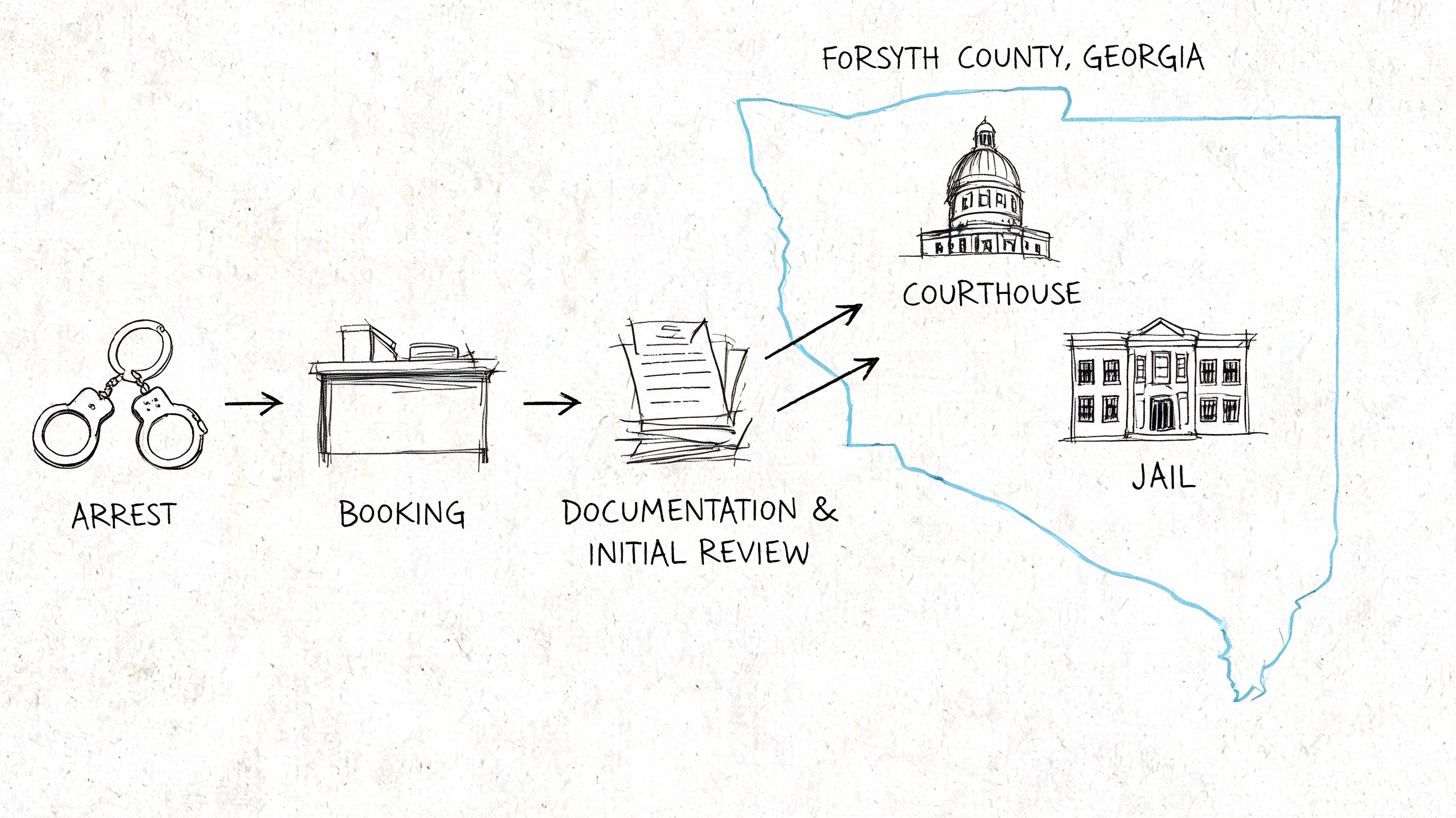
An arrest in Forsyth County generally starts with transport, booking, charge entry, and a decision about whether bail can be posted immediately or whether a first appearance is required. The exact timing depends on the charge, the arrest circumstances, and where the case sits in the intake process.
Why county knowledge matters
One of the biggest mistakes families make is assuming neighboring counties handle bail the same way. They don’t.
As noted in this explanation of county-based bail differences, bail schedules and judicial tendencies vary significantly from one county to the next in Georgia, and an offense may carry a different preset amount depending on the county. That’s one reason local process knowledge matters so much in Forsyth County. It affects expectations, timing, and strategy.
A person arrested in or near Cumming may face a release process that feels very different from what a relative saw in another county. That doesn’t mean something is wrong. It means local procedure controls.
What families should expect in Forsyth County
The usual sequence looks like this:
- Arrest and transport
- Booking and identification
- Charge entry and hold review
- Bail set through schedule, magistrate action, or first appearance
- Bond posting if eligible
- Jail release processing
That last step is where many families get frustrated. Posting the bond is one milestone. Walking out the door is another. Release still depends on the jail completing its own internal processing.
Common practical issues
Some details can slow release more than people expect:
- Incomplete booking: If booking isn’t finished, posting may not happen as fast as the family wants.
- Multiple holds: A warrant from another place or another legal issue can affect release.
- Name confusion: Similar names create avoidable delays when people call with partial information.
- Out-of-county assumptions: Families from Alpharetta, Dawsonville, Suwanee, or Buford sometimes assume the nearest jail process applies. It may not.
If your loved one was arrested while traveling through Forsyth County, say that upfront. Out-of-town defendants often raise different questions about ties to the community and return to court.
What works locally
The best approach is simple. Verify the charge, confirm where the person is housed, learn whether bail is already available, and act on the actual release route instead of relying on what happened to somebody else in another county.
That local focus is what usually separates a smooth process from a long night of bad assumptions.
Your Three Main Options for Posting Bail
Once bail is set, most families have three realistic paths. They can pay the full amount directly if that option is available. They can use a surety bond through a bail bondsman. Or the defendant may be released on recognizance, meaning release is based on a promise to return to court instead of a financial bond.
The right option depends on the case, the amount, and how much financial strain the family can absorb.
Comparing Your Bail Options in Forsyth County
| Bail Type | Upfront Cost | Who It's For | Key Consideration |
|---|---|---|---|
| Cash bond | Full bail amount paid directly | Families with immediate access to the full amount | Ties up a large amount of money while the case is pending |
| Surety bond | Partial upfront payment to a bail bond company | Most families who need a practical path to release | Usually the most workable option when full cash bail isn’t realistic |
| Recognizance bond | No traditional cash bond upfront | Defendants the court believes can be trusted to return | Not available in every case |
How to think through the choice
Cash bond is straightforward in theory. If you have immediate access to the full amount and the jail accepts that form of payment for the case, it can be an option. The problem is obvious. Most families don’t want to lock up that much money during an already stressful case.
A surety bond is often the most practical route because it avoids the need to produce the full bail amount all at once. For many people searching for affordable bail bonds, emergency bail bonds, or 24 hour bail bonds near me, this is the option that keeps the process moving without draining savings needed for lawyers, bills, or missed work.
Recognizance release sounds ideal, but it isn’t something a family can force. The court has to allow it. If you want a plain-English explanation of that kind of release, this article on what is a personal recognizance bond lays it out well.
What usually does not work
Families sometimes waste time trying to negotiate the jail into accepting a different arrangement that doesn’t match the bond type set in the case. That rarely helps.
It also doesn’t help to delay the decision while everyone debates what “should” happen. Once the bail path is clear, fast decisions usually matter more than perfect ones.
A Step-by-Step Guide to a Fast Jail Release
When release needs to happen quickly, the process works best when everyone sticks to a clean sequence. Speed comes from complete information, fast signatures, clear payment arrangements, and no confusion about where the defendant is being held.
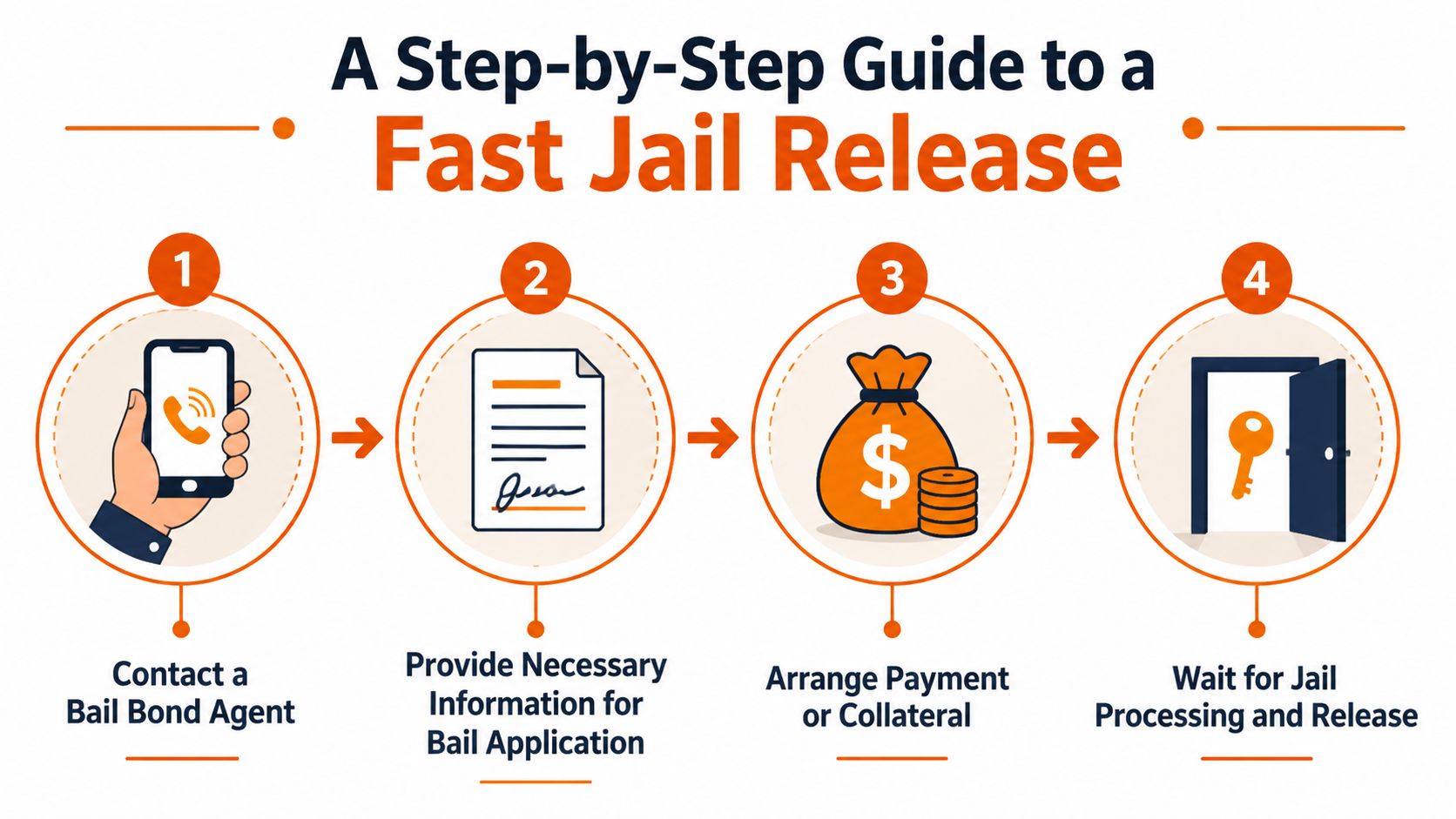
The fastest path from call to release
Make the call immediately
If you need 24 hour bail bonds, don’t wait until morning hoping things will sort themselves out on their own. The earlier the process starts, the sooner someone can verify location, charge status, and bond eligibility.Provide the defendant’s details
Give the full name, date of birth if you have it, the jail or arresting agency if known, and the likely charge. If the arrest involved DUI, an active warrant, or a probation issue, mention that at the start.Complete the bond paperwork
Delays often occur during this step. The person arranging the bond may need to provide identification, contact details, employment information, and sign indemnity paperwork. If the file requires extra review, answer every question directly and quickly.Arrange payment and any required support
Some bonds are simple. Others require more review depending on the charge, background, or risk concerns. If collateral is discussed, ask exactly what is needed and why. Don’t assume every case requires the same thing.Wait for the bond to be posted and processed
Posting the bond is not the same as instant release. After the bond is accepted, the jail still has to complete release processing.
What speeds things up
These habits help more than people realize:
- Answer your phone: Agents and staff can’t move your file if they can’t reach you.
- Use exact information: Correct spelling and accurate birth dates reduce wasted time.
- Send documents promptly: If a signature or ID is needed, send it right away.
- Keep one decision-maker involved: Too many relatives giving conflicting instructions slows approval.
A fast jail release usually depends less on drama and more on whether the family can provide accurate information without delay.
Where expectations need to stay realistic
Even with emergency bail bonds and a responsive bondsman near Forsyth jail, there are parts of the process nobody outside the jail controls. Booking backlog, shift changes, internal release procedures, and additional holds all affect the final timeline.
That’s why the smartest move is to get the bond process started as soon as the case allows. If you want a clearer sense of the timing issues families ask about most, this guide on how long it takes to post bail is worth reading.
After Release What You and Your Loved One Must Do
Getting out of jail is not the finish line. It’s the handoff point.
The bond exists for one reason. The defendant must return to court and follow any release conditions. If that doesn’t happen, the legal trouble gets worse and the financial fallout can reach the person who signed for the bond.
The defendant’s main obligation
The most important job after release is simple. Show up for every court date. If the court changes the date, confirm the new date. If an attorney is hired later, still verify the schedule independently until you know who is tracking it.
Other conditions may apply too. Those can include no-contact rules, travel limits, treatment requirements, or instructions tied to the charge. Read every release paper carefully.
What the cosigner is actually agreeing to
A lot of people sign bond paperwork while running on fear and no sleep. Later they realize they didn’t fully understand the obligation.
If you cosign, you are not just helping with paperwork. You are financially backing the defendant’s compliance. If the defendant disappears, misses court, or violates the bond in a way that creates forfeiture risk, the cosigner may face serious consequences under the agreement.
- Stay informed: Keep copies of all paperwork and court dates.
- Stay in contact: Don’t cosign for someone you can’t reliably reach.
- Speak up early: If the defendant is talking about running, using again, or ignoring court, deal with it immediately.
- Don’t ignore notices: Any court or bond communication deserves a fast response.
Release buys time. It does not erase responsibility.
What protects everyone
The best post-release plan is boring. Keep the paperwork in one place. Put court dates in the phone calendar. Make transportation plans early. If the defendant has a job, a family obligation, or treatment issue that affects scheduling, start solving that immediately instead of the night before court.
Most bond problems don’t start with one dramatic event. They start with avoidance, denial, and missed communication.
Forsyth County Bail Bonds Common Questions and Answers
Families usually ask the same practical questions once the panic eases and the actual details start sinking in.
How quickly can someone be released after the bond is posted
It depends on where the case is in booking and release processing. Bond posting starts the release process, but it doesn’t mean the jail door opens right away. Internal jail procedures still have to be completed.
If you need fast jail release, the best move is to start as soon as the case is eligible and avoid delays caused by missing information or slow paperwork.
What if I don’t have collateral for the bond
Not every bond is handled the same way. Some cases may be approved without collateral. Others may require more security because of the charge, the bail amount, or concerns about appearance risk.
The key is to ask early and be candid about what you can provide. Don’t assume you have no options just because you can’t produce major assets on short notice.
What happens if the defendant misses a court date
That’s a serious problem. Missing court can trigger a warrant, put the bond at risk, and create new legal trouble for the defendant. It can also expose the cosigner to financial consequences under the bond agreement.
If a court date was missed or is about to be missed, act immediately. Silence makes it worse.
Can a bondsman help with a DUI bail
Yes, in many situations a DUI arrest can lead to a bond process. The exact route depends on the charge details, whether there was an accident, whether other holds exist, and whether bail has already been set.
For people searching DUI bail, the first step is confirming where the person is held and whether the case is ready for bond action.
Can you help if there is an active arrest warrant
Often, yes, but warrant situations need careful handling. Don’t assume you can just pay something in advance and make the problem disappear. A warrant may require surrender, court handling, or a specific bond process once the arrest occurs.
If someone is searching for warrant assistance in Forsyth County, the smartest step is to get accurate guidance before they make the situation worse by avoiding it.
What do I need to start right now
Usually the basics:
- Full legal name of the defendant
- Date of birth if available
- Location of custody
- Possible charge
- Your ID and contact information
- A working phone you’ll answer
That’s enough to start moving.
If your loved one is in jail in Cumming or elsewhere in Forsyth County and you need help now, 24-7 Best Bonding provides around-the-clock support for fast, discreet bail bond service. Call 770-888-4585 or visit 110 Samaritan Dr, Suite 112, Cumming, GA 30040 to get clear answers, immediate guidance, and help moving the release process forward.