
When you get that call, your brain usually goes straight to the worst-case scenario. Slow down. The fastest way to help someone at the burke county jail is to stop guessing and start confirming facts in the right order.
The first priority is simple. Find out exactly where they are, whether they’ve been booked yet, what charge is listed, and whether a bail amount has already been set. Everything else comes after that.
Your First Steps Finding the Burke County Jail and an Inmate
The first hour after an arrest is messy. You may have a short phone call, a secondhand story, or no information at all. Your job is to pin down four facts in order: where the person is, whether booking has started, what name the jail has on file, and whether any bond information exists yet.
Start with the detention facility. The Burke County Detention Facility is in Morganton on Government Drive, and the sheriff’s office can confirm whether someone has arrived or is still being processed. Call 828-438-5500 and keep your questions tight so staff can answer them fast.
Gather the right details before you call
Do not start with rumors from friends or social media posts. Start with identifiers the jail can use.
Have these ready:
- Full legal name
- Date of birth, if you know it
- Approximate arrest time and city
- Arresting agency, if anyone told you
- Any spelling variations for last names
That short prep matters. A common name can pull up the wrong person, and a missing middle initial or wrong birth date can slow down confirmation.
If you need a broader step by step explanation beyond Burke County, this guide on how to find someone in jail after an arrest gives a useful overview.
Ask for the information that changes your next move
Once you reach staff or find the person in an inmate listing, do not stop at “yes, they’re here.” Get the details that control what happens next.
Ask for or note:
- Booking status
- Exact listed charges
- Inmate ID number
- Bond or bail amount, if one has been set
- Housing unit or pod, if available later
- Any hold from another agency, if staff will disclose it
Each item answers a practical question. Booking status tells you whether release steps can even start. Charges affect bond and court handling. The inmate ID saves time with mail, account deposits, and future calls to the jail.
Expect delays early, and do not mistake that for bad information
A person may be physically at the jail before their record is fully searchable. That gap causes a lot of panic. It is normal.
If staff say they cannot confirm everything yet, the usual reason is simple. Intake is still underway, paperwork is still being entered, or bond has not been set. Calling back with the same vague question every ten minutes will not speed that up. Calling back later with the person’s full legal name and date of birth often will.
Use this checklist to stay organized:
| What you need | Best question to ask |
|---|---|
| Confirm they are at the jail | “Has this person been booked into Burke County yet?” |
| Find out whether release can start | “Is booking complete?” |
| Learn what controls bail | “What charges are listed right now?” |
| Avoid mistakes later | “Can you confirm the inmate ID number?” |
Write everything down the first time. Names, charge codes, booking times, and bond numbers are easy to mix up under stress. Clear notes will save you time when you call a bondsman, speak with family, or prepare for release rules later.
Understanding the Booking and Intake Process
Your phone rings. Someone you care about has been arrested. You confirm they made it to the Burke County jail, then everything seems to stall. That gap is usually the booking process, and it controls almost every step that comes after.
Booking takes time because staff have to answer basic questions before the jail can house or release anyone. Who is this person? What charges are active? Do they have medical needs, withdrawal risks, or a hold from another agency? Until those questions are answered, the person may be physically inside the jail but still not ready for calls, bond processing, or release.
What usually happens during intake
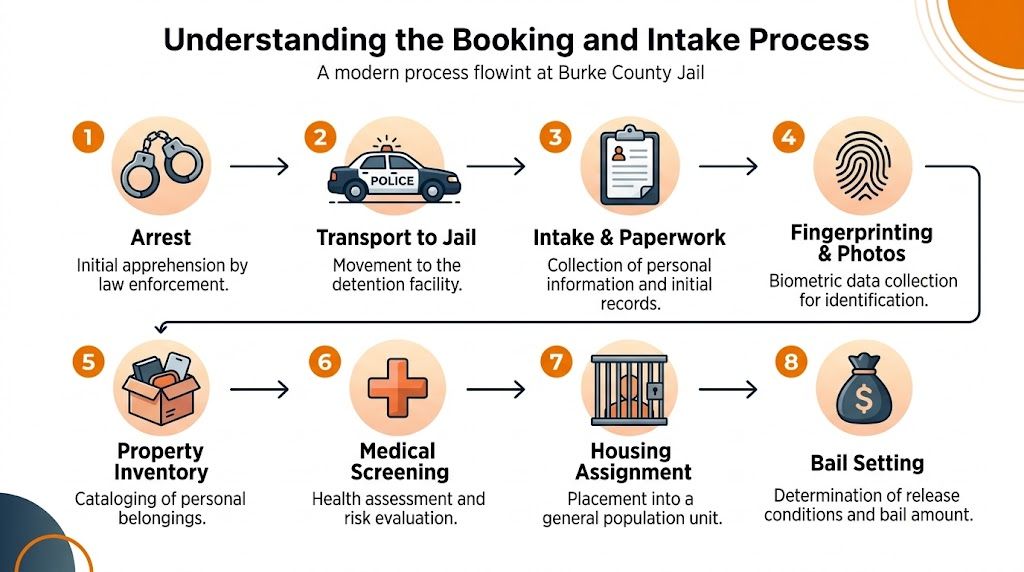
The order can vary a little, but the process usually follows the same path:
Arrival and handoff from the arresting agency
The officer brings the person to the detention facility and transfers custody.Identity verification
Staff confirm the person’s name, date of birth, and other identifying details so the jail record starts correctly.Photographs and fingerprints
This creates the official booking record tied to that person, not just the arrest report.Property collection
Clothing, cash, phones, jewelry, and other belongings are logged and stored. This protects the inmate and the jail from disputes later.Medical and mental health screening
Staff check for urgent health issues, current prescriptions, intoxication, injury, suicide risk, and withdrawal concerns. This step matters more than families realize. A delay here can be the difference between a safe hold and a medical emergency.Classification review
Jail staff decide where the person can be housed safely. Charge level, behavior, sex, health concerns, and safety issues all affect placement.Housing assignment or temporary hold
The person is placed in an appropriate area once staff clear them for housing.Bond review or hold confirmation
The jail confirms whether a bond applies, whether a judge must set it, or whether another hold blocks release.
Why the process feels slow
The jail is not stalling for no reason. Staff cannot skip identity checks, health screening, or classification just because a family is ready to post bond. Those steps exist to prevent mistaken identity, missed medical issues, lost property claims, and unsafe housing decisions.
That is the part many families miss.
If someone has a medical concern, appears intoxicated, gives inconsistent identifying information, or has an outside hold, intake takes longer. The delay may feel personal. It usually is not. It is procedural, and understanding that helps you focus on the right question: what is still pending?
What you should do while intake is happening
Use the waiting time well. Get organized.
Write down the person’s full legal name, date of birth, arresting agency if you know it, and the time you first learned about the arrest. Keep a note with every update from the jail. If you later need step-by-step help posting bail for someone, those details will save time and prevent mistakes.
You should also ask direct questions when you call:
| Intake issue | Best question |
|---|---|
| Identity not confirmed yet | “Has the booking record been completed?” |
| Bond not available yet | “Has bond been set, or is the person waiting on a magistrate or judge?” |
| Release blocked | “Is there a hold from another agency?” |
| Communication delay | “Has the person been moved out of intake yet?” |
What families get wrong during booking
The biggest mistake is assuming silence means something has gone wrong. During intake, silence usually means the process is still underway.
A second mistake is showing up at the jail too early with property, medication, or cash before staff confirm what is allowed. That wastes time and often creates more confusion. Follow the jail’s rules, not advice from a friend who dealt with a different county.
A third mistake is relying on the arrested person’s version of the charge during the first chaotic phone call. Use the booking information the jail gives you. That is the record that will control bond, housing, court scheduling, and release conditions.
The practical takeaway
Booking is the gatekeeper stage. Until it is finished, the person may not appear in the system the way you expect, may not have phone access, and may not have a final bond amount.
Stay calm. Keep notes. Ask focused questions. Once intake is complete, the next steps get much clearer.
How to Post Bail for a Fast Jail Release
You get the call, find out bond has finally been set, and now the pressure shifts. The next few hours matter. If you choose the wrong payment method, bring the wrong information, or assume release starts the second money changes hands, you can lose a lot of time.
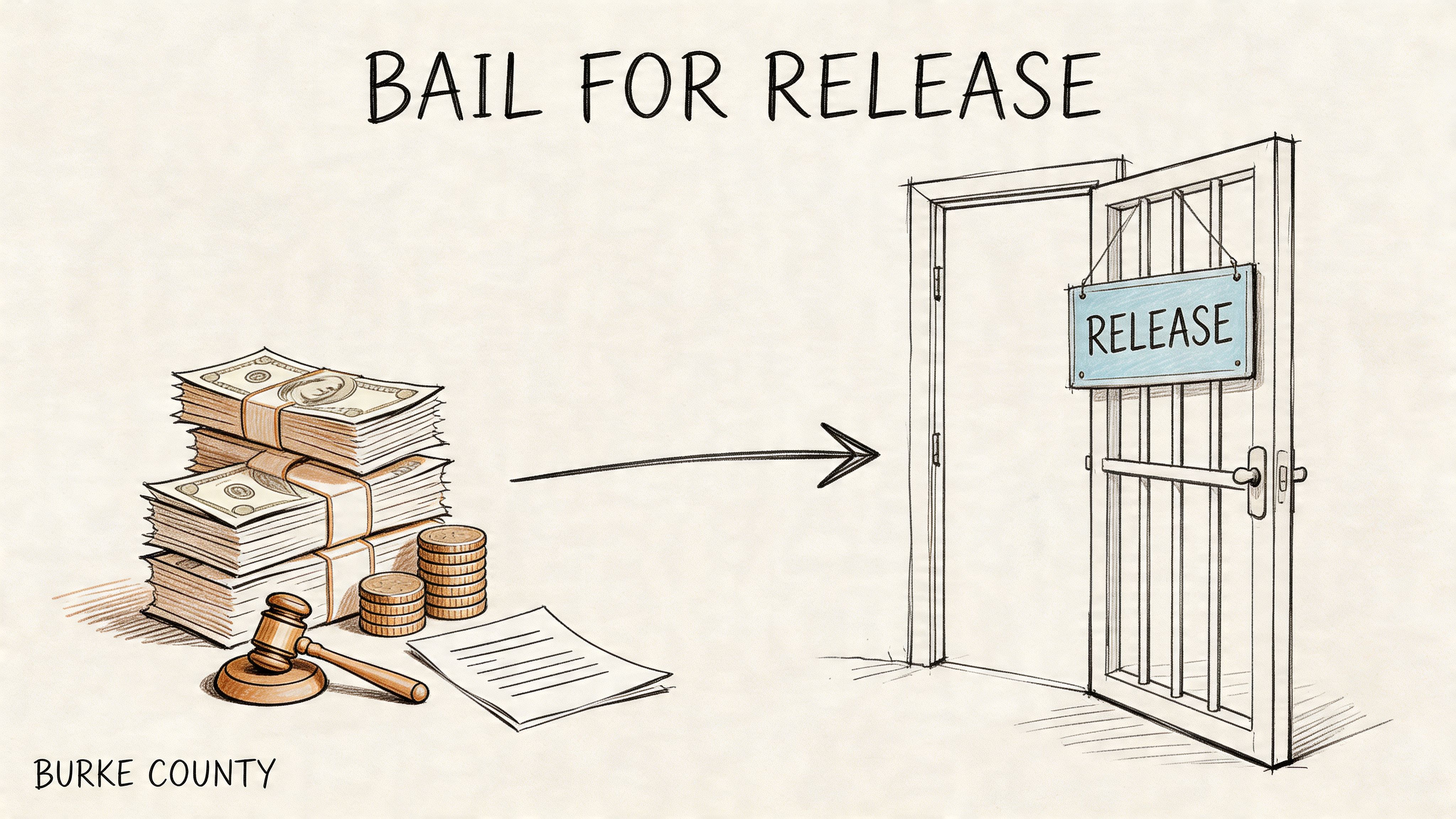
Bail is the court’s way of allowing release while still requiring the person to come back and follow court rules. Your job is simple. Confirm the bond terms, choose the fastest realistic payment option, and clear anything else that could block release.
Your three main ways to post bail
You usually have three options. Pick based on speed, cost, and how much paperwork you can handle right now.
| Bail option | Best for | Main drawback |
|---|---|---|
| Cash bond | People who can pay the full amount right away | A lot of money stays tied up |
| Property bond | People with qualifying property and time for extra review | Slower and more document-heavy |
| Bail bond company | Families who need release without paying the full bond amount upfront | The fee is usually not refunded |
Cash bond
Cash bond is the cleanest route if you can afford it. You pay the full amount ordered by the court, and that removes a middle step.
It is also the option families misuse the most. Do not empty rent money, bill money, or emergency savings just to say you posted cash. Fast release does not help much if the household falls behind next week.
Cash bond makes sense if:
- The amount is manageable
- You have the accepted payment method ready
- You want the most direct path without a bondsman involved
Property bond
Property bond sounds attractive because it can reduce immediate cash pressure. In practice, it often slows things down.
The court or jail process may require proof of ownership, valuation, equity, and identity checks before anything moves. If your main goal is getting someone out quickly so they can return to work, care for children, or deal with medical issues, property bond is often the wrong tool.
Use it only if you already know the property qualifies and you can handle the paperwork without delay.
Bail bond company
For many Burke County families, a licensed bail bond company is the practical choice. You usually pay a percentage of the bond amount instead of the full amount, sign the required paperwork, and let the agent submit the bond.
A good bond agent helps with the part families tend to fumble under stress:
- Confirming the exact bond amount
- Checking whether any hold or detainer still blocks release
- Collecting signer and identification details
- Completing the bond paperwork correctly
- Submitting everything so the jail can start release processing
If you want a plain-English overview before you call an agent, this guide on how to post bail for someone explains the usual sequence.
What actually speeds release up
Preparation speeds release up. Families who move fastest usually do the boring things right.
Have these ready before you pay anything:
- The inmate’s full legal name
- Date of birth
- Booking or inmate number, if you have it
- The exact bond amount
- Your photo ID
- Your payment method
- Any paperwork requested by the jail or bond agent
Then ask the question that saves the most frustration: “Is there any other hold that will keep this person from being released after bond is posted?”
Ask it every time.
A person can post bond on one case and still stay in custody because of another county’s warrant, a probation issue, an immigration hold, or another pending matter. Families often learn that too late because they focus only on the bond amount.
What slows release down
The delays are usually predictable:
- Bond has been set, but the jail has not finished internal processing
- A magistrate or judge still needs to approve part of the release
- Another agency hold is active
- The name, date of birth, or case information given by family is wrong
- Payment is incomplete or submitted in the wrong form
- The jail is already processing multiple releases
One point matters more than people expect. Bond posted does not mean walking out immediately. After the bond is accepted, staff still have to verify identity, clear holds, update records, and complete release paperwork. That is why some people leave quickly and others wait much longer even after payment is handled.
My recommendation
Choose the option that gets the person out without creating a second crisis at home.
If full cash bail is affordable, use it. If paying full cash means missed housing costs, missed utilities, or borrowed money you cannot replace, use a bail bond company instead. That is the smarter call for many working families.
Treat property bond as the slow option unless someone has already confirmed it fits your situation. Speed matters. So does keeping the household stable after release.
Rules for Visitation Mail and Inmate Accounts
Once someone is inside the burke county jail, families usually want to do three things right away. Visit them, send mail, and put money on their account. All three are possible, but only if you follow the rules exactly.
People often create avoidable problems. They show up dressed wrong, send mail with missing information, or try to pass along items the jail won’t allow. That doesn’t help the inmate. It just creates delays and rejection.
Mail rules are strict for a reason
The clearest written rules appear in the inmate handbook. The Burke County Jail Inmate Handbook says incoming mail is digitally scanned and limits personal property, including three pairs of white socks, in the Burke County Jail Inmate Handbook.
That tells you something important about the jail’s culture. Staff are running a tight property and contraband system. If your mail or property doesn’t comply, it’s not getting through just because your intentions were good.
When sending mail, make sure the envelope includes the required identifying information listed by the facility. Missing details can get mail rejected or delayed.
What families should do with mail
Use this checklist before sending anything:
- Use the inmate’s full legal name exactly as booked.
- Include the inmate ID number if you have it.
- Include the facility information as required by the jail.
- Keep the contents simple. Plain letters are safer than anything decorative.
- Avoid trying to sneak in extras. That is a fast way to get mail rejected.
Best approach: Send clean, readable, compliant mail. Jail mail isn’t the place for creativity.
Visitation usually goes smoother when you plan ahead
Visitation rules can change, and some facilities rely heavily on scheduled or video-based systems. Don’t drive to the jail assuming you can walk in. Call first, confirm the current procedure, and ask what identification is required.
Before any visit, verify:
| What to confirm | Why it matters |
|---|---|
| Visitor approval requirements | Some visitors may need to be cleared first |
| Visitation type | In-person and video visits can work differently |
| Schedule | Missing the assigned window can end the visit |
| Dress expectations | Improper clothing can lead to denial |
| Age rules for minors | Children may need an adult guardian present |
Dress conservatively. Bring valid identification. Arrive early. Don’t argue with detention staff over policy. They won’t bend the rule because you drove a long way.
Phone calls and inmate accounts
Most inmates rely on outgoing calls, not incoming ones. That means you need to understand the phone system the jail uses and whether you need to set up a prepaid or funded account.
If you want communication to work, do this:
- Ask the jail which phone vendor handles inmate calls
- Set up the account exactly in the name requested
- Test your phone settings and voicemail
- Answer unfamiliar calls if you’re expecting contact
For commissary or account deposits, the same rule applies. Don’t guess. Ask what system the jail uses and follow that process. If the inmate needs hygiene items, snacks, or writing materials, account funding may matter a lot.
Property is not a free-for-all
The handbook’s limit on personal property should tell you everything you need to know. Burke County is not casual about what inmates can keep. Don’t bring extra clothing, toiletries, paperwork, or comfort items unless staff specifically says they are accepted.
The right mindset is simple. Support the inmate without fighting the system. Clean mail, proper account funding, and rule-following visits do more good than emotional improvisation.
The Inmate Release Process and Post-Release Responsibilities
The bond gets posted. Everyone exhales. Then nothing happens for a little while, and panic starts again.
That gap is normal. Release from the burke county jail still takes internal processing. Staff have to confirm the bond, clear the inmate for release, return stored property, and complete whatever final paperwork applies. A posted bond starts the release process. It doesn’t mean the person walks out that same minute.
What release day usually looks like
A common release day unfolds like this. The family gets confirmation that bond has been accepted. The inmate waits while jail staff handle release processing inside the facility. Personal property that was taken during intake is matched back to the inmate. Then the person is discharged and leaves the jail.
That means your job isn’t over when payment is done.
Plan for these basics:
- Have transportation ready
- Keep your phone on
- Bring needed medication information if the person has health needs
- Confirm where they’re supposed to go next
- Do not celebrate so hard that you forget the court date
The first few hours after release matter more than most families realize. People are tired, embarrassed, hungry, and not thinking clearly.
Court compliance starts immediately
Once someone is out, the bond has conditions attached to it. Those conditions may include appearing in court, avoiding new charges, staying in contact with counsel, or following other restrictions tied to the case.
If the person ignores those obligations, the situation can get worse fast. Missed court dates, new arrests, or violation of release conditions can put them right back in custody.
A good first-day checklist looks like this:
- Read every release paper before leaving the parking lot
- Write down every court date in two places
- Store charging documents and bond paperwork together
- Avoid contact that could violate any condition of release
- Talk to a defense lawyer early, not after a mistake
If you need a practical overview of how life changes after bond is posted, this guide on being out on bail is worth reading.
Reentry problems are real, and pretending otherwise is foolish
A lot of families focus so hard on getting someone out that they ignore what happens next. That’s a mistake, especially if substance use played a role in the arrest.
Burke County is using opioid settlement funds for medication-assisted treatment, sober living opportunities, and peer support in an effort to address addiction-related challenges after release, according to county opioid response information. That matters because release without support often turns into another arrest.
The smart move after release
Ask direct questions and make a plan. Don’t wait for a crisis.
| Immediate issue | Better response |
|---|---|
| Substance use concern | Ask about treatment and peer support options |
| No stable place to stay | Look for sober living or safe family housing |
| Lost job or missed work | Notify employer quickly and honestly |
| Confusion about court | Call counsel and confirm dates in writing |
A released inmate doesn’t need lectures on the ride home. They need structure. Food. Sleep. A clean phone charger. Their paperwork. A calm conversation about what happens next.
The families who do best are the ones who treat release as the start of a responsibility period, not the end of the problem.
Frequently Asked Questions About the Burke County Jail
Families usually ask the same urgent questions, but the actual answers are often more uncomfortable than the short version they get over the phone.
Is the burke county jail dealing with overcrowding or safety issues
Yes, that concern is public and real. The Burke County Sheriff has warned about “serious safety threats” related to overcrowding and failing infrastructure, including faulty jail bars, and has pushed for a new facility in the sheriff’s public warning about jail safety threats.
That matters because poor facility conditions can affect day-to-day operations. If staff are managing safety problems, movement and release processing can become less predictable. It doesn’t mean every case will be delayed. It does mean you should expect the jail to prioritize security first.
Why does release still take time after bail is posted
Because the jail still has internal work to do. Staff must confirm the bond, verify the inmate’s status, complete discharge steps, and return inventoried property. If the jail is busy or dealing with operational strain, that timeline can stretch.
The biggest mistake families make is assuming a financial transaction equals immediate freedom. It doesn’t.
Can a person post bond and still not be released
Yes. A second hold, a separate warrant, another agency detainer, or an unresolved booking issue can stop release even after one bond is handled.
That’s why you should ask one blunt question every time: “Is there anything else preventing release?” If the answer is yes, you need that explained clearly before making assumptions.
Why are the jail’s rules so strict about property and contact
Because detention facilities are trying to control contraband, conflict, and operational risk. Families often see rules as petty until they understand what staff are trying to prevent. The tighter the facility, the less room there is for informal exceptions.
That’s also why arguing at the front desk usually backfires. Staff are not improvising. They’re enforcing policy.
Follow the rules exactly as written, not as you think they should work.
What should families worry about most in the first day
Not rumors. Not embarrassment. Not what extended family is saying.
Worry about the basics:
- Has booking been completed
- Has bail been set
- Is there any hold blocking release
- Does the inmate know the court date
- Is there a safe plan for the first night out
Those five questions solve more problems than emotional reacting ever will.
What if substance use or mental health is part of the case
Then treat that as central, not secondary. Release alone doesn’t fix addiction, withdrawal risk, or unstable decision-making. The smartest families move quickly toward treatment support, stable housing, and legal compliance. Waiting for the next court date and hoping everything settles down on its own is how people end up back in jail.
Is the burke county jail process manageable for out-of-town families
Yes, but only if you stay organized. Out-of-town families should keep a written list of names, charges, booking details, bond status, and every phone call they make. Distance creates confusion. Written notes cut through it.
If you’re helping someone through an arrest and need fast, steady guidance from a team that handles urgent bond situations every day, 24-7 Best Bonding is available around the clock. They serve Forsyth County, Georgia with clear answers, responsive communication, and practical help when time matters most.