
If you're searching for help right now, the first question isn't what kind of bond you want. It's where your loved one is being held.
Families in Cumming, Dawsonville, Alpharetta, Suwanee, and Buford often use the word "bail" for everything. That's normal. But a person booked into the Forsyth County jail on a DUI or other local charge is in one system. A person held by ICE is in a completely different system. If you call the wrong kind of bond company first, you can lose valuable time.
That distinction matters even more when people ask about immigration bail bonds no collateral. Those cases are real, but they don't work like a standard county criminal bond. The paperwork is different. The decision-makers are different. The risk review is different. And the right help is different too.
Understanding the Two Worlds of Bail County vs Immigration
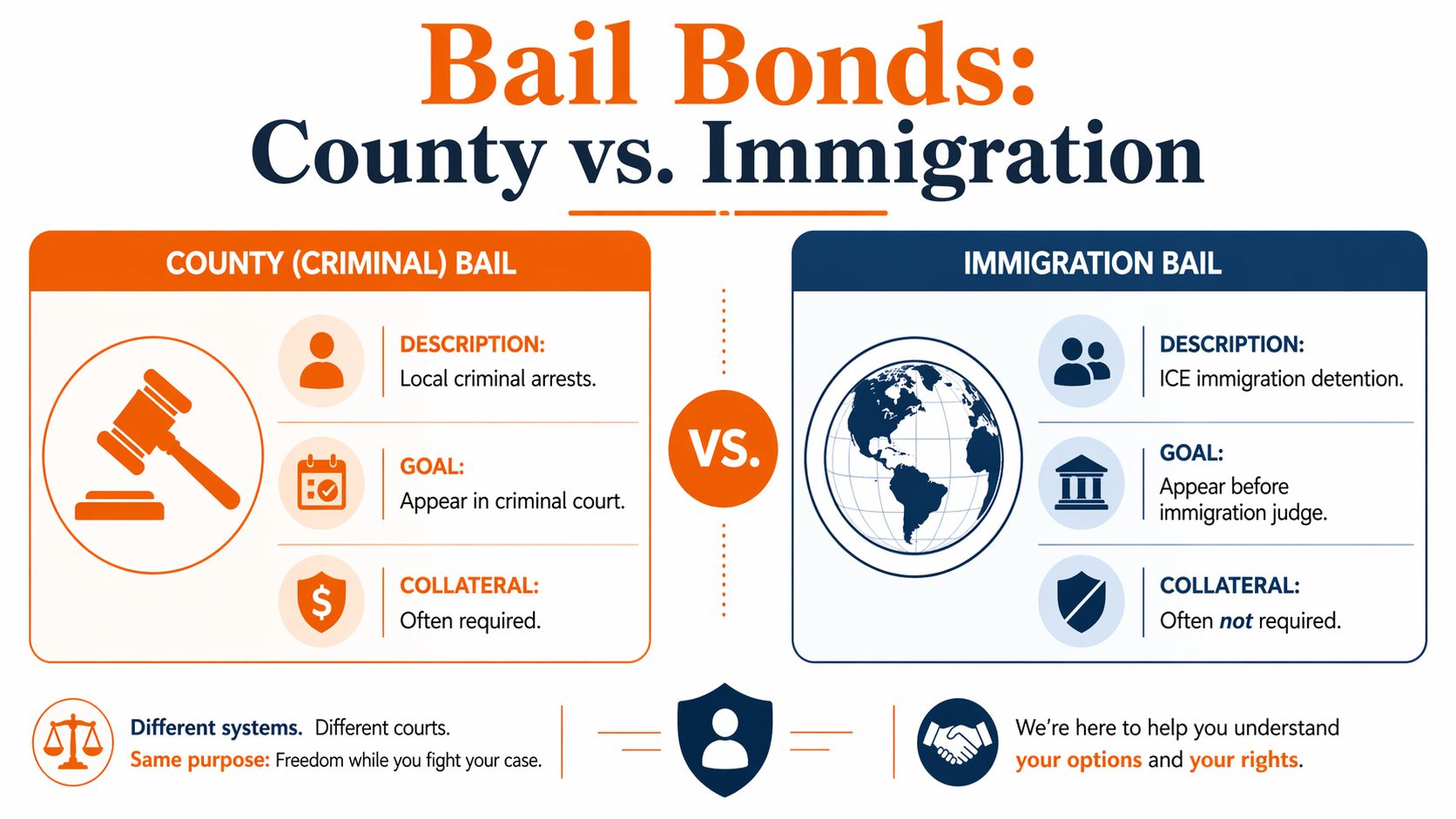
The fastest way to reduce panic is to separate county criminal bail from federal immigration detention.
If someone was arrested in Forsyth County on a local criminal charge, you're dealing with the county jail process and a traditional bail or bond arrangement. That usually means a local bail bondsman, local court obligations, and release tied to a criminal case.
If someone is in ICE custody, you're not dealing with the same playbook. You're dealing with immigration detention, immigration court, and a bond process built around whether the person is likely to appear and whether the government considers them a risk.
What county criminal bail usually means
A county criminal bond is tied to charges like DUI, probation issues, warrants, assault, theft, or other state or local allegations. The core promise is simple. The defendant must return to criminal court.
A local bondsman may discuss payment options, co-signers, and sometimes collateral depending on the case. The goal is fast release from the local facility so the person can get back to work, family, and court preparation.
What immigration bond means instead
An immigration bond concerns an ICE detention matter, not a standard county arrest. The release decision turns on immigration law and federal custody rules. Families asking about immigration bail bonds no collateral are usually trying to solve one very specific problem. They can't put up property or cash security, but they still need a path to release.
Practical rule: Before you ask about price, ask, "Is my loved one in the Forsyth County jail or in ICE custody?"
That one question saves time because the professionals you need are not always the same. A county bail agent who handles local criminal cases isn't automatically the right person for a federal immigration bond matter. Public information on no-collateral immigration bonds is also limited, which is one reason families often need specialists who work in that system regularly, as noted by Broadway Bonds' discussion of limited public data in the bail bond industry.
Why families get confused
A person can have a local arrest and an immigration issue at the same time. That's where confusion usually starts. Someone may post a county bond and still not walk out because an ICE hold changes what happens next.
That doesn't mean the county bond process was handled wrong. It means two systems may be active at once. One is local and criminal. The other is federal and immigration-based.
If you need a plain-language explanation of those terms, this guide on the difference between bail and bond helps clear up the vocabulary before you start making calls.
How to Pursue an Immigration Bond Without Collateral
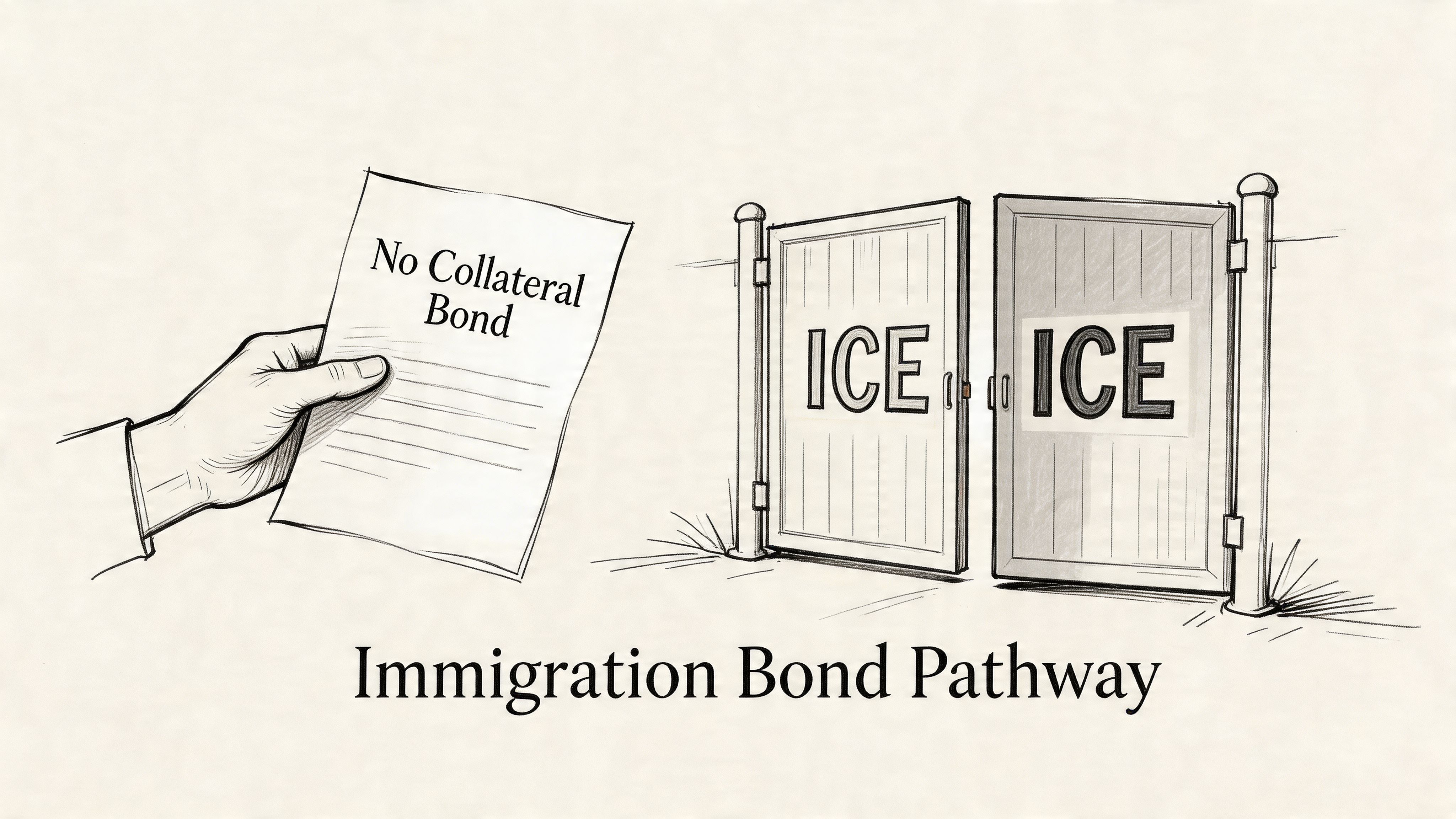
A no-collateral immigration bond isn't impossible. It is, however, harder than many families expect.
The reason is straightforward. If a bond company posts an immigration bond without property or other asset security, it takes on more risk. That means the family usually has to make a strong case on paper. The person in detention must look like someone who will show up, follow instructions, and remain reachable.
What the process usually looks like
In practice, the path tends to move through a few key stages:
Initial bond amount is set
A judge or magistrate sets the starting amount after detention.The family shows financial inability
In no-collateral situations, the person seeking help often has to prove they can't afford even the normal premium without some flexibility. That typically means financial affidavits, income verification, or bank records.The bond company underwrites the case
Expect questions about credit history, background, work, residence, and who will co-sign.A co-signer steps in
In many no-collateral cases, a family member or friend signs an indemnity agreement and takes on serious responsibility if the person doesn't comply.Risk review drives the outcome
The central issue is whether the person appears to be a low flight risk with enough community connection to justify release.
The numbers that matter most
Families should go in with realistic expectations. According to Bail City Bail Bonds' discussion of no-collateral immigration bonds, success rates for detained immigrants obtaining bond release hover around 30.5%, and the median bond amount is often around $7,500. The same source explains that proving financial inability and low flight risk is a core part of the process.
Those numbers don't mean your case can't move forward. They mean preparation matters.
The strongest no-collateral cases usually show stable residence, steady work, family support, and a co-signer who's organized and credible.
What helps and what usually hurts
No-collateral immigration cases are often won or lost on details that families overlook in the first day or two.
What usually helps:
- Strong community ties such as long-term residence, employment, and close family support
- A reliable co-signer who understands the legal and financial responsibility
- Complete financial paperwork delivered quickly and cleanly
- Consistent records that don't contradict each other
What usually hurts:
- Missing documents that slow review
- Weak address history or unstable contact information
- Poor co-signer preparation
- A criminal record that raises danger concerns
- Calling only local criminal bond companies and assuming the process is the same
A family's payment questions are still important, but they come after the bigger issue. The first hurdle is whether the case is one an immigration-focused bond professional will even consider. If you're comparing practical financing ideas on local cases, these bail bond payment options can help you understand the difference between normal county bond arrangements and the much narrower no-collateral immigration setting.
Preparing for an Immigration Bond Hearing What You Need
This part is where many families either get organized or lose momentum.
An immigration bond hearing is not a place for vague explanations. The court and any bond professional reviewing the file want proof. That means documents, names, dates, and a clear picture of why release makes sense.
Build a hearing packet, not a pile of papers
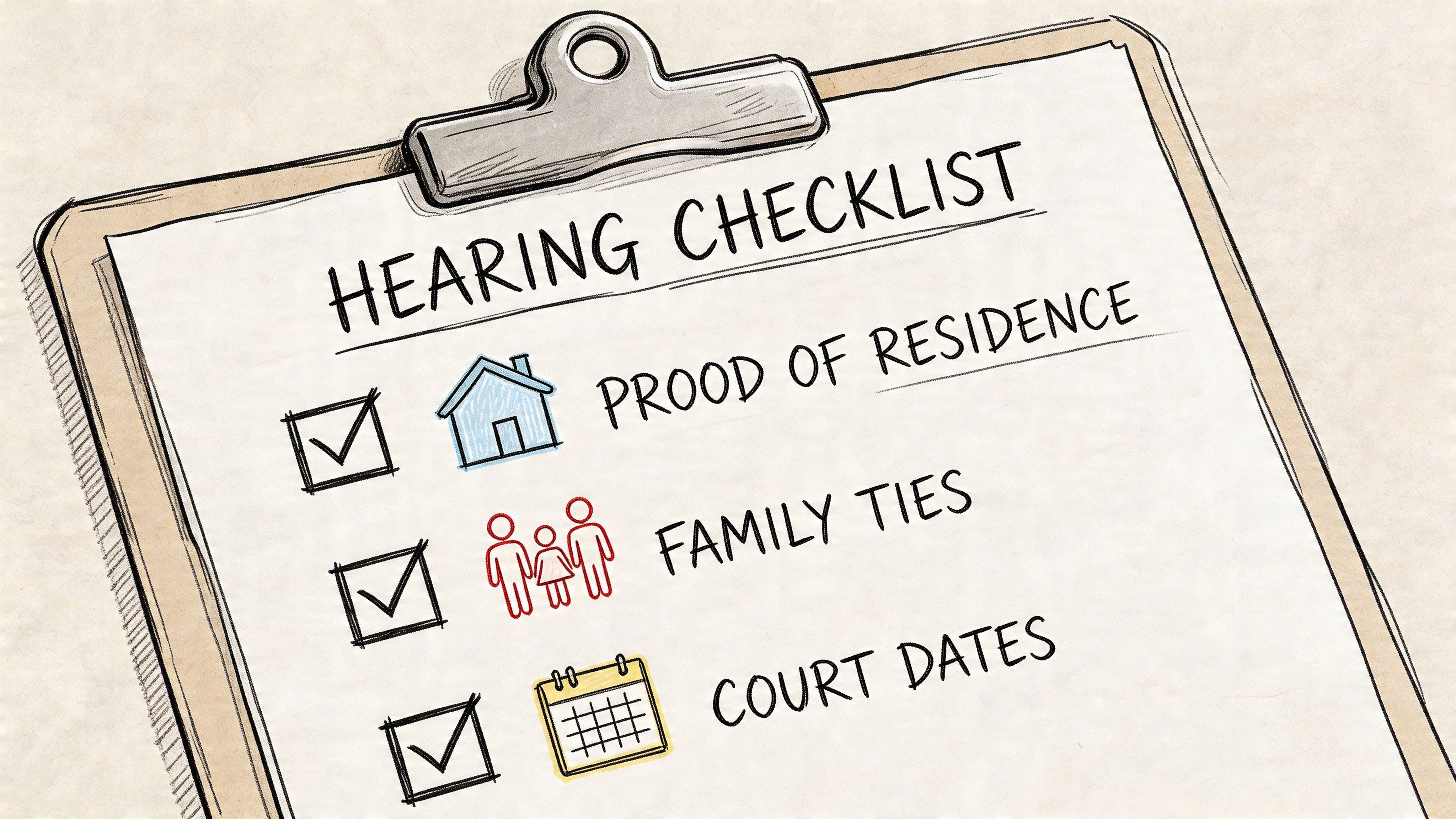
Start gathering records that show the person has roots and structure. Useful items often include:
- Proof of residence such as a lease, mail, or utility records
- Employment support like pay records, an employer letter, or a work history summary
- Family documents that show close relatives and responsibilities
- Letters of support from people who know the person and can speak to reliability
- Financial records that explain why full cash payment or standard collateral isn't realistic
- Identity information so names, addresses, and case details stay consistent
Don't hand over random papers and hope someone sorts them out. Label documents clearly. Keep copies. Put them in a simple order that another person can follow in minutes.
The high-risk issues you can't ignore
Some cases face serious obstacles from the start. According to My Bail Hotline's analysis of no-collateral immigration bonds, bond is denied in over 52% of hearings, outcomes vary sharply by location, a prior criminal history can disqualify 70-80% of applicants, and failing to use an immigration-focused bondsman can increase denial rates by 35%.
That doesn't mean every case with a complication is over. It means guessing is expensive.
If there's any criminal history, even something the family thinks is minor, tell the immigration lawyer and bond specialist immediately. Surprises are what damage credibility.
Who you need on your side
For a true immigration detention case, two people matter most:
| Role | What they do | Why it matters |
|---|---|---|
| Immigration attorney | Handles legal strategy, bond hearing arguments, and case-specific risks | The attorney addresses detention law and hearing presentation |
| Immigration bond specialist | Reviews whether a bond can be written and on what terms | The specialist evaluates underwriting and release logistics |
A general county bondsman isn't a substitute for an immigration attorney. And an attorney still may need a specialized immigration bond company if bond is granted and the family can't pay the full amount directly.
Before any hearing, review the practical basics in this checklist on what you need to bail someone out. The legal system may differ, but the habit of organizing names, booking details, identification, and payment responsibility still applies.
Need Fast Jail Release in Forsyth County for Criminal Charges?
If your loved one is in the Forsyth County jail on criminal charges, this is the part that applies to you.
This is the local emergency one often means when searching for bail bonds near me, 24 hour bail bonds Cumming, bondsman near Forsyth jail, DUI bail bonds, or fast jail release Forsyth County. In that situation, you don't need an immigration bond strategy first. You need a local criminal bail response, and you need it quickly.
What to have ready when you call
The people who move fastest are usually the people who have the right details ready. Try to gather:
- Full legal name of the person in custody
- Date of birth if available
- Where they're being held
- Charge information if you have it
- Any bond amount already set
- Your relationship to the defendant
- Whether there are other issues involved, such as a probation problem, warrant, or possible ICE hold
If you don't have every detail, call anyway. But the more accurate information you provide, the faster a local bondsman can tell you what the next step looks like.
Common local situations
County criminal bonds in Forsyth often involve high-stress calls late at night, early in the morning, or on weekends. The most common urgent categories usually include:
- DUI bail after a traffic stop or accident
- Warrant assistance when someone learns there's an active hold
- Domestic-related charges where release conditions matter
- Drug possession or misdemeanor charges
- Out-of-town arrests involving visitors passing through North Georgia
Each of those situations has its own pace and paperwork. But the same principle applies. A local criminal bond is about getting the person released from county custody while making sure the court obligations are understood.
What a good local bail response looks like
A dependable county bail process should feel clear, not chaotic. You should be told:
| Question | What you need to know |
|---|---|
| Is bond set yet? | Release can't begin until the case reaches the bond stage |
| What amount is required? | The bond amount controls the payment discussion |
| Who can co-sign? | The indemnitor takes on responsibility if the defendant doesn't appear |
| How long could release take? | Timing depends on booking, jail processing, and when the bond is posted |
A fast local bail response doesn't come from panic. It comes from accurate information, immediate contact, and a bondsman who already knows Forsyth County procedures.
For families in Cumming, Dawsonville, Alpharetta, Suwanee, Buford, and nearby communities, the key is not to overcomplicate a local criminal bond by mixing it up with federal immigration detention rules. If it's a county charge, handle it as a county charge first. If an ICE hold exists too, then bring in the right immigration help alongside that process.
Your Immediate Action Plan What to Do Right Now
It is 11:30 at night, your phone is blowing up, and everyone is asking the same question. Who do we call first?
Start by finding out who has custody. That one answer saves time, money, and a lot of bad advice. A county criminal bond and a federal immigration bond are handled through different systems, by different people, with different rules.
Path A for ICE detention
If the person is in immigration custody, shift your effort away from local criminal bond calls and toward federal immigration help. Ask for the detention location, the A-number if anyone has it, and whether bond has already been set, denied, or not addressed yet.
Then contact an immigration attorney and an immigration bond specialist. Ask them:
- Is the person eligible for an immigration bond
- Has a bond amount already been set
- What records or letters should the family gather today
- Who can act as the financially responsible person
- What facts could delay or block release
Keep the information consistent across every form, letter, and phone call. Small mismatches in names, addresses, work history, or family details can create problems you do not need.
Path B for Forsyth County criminal charges
If the person is being held in the Forsyth County jail on local criminal charges, call 24-7 Best Bonding at 770-888-4585.
Be ready to give:
- Defendant's full name
- Date of birth
- Charge or warrant details
- Bond amount, if it has been set
- Your phone number
- Whether you are the co-signer or are helping find one
The office serves Forsyth County from 110 Samaritan Dr, Suite 112, Cumming, GA 30040. This is the right call for local matters such as DUI bail, warrant-related arrests, emergency county bonds, and fast release from county custody.
One more point matters here. If the jail says there is also an ICE hold, a county bond may only solve part of the problem. It can address the local criminal case. It does not cancel federal immigration detention.
Before you make another call
Ask these three questions:
- Is the person in county custody, ICE custody, or both
- Has any bond been set yet
- Who in the family can give accurate information and sign paperwork if needed
If you answer those three questions first, the next call is usually the right one. That is how families get traction fast.
Frequently Asked Questions About Bail Bonds in Forsyth County
Can I get a no-collateral bail bond for a criminal charge like a DUI in Forsyth County
Sometimes, but it depends on the charge, the bond amount, the defendant's history, and the strength of the co-signer. Local criminal no-collateral options are a separate question from immigration bail bonds no collateral. A county bondsman will review risk before offering terms.
What am I responsible for if I co-sign a bail bond
A co-signer takes on real responsibility. If the defendant misses court or violates bond conditions, the co-signer can face financial consequences under the bond agreement. Before signing anything, read the contract and ask exactly what triggers liability.
How do I check for a warrant in Forsyth County
Start with accurate identifying information. A local bail bondsman can often help you understand what information is needed and what the next step should be if a warrant exists. If the person is at immediate risk of arrest, don't wait until after hours to start asking questions.
If my loved one posted county bond but still wasn't released, what could be happening
One possibility is a separate hold, including an immigration hold. Another is a processing delay inside the jail. The important thing is to confirm the exact reason instead of assuming the bond failed.
Who do I call first
Use this quick guide:
| Situation | Primary Contact | Action |
|---|---|---|
| DUI, warrant, or local criminal arrest in Forsyth County | Local bail bondsman | Start the county release process immediately |
| Confirmed ICE detention | Immigration attorney | Review bond eligibility and detention strategy |
| Immigration bond approved but family can't pay full amount | Immigration bond specialist | Ask about underwriting, co-signer requirements, and no-collateral options |
| Unsure whether it's county custody or ICE custody | Jail or detention facility, then the correct professional | Confirm where the person is being held before moving money |
If you're in Cumming, Alpharetta, Suwanee, Buford, Dawsonville, or nearby and need help with a local criminal bond right now, don't wait for the situation to become more complicated than it already is.
When it's a local criminal arrest in Forsyth County, 24-7 Best Bonding is ready to help with fast, courteous, around-the-clock service. Call 770-888-4585 for immediate help with jail release, DUI bail, warrant assistance, and emergency bail bonds in Cumming and surrounding North Georgia communities.