
The call usually comes at the worst time. Late night. Short sentence. “I’m in jail.” Then the next shock hits. Bond is set, and the amount sounds impossible.
If you’re in Forsyth County and you’re trying to figure out how to get someone out fast, don’t freeze on that first number. The first bond amount isn’t always the final word. In many cases, the court can be asked to take a second look.
That’s where people start asking what is a bond reduction hearing, and whether it can help with fast jail release in Forsyth County. It can. But only if you move quickly, get organized, and stop guessing.
Your Loved One Was Arrested What Happens Next
A lot of families make the same mistake in the first hour. They hear the bond amount, assume nothing can change, and spend the rest of the night panicking. That wastes time.
A bond reduction hearing is a court proceeding where a judge reevaluates and potentially lowers an initially set bail or bond amount, typically requested if the defendant believes it’s unaffordable or unreasonable, often within 24 hours of arrest or at arraignment, according to this explanation of reduction hearings. In plain English, it’s the court’s chance to decide whether the original number was too high for the facts of the case.
If your son, daughter, spouse, or friend was arrested in Cumming, Alpharetta, Suwanee, Buford, or nearby, you need to focus on two tracks at the same time. One track is the legal side. Can the bond be lowered? The other is the practical side. If it is lowered, how will you post it immediately?
The first few hours matter
Right after arrest, everything feels rushed and unclear. Booking happens. Charges are listed. Bond may be set quickly. Families are often left trying to decode jail procedures while also searching for 24 hour bail bonds near me, bail bondsman near Forsyth jail, or how to post bail.
That’s normal. But the smarter move is to get clear on the process and stop reacting blindly.
Practical rule: Don’t assume the first bond amount is fixed. Ask right away whether a bond reduction request is possible and what must be gathered before the hearing.
You also need to understand the bigger sequence after an arrest, because bond is only one part of it. If you need that timeline laid out clearly, this guide on what happens after arrest in Forsyth County is worth reading.
What families should do immediately
- Confirm the jail location: Make sure the person is in the Forsyth County system and verify the booking status.
- Write down the charge information: Charge level affects how the court views release conditions.
- Find out the bond amount: You need the exact number, not an estimate from a relative or friend.
- Start gathering personal information: Job details, home address, family ties, and local connections can matter.
- Think ahead about payment: If the judge lowers bond, you want to be ready to act on the new amount without delay.
When people search for emergency bail bonds, what they usually need is not just money. They need a plan. A bond reduction hearing can be part of that plan.
Understanding Bond Reduction Hearings in Simple Terms
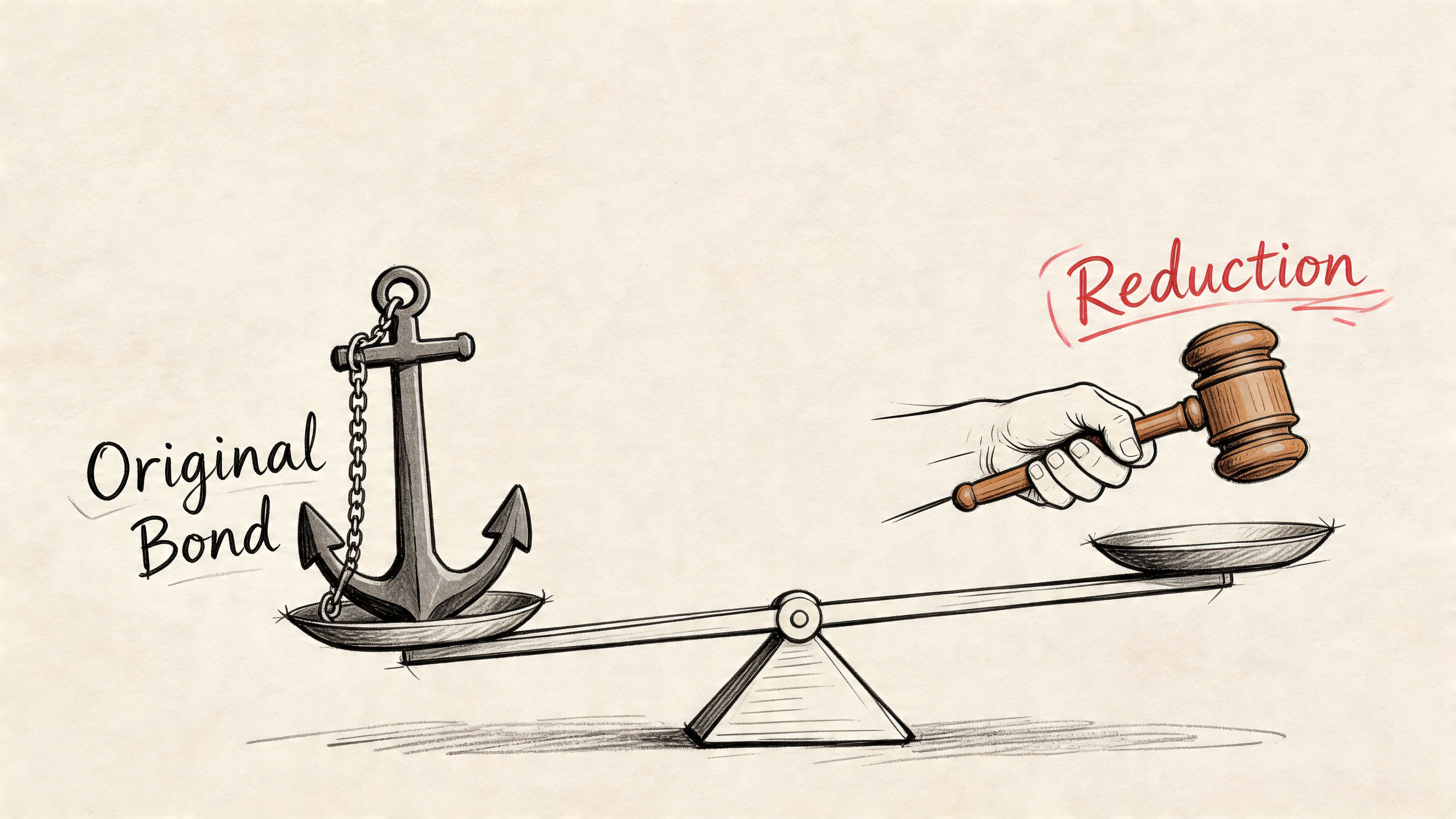
Your family hears a bond amount, and the number is way out of reach. That does not mean the case is stuck there. A bond reduction hearing gives the judge a second look with better information, and in Forsyth County that second look can be the difference between sitting in jail and getting released through a local bondsman the same day.
The first bond amount is often set fast, with limited facts in front of the court. The judge may know the charge and basic booking details, but not the full picture of the person’s life. A bond reduction hearing is the process for putting that missing information in front of the judge so the bond amount matches the actual risk, not just the arrest paperwork.
Why families in Forsyth County need to understand this fast
A lower bond is not just a legal win. It changes what you can do tonight or tomorrow morning.
If the current bond is too high for a bail bond to be affordable, a reduction hearing may bring it into a range where you can call a Forsyth County bondsman and get release moving right away. That practical link gets missed on a lot of legal sites. Families do not need theory at 2 AM. They need a number they can work with and a release plan that starts as soon as the judge rules.
Here is the basic flow:
| Stage | What the court has | What it means for release |
|---|---|---|
| Initial bond setting | Arrest details and charge information | Bond may be set higher than the family can handle |
| Bond reduction request | Added facts about work, residence, family, and finances | The judge reviews whether the amount should come down |
| Hearing decision | A fuller picture of risk and stability | If bond drops, you may be able to post through a local bondsman without delay |
What the judge is actually deciding
The judge is usually focused on a short list of practical questions.
- Will this person come back to court?
- Does release create a safety problem?
- Is the current bond amount higher than it needs to be?
- Did the court miss important facts the first time?
Those questions matter because they line up with what gets people out. If your loved one has a stable address, local family, a real job, and a history of showing up for court, those facts belong in front of the judge. If the bond comes down to an amount you can post, the hearing has done exactly what your family needs it to do.
If you want the courtroom side explained in more detail, read this guide on what happens at a bail hearing.
A bond reduction hearing is a request for a fairer bond amount based on real facts. In Forsyth County, that can directly open the door to getting a bond posted fast instead of waiting in jail because the first number was too high.
How Bond Reduction Works in Forsyth County Georgia
Georgia doesn’t treat bond reduction as a casual request. It runs through a defined court process. If the initial bond amount is out of reach, the defendant can formally ask the court to reduce it, and the judge makes that decision using a documented record rather than guesswork, as described in the Forsyth County court administrative order.
That’s the first point families need to understand. In Forsyth County, a bond reduction request works best when it’s built on facts, not emotion.
What a Forsyth County judge is looking at
Judges don’t lower bond because a family says the number feels unfair. They lower bond when the information supports a lower risk picture than the first setting suggested.
A judge may weigh things like these:
- Local roots: Does the person live in Cumming, Buford, Suwanee, Alpharetta, Dawsonville, or nearby?
- Employment stability: Is there a real job to return to, with an employer who can confirm it?
- Family responsibilities: Does the person support children, parents, or a household locally?
- Criminal background: A clean or limited record usually helps more than a repeated history of trouble.
- Court reliability: If the person has a history of appearing when required, that matters.
Why local facts matter more than general promises
Saying “he’s not going anywhere” won’t do much in court. Showing that he has lived at the same address, works the same job, and has family in Forsyth County is stronger. Judges want specifics.
That’s where many families lose ground. They rely on broad statements when they should be collecting proof.
A useful way to think about it is this:
| Weak argument | Stronger argument |
|---|---|
| “She’s a good person.” | “She has stable local housing, steady work, and family in the county.” |
| “The bond is too high.” | “The bond is beyond her means, and she has reasons to remain in the area and appear.” |
| “He won’t run.” | “He has ongoing employment and established ties that support court appearance.” |
What this means for common charges
For many people dealing with DUI bail, misdemeanor arrests, probation issues, or other criminal charges, the first bond amount may be driven by the charge label more than the full person behind the case. The hearing is the chance to put that person back into the picture.
Local reality: In Forsyth County, broad claims don’t carry much weight. Concrete details do.
That’s why the most useful preparation isn’t panic-calling ten different people for opinions. It’s pulling together records, names, addresses, job details, and anything that shows the defendant is tied to the community and can follow court conditions.
If you’re trying to help with inmate release in Forsyth County, this is the practical takeaway. The legal process is structured. The better the record, the better the chance the judge sees a lower bond as reasonable.
Navigating the Bond Reduction Hearing Process
Families usually want one answer. “How long is this going to take?” The honest answer is that it depends on the court calendar, the charge, and how quickly the request is filed.
Georgia’s Superior Court process emphasizes prompt hearings, but in Forsyth County, calendar availability can stretch to 5 to 10 business days, according to this discussion of bail reduction hearing timing. That delay is one reason fast action matters. If you wait to get organized, you lose valuable time.
The usual sequence
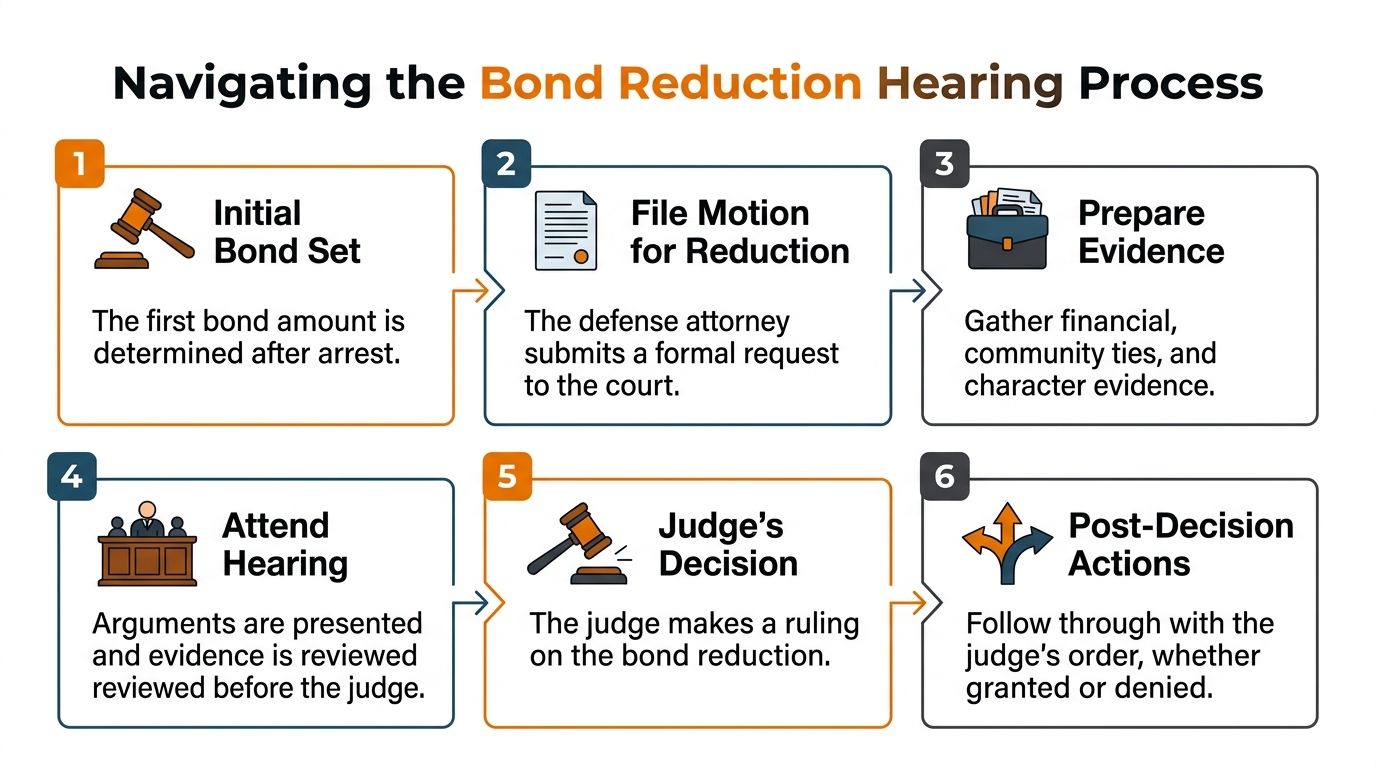
Here’s what the process often looks like in practice:
Initial bond is set
This happens soon after arrest or at the first court appearance.A motion for reduction is filed
The defense asks the court to lower the amount.Supporting information is gathered
Employment proof, residence records, family information, and other documents are assembled.The hearing is scheduled
Delays can happen at this point, especially if the calendar is crowded.Both sides speak to the judge
The prosecutor may argue risk. The defense responds with facts that support a lower bond.The judge rules
The judge can leave bond where it is, lower it, or deny a change.
Where families can help without making things worse
A lot of relatives hurt the effort by calling the court repeatedly, venting online, or trying to write emotional statements with no useful detail. That usually doesn’t help.
What helps is this:
- Collect paperwork quickly: Pay records, lease documents, utility bills, and employer contacts.
- Stay consistent: Make sure everyone gives the same accurate address, work status, and family information.
- Be reachable: When the hearing gets scheduled or the court asks for something, delays often come from missing calls.
- Plan for release in advance: If bond is reduced, you don’t want to start figuring out the logistics afterward.
What to expect at the hearing
The hearing itself is usually shorter than families expect. The court isn’t there for a long life story. The judge wants focused facts tied to release risk and affordability.
If the court lowers bond and you aren’t ready to move the same day, you’ve lost the biggest advantage the hearing gave you.
That’s why people searching 24 hour bail bonds, fast jail release, and how to post bail in Forsyth County are asking the right questions. The hearing and the release plan should run together, not separately.
Evidence and Arguments That Win Reductions
Results usually depend. Not on dramatic speeches. On paperwork, credibility, and a clean argument.
Research from similar jurisdictions indicates that 40 to 60 percent of petitions receive at least a partial reduction, and most successful reductions fall in the 25 to 50 percent range, according to the UNC-affiliated report on bond reduction outcomes. That doesn’t mean any one case will win. It does mean preparation matters enough to make the hearing worth taking seriously.

The evidence that actually helps
Start with proof that is easy for a judge to trust.
- Job records: Pay stubs, a letter from an employer, or a work schedule.
- Residence proof: Lease, mortgage statement, or utility bill showing stable housing.
- Family support details: Information showing who depends on the person and where those family members live.
- Court history: Any record showing the person has appeared in court before when required.
- Financial reality: Documents that show the current bond amount is not realistically affordable.
The arguments that land better in court
Some arguments are weak no matter how emotional they sound. Others line up with what judges are already looking for.
Better arguments often sound like this:
- The defendant has strong community ties in Forsyth County or nearby North Georgia.
- The defendant has stable employment and a reason to return to work quickly.
- The defendant has family obligations that support staying local.
- The current amount is higher than necessary to secure appearance in court.
- The defendant can comply with conditions if released.
What families should avoid
Don’t exaggerate. Don’t hide prior trouble. Don’t promise perfect behavior. If the court spots one false claim, the rest of your presentation loses value.
A short checklist helps:
| Bring this | Avoid this |
|---|---|
| Verifiable documents | Unsupported claims |
| Accurate work history | Inflated income statements |
| Real local contacts | Vague promises |
| Clear housing proof | Last-minute stories that can’t be checked |
Hard truth: A prepared file beats a heartfelt speech almost every time.
If you’re dealing with affordable bail bonds, no collateral bail bonds, or trying to make a reduced DUI bail amount manageable, this is the hearing that can create that opening. But the hearing only helps if the judge is given something solid to rely on.
What to Do After the Judge's Decision
Once the judge rules, you need to move from courtroom thinking to release thinking. Don’t sit around “waiting to see” what happens next. The next step depends entirely on whether the bond was reduced.
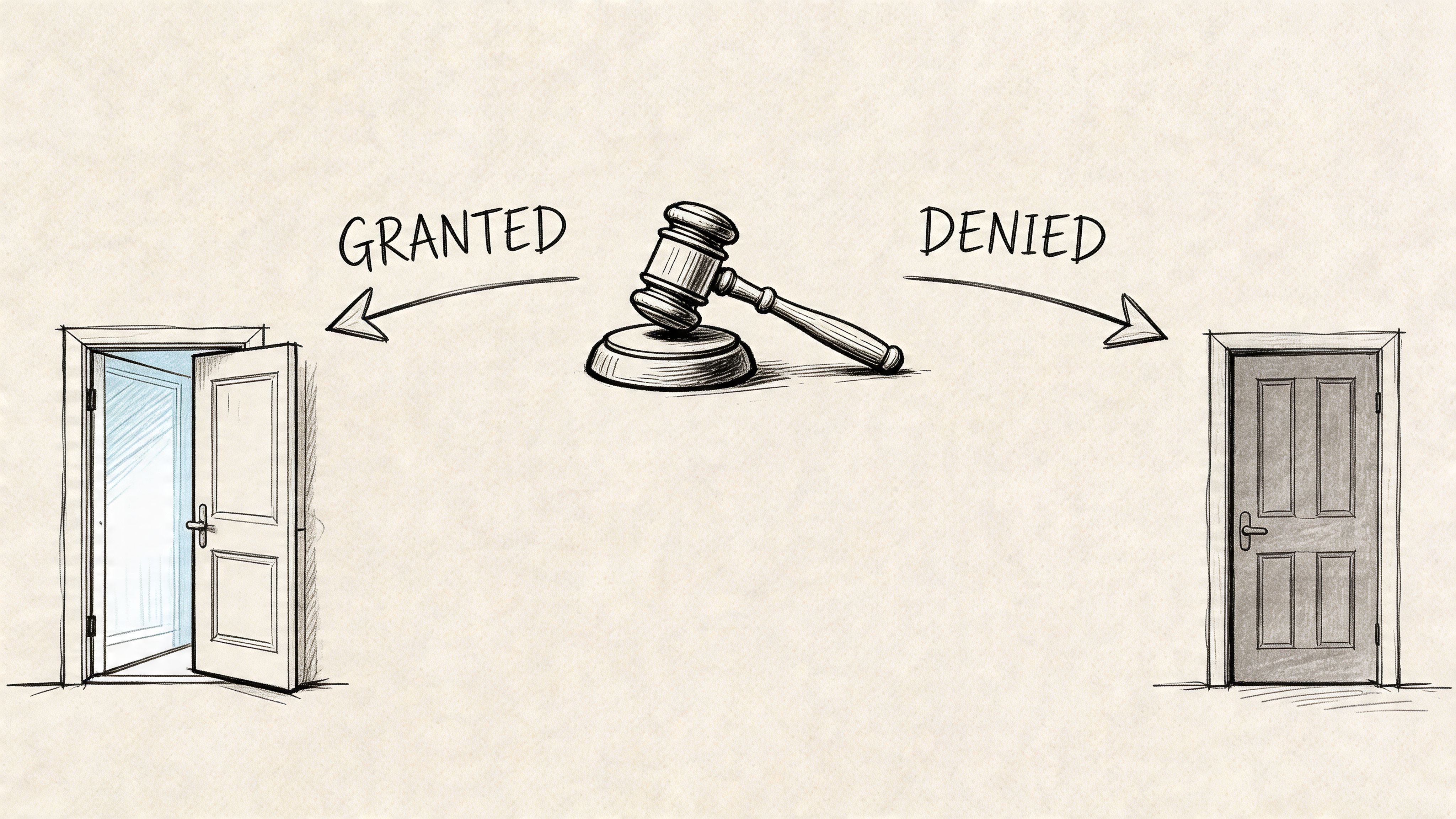
If the judge grants the reduction
Act immediately. In bail bond arrangements, defendants often pay 10 percent of the bond to a bondsman while the bondsman covers the remaining 90 percent, as described in this overview of pretrial release and bond practice. That’s why even a modest reduction can make release possible when the original amount wasn’t.
Your checklist is simple:
- Confirm the new bond amount
- Ask about any added release conditions
- Get identification and payment details ready
- Start the posting process right away
If your goal is fast jail release, speed after the ruling matters almost as much as the ruling itself.
If the judge denies the reduction
A denial is frustrating, but it isn’t the end of the road. It just means the original amount remains in place unless the court changes it later.
At that point, families usually have to make a practical decision:
| Outcome | Immediate response |
|---|---|
| Reduction granted | Prepare to post the lower bond quickly |
| Reduction denied | Decide whether to post the original bond amount through a bondsman |
Keep your focus on release, not outrage
People lose time after a denial by arguing about fairness. I understand the anger. It just doesn’t help the person in custody.
What helps is asking the right questions right away. What amount is now required. What paperwork is needed. How fast can posting happen. What conditions apply after release. That’s how you turn a court ruling into actual movement.
Common Questions About Bond Reduction and Bail
Do you need a lawyer for a bond reduction hearing
In practical terms, yes, that’s usually the strongest path. A hearing works better when someone knows how to present the right facts in the right format. Families can gather documents and support, but court arguments need structure.
Can bond be reduced just because the family can’t afford it
Not by itself. Financial hardship matters, but judges also look at whether the person is likely to return to court and whether release creates a public safety concern. Affordability helps most when it’s paired with proof of stability.
How fast can someone get out after bond is reduced
That depends on how quickly the order is processed, how fast the bond is posted, and how long jail release takes on that day. The practical lesson is simple. Be ready before the ruling, not after.
What should you gather before the hearing
Use this short list:
- Work proof: Pay stubs, schedule, employer contact
- Address proof: Lease, bill, or other housing record
- Family information: Names, local ties, dependents
- Money documents: Enough to show the current amount is out of reach
- Court history: Anything showing prior compliance
What should you ask a bail bondsman
Ask direct questions. You don’t need a sales pitch at a time like this.
- How quickly can you start the bond once the amount is confirmed
- What percentage is required
- What documents do you need from me tonight
- Do you handle Forsyth County jail releases regularly
- Are payment options available if the premium is hard to manage
- What happens if the defendant misses court
Can a reduction help with common charges like DUI bail or warrant-related arrests
Yes, it can. Whether it will depends on the charge, the person’s history, and the facts presented to the judge. For DUI bail, warrant assistance, and other common local situations, the same basic rule applies. The court wants proof that the defendant can be released responsibly.
What if the hearing takes too long to get scheduled
That’s one of the most stressful parts of the process in Forsyth County. While waiting, use the time wisely. Gather documents. Stay reachable. Make sure everyone involved knows the exact charges, booking details, and release plan. Delay is hard enough without adding confusion.
If you’re asking what is a bond reduction hearing, the shortest honest answer is this: it’s your chance to ask the court to replace a rushed first number with a more informed decision. Sometimes that changes everything.
If your family needs help right now, 24-7 Best Bonding is available around the clock for Forsyth County bail help. Whether you’re dealing with a late-night arrest in Cumming, need a bail bondsman near Forsyth jail, or you’re trying to secure fast release after a bond amount is set, their team can walk you through the next step clearly and without the runaround. Call 770-888-4585 or visit them at 110 Samaritan Dr, Suite 112, Cumming, GA 30040 for direct help when time matters.