
If you're dealing with a release out of Forsyth County and someone just told you that an ankle monitor alcohol condition will be part of the bond, you're probably juggling two problems at once. First, you want to get out of jail fast. Second, you need to understand a device you may have never seen before, under rules that can send you right back if you get them wrong.
That confusion is normal. People in Cumming, Dawsonville, Alpharetta, Suwanee, Buford, and across North Georgia often hear about bond conditions in a rushed setting, with stress high and details coming fast. One minute you're asking about a bondsman near Forsyth jail or how to post bail. The next minute you're being told you can't drink, can't tamper with a monitor, and need to report for installation.
Courts use alcohol monitoring because they want proof of sobriety while a case is pending. This is common in DUI bail and other alcohol-related cases. It lets a person stay in the community instead of sitting in jail, but only if they follow the rules closely.
This isn't new technology. SCRAM Continuous Alcohol Monitoring® reached more than 2 billion alcohol tests in 2016, a marker of how widely this kind of monitoring has been used in community corrections and DUI management across the United States, the UK, and Canada, as reported in the SCRAM CAM milestone announcement.
Your Guide to Court-Ordered Alcohol Monitoring in Forsyth County
When a judge orders alcohol monitoring, the court isn't making a suggestion. It's setting a release condition. If you're out on bond in Forsyth County, that condition matters just as much as showing up to court.
For many defendants, the hard part isn't only getting released. It's staying released. That's where people get tripped up. They focus on the emergency bail bonds side of the problem, then underestimate the daily compliance side.
Why this condition shows up on bond
Alcohol monitoring is often tied to cases where the court believes drinking could create a safety issue or a repeat-offense risk. DUI charges are the most obvious example, but they aren't the only one. Any case with alcohol in the background can lead to a no-drinking order backed by electronic monitoring.
In practical terms, the court is saying this: you can remain out of custody, but only if sobriety is verified.
Practical rule: Treat the monitor like a direct court order attached to your ankle. If the device reports a problem, the legal problem follows right behind it.
What people usually get wrong
The most common misunderstanding is thinking the monitor only matters if someone drinks on purpose. That's not a safe assumption. These devices are designed to detect alcohol through the skin, and everyday products can become part of the compliance conversation if you're careless.
Another mistake is assuming the bondsman, the court, and the monitoring company all do the same job. They don't. The court orders the condition. A third-party provider usually installs and monitors the device. Your bond situation can be affected if you don't follow the monitoring terms.
What matters right now
If you're searching for Forsyth County bail bonds, 24 hour bail bonds near me, or fast jail release after an arrest, keep your focus on these three things:
- Get the release terms in writing: You need to know exactly what the judge ordered.
- Ask where and when installation happens: Don't guess.
- Start living like you're being watched immediately: Because you are.
That mindset keeps small mistakes from turning into bond violations.
How an Alcohol Ankle Monitor Actually Works
A Forsyth County client gets released, goes home, uses mouthwash before bed, and wakes up worried the ankle monitor may have registered alcohol. That kind of panic is common, and it helps to know what the device is doing and what it is not doing.
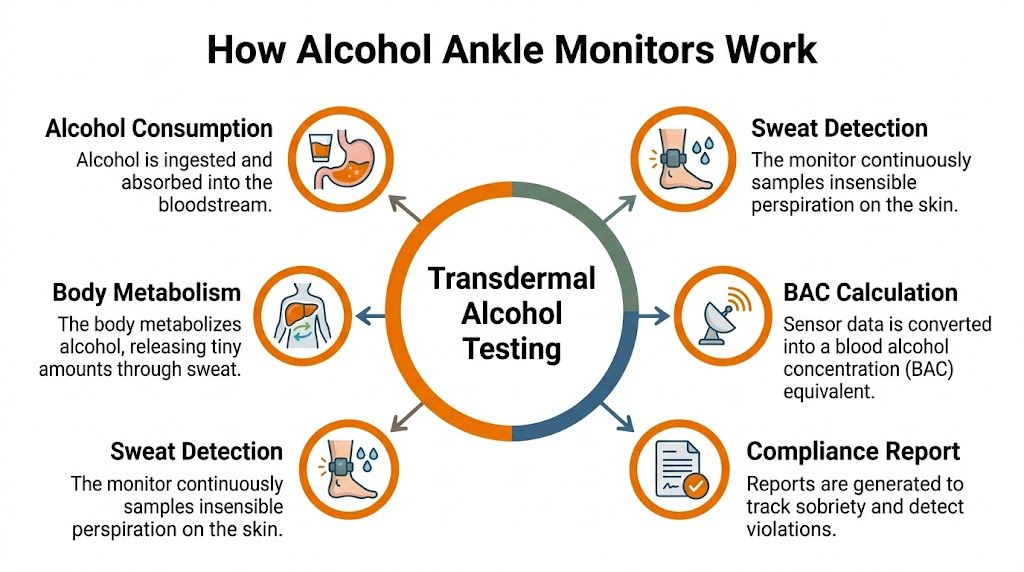
An alcohol monitor works like a breath test that reads through your skin over time instead of through one hard blow into a tube. It does not watch you second by second like a camera. It samples for alcohol your body releases through perspiration, stores that information, and sends it in for review.
What the device is measuring
These monitors use transdermal alcohol detection. After a person drinks, alcohol moves into the bloodstream. A small portion then leaves the body through the skin. The monitor picks up tiny samples of perspiration around the ankle and uses a fuel-cell sensor to check for ethanol, which is the same type of alcohol found in beer, liquor, wine, and many household products.
With SCRAM CAM, the device samples on a regular schedule, often every 30 minutes. The company explains that it passively collects insensible perspiration and sends the results wirelessly for review in this SCRAM CAM overview.
If you want a simpler explanation to read alongside your bond paperwork, this guide on how an alcohol ankle bracelet works lays it out in plain language.
Why the alert is not immediate
This confuses a lot of people. A breath test measures alcohol in your breath right then. An ankle monitor is tracking what shows up through the skin later.
The same source notes there can be about a 90-minute lag between peak blood alcohol levels and the transdermal reading fully appearing. So a person does not drink and get an instant alarm like a smoke detector. The system is built to review a pattern over time.
That timing matters in real life. Some people assume late-night drinking will be gone before anyone notices. That is a bad bet. The device is designed to catch the rise and fall of alcohol readings, not just one isolated moment.
Why courts rely on them, and why false positives still matter
Courts use these monitors because they are trusted enough to document drinking events and possible tampering. A GovTech report on SCRAM monitor performance describes strong accuracy and correlation with blood or breath alcohol levels.
Still, a monitor is part of a review process, not magic. Monitoring staff look at the full pattern, including absorption, elimination, and possible environmental exposure. That is why products like cologne, body spray, certain cleaners, and alcohol-based hygiene items can create problems if you are careless. They may not produce the same pattern as drinking, but they can trigger questions, extra review, and a stressful phone call you did not need.
In Forsyth County, that practical point matters as much as the technology. A violation issue can bring added fees, extra reporting requirements, court attention, or trouble with your bond. The cost of staying compliant is not just the monthly monitor charge. It can include installation fees, service appointments, transportation, missed work, and replacing everyday products around the house.
What happens after a reading is flagged
The monitor records the event and sends the data to the monitoring system. Staff then review possible positives, tampers, and strap issues before reporting up the chain according to the rules of the program.
For a client out on bond, that means the ankle unit is only one part of the system. The other part is human review, paperwork, and court response.
That is also where a local bondsman helps in a practical way. Posting bond is only the first step. Clients often need help understanding what the court order means day to day, what products to avoid, how to document a problem, and who to call fast if there is a missed appointment or a monitor issue. Clear guidance early can keep a small mistake from turning into a bond violation.
Common Types of Alcohol Monitoring Devices
A lot of clients hear "alcohol ankle monitor" and assume every device works the same way. In practice, the type of unit on your leg can change your daily routine, your reporting burden, and the kinds of violations you have to watch for in Forsyth County.
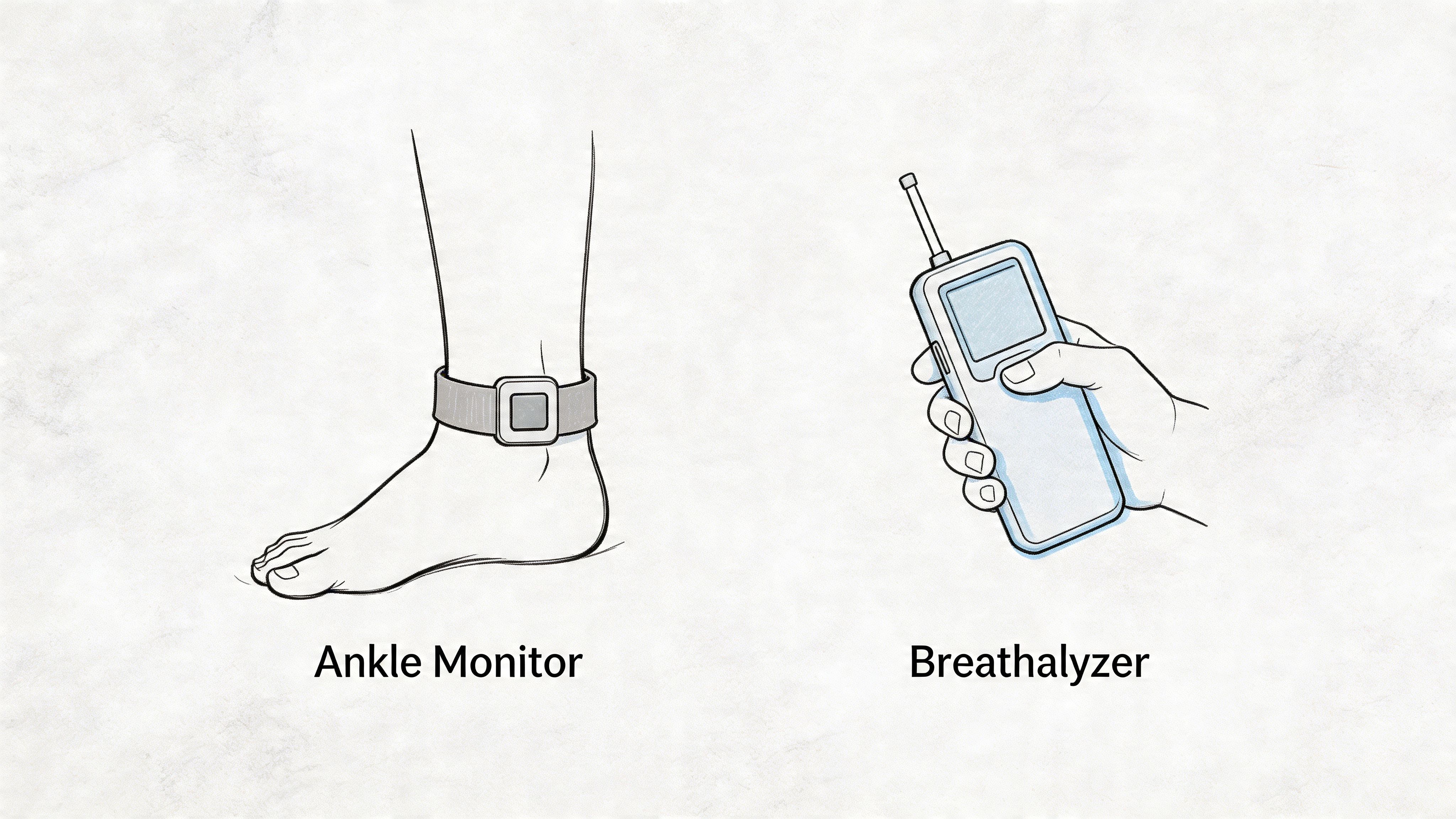
Two names come up often in Georgia cases: SCRAM CAM and BI TAD. Both use transdermal testing, which means they check for alcohol that leaves the body through the skin. The difference is their job. SCRAM CAM is built mainly to monitor alcohol use. BI TAD combines alcohol monitoring with home-based supervision features.
If you want a broader overview beyond alcohol-specific devices, this guide to types of ankle monitors helps explain how courts use different systems for different restrictions.
Alcohol Monitor Feature Comparison
| Feature | SCRAM CAM | BI TAD |
|---|---|---|
| Primary role | Alcohol monitoring | Alcohol monitoring plus RF house arrest |
| Testing method | Transdermal alcohol detection | Transdermal alcohol detection |
| Sampling pattern | Continuous scheduled sampling | Continuous pattern monitoring |
| Curfew support | Not the main focus | Built to support curfew compliance |
| Home component | May depend on separate setup | Includes a home-based RF component |
| Main compliance concern | Drinking, tampers, strap issues | Drinking, tampers, and curfew or home-presence problems |
What to expect from SCRAM CAM
SCRAM CAM is the device many defendants recognize first. Courts often use it when the main concern is alcohol use while the case is pending.
That usually creates a simpler rule set, but "simpler" does not mean easy. You still have to avoid drinking, avoid alcohol-heavy products around the device, keep your appointments, and respond quickly if the provider contacts you about a reading. If there is a flagged event, the review process can still lead to stress, missed work, extra reporting, or a violation hearing.
What to expect from BI TAD
BI TAD adds another layer. According to BI's product information, it combines transdermal alcohol monitoring with RF home supervision. In plain terms, the court may be checking two things at once: whether you drank and whether you were where you were supposed to be.
That matters more than many people realize. A client can stay sober and still get into trouble by missing curfew, stepping outside the permitted range, or mishandling the home unit. It works like having two separate conditions folded into one piece of equipment.
Why the distinction matters in real life
From a client's side, the biggest question is not which brand name sounds more advanced. Instead, the key question is what the court expects you to do every day.
A dedicated alcohol monitor usually means your focus stays on exposure risks, testing issues, and service compliance. A combined alcohol and RF device can add transportation planning, curfew timing, work-schedule conflicts, and household coordination if you live with other people. Those practical details can affect cost too. Extra appointments, missed hours at work, rides to service visits, and replacement products at home all add up.
Ask the monitoring provider direct questions before a small misunderstanding turns into a bigger problem:
- What exactly does this device track?
- Does it also enforce curfew or home confinement?
- How are readings reviewed?
- What happens if I have a work conflict or equipment problem?
- Who do I call first if something goes wrong?
A local bondsman helps by answering those day-to-day compliance questions in plain English. Posting the bond is only the first step. Clear advice about the specific device on your case can help you avoid preventable mistakes, especially when false positives, missed appointments, or curfew issues could put your release at risk.
Understanding Your Bail Conditions in Forsyth County
A monitor only becomes part of your life because a judge puts it there. That's why it helps to stop thinking about the device as a piece of hardware and start thinking about it as part of your release order.
In Forsyth County, bond conditions can vary from case to case. One defendant may get a straight financial bond. Another may get a bond with added terms like no alcohol use, no contact with certain people, curfew, treatment, or electronic monitoring. If alcohol is part of the alleged conduct, a judge may view continuous testing as a way to reduce risk while allowing release.
Why courts use this condition
A no-alcohol condition backed by monitoring gives the court something more concrete than a promise. It creates a record. That can matter in DUI cases, repeat cases, or situations where the judge believes relapse or drinking could create a new problem while the case is pending.
From the court's point of view, this can serve two goals at once:
- Community protection: The court wants fewer risky incidents before trial.
- Release flexibility: The court may allow someone to remain at home, work, and prepare for court instead of staying jailed.
That second point matters. An alcohol monitor can feel restrictive, but it may also be the reason a person is allowed out.
What bond compliance really means
Many people hear "bond violation" and think only of missing court. That's too narrow. In practice, violating a release condition can include drinking, tampering with the device, failing to install it on time, ignoring reporting instructions, or falling out of compliance in some other way.
A judge doesn't have to treat those mistakes lightly just because the original arrest wasn't violent. If the release order says no alcohol and verified monitoring is required, then compliance becomes part of your legal survival strategy.
Questions to ask before you leave custody or soon after
If you're arranging DUI bail in Forsyth County or helping with inmate release Forsyth County, get clear answers to these questions:
- Was alcohol monitoring ordered immediately, or only after a later hearing?
- Who is the approved provider?
- Is there a deadline for installation?
- Are there any related curfew or travel limits?
- Who must be notified if there is a medical or technical issue?
Courts usually care less about excuses than about whether you followed instructions fast and documented what happened.
Local reality
Forsyth County cases move through local court procedures, and timing matters. The bond may be posted quickly, but the monitoring condition can still control when release is completed or what you must do right after release. That's why people searching for affordable bail bonds, no collateral bail bonds, or fast jail release need to think beyond the bond premium itself. Release is only the first step. Ongoing compliance is what keeps the door from swinging back open.
How to Stay Compliant and Avoid Common Violations
This is the part that keeps people out of trouble. Most violations don't start with some dramatic act. They start with a shortcut, a bad assumption, or a failure to treat the monitor like sensitive evidence.
The biggest mistake is thinking only drinking matters
Drinking matters most, of course. But it's not the only issue. SCRAM monitors can register false positives from environmental alcohol, such as hand sanitizers or lotions, and that gap between a reading and actual drinking is one reason defendants need to be careful and document exposures, as discussed in the Berkeley Law paper on challenging SCRAM evidence.
That doesn't mean the answer is to argue with the device after the fact. The better approach is prevention.
Daily habits that protect you
Use a routine. People who stay compliant usually make their day boring on purpose.
- Read labels: Avoid products with alcohol around the ankle area. Lotions, sprays, cleaning products, and some hygiene products can create unnecessary risk.
- Keep the device clean the approved way: Follow the provider's instructions exactly. Don't improvise with strong cleaners.
- Protect the area around the monitor: Avoid wrapping, covering, or stuffing material around it.
- Plan for work exposure: If your job involves solvents, sanitizers, cleaners, or similar products, tell your lawyer and monitoring provider early.
- Save receipts and notes: If you used a product because you had no choice, document it.
Tampering is broader than people think
Cutting the strap is a clear violation. But tampering can include more than obvious removal attempts. If the device uses contact checks, temperature checks, or other anti-tamper systems, then blocking normal operation can trigger a report even when you think you were only "making it more comfortable."
Don't try home fixes. Don't put anything under the strap unless the provider tells you to. Don't test the limits.
One safe rule: If you're about to do something because you hope the monitor won't notice, don't do it.
Handle discomfort the right way
Some people wear these devices without major physical issues. Others deal with rubbing, pressure, or skin irritation. There has also been litigation alleging injuries from prolonged wear. If you're having a medical problem, don't ignore it and don't take matters into your own hands.
Use this approach instead:
- Photograph the area clearly
- Notify the monitoring company
- Notify your lawyer
- Follow medical advice if treatment is needed
- Keep records of every call, message, and visit
That paper trail matters. It shows you responded responsibly instead of stopping compliance.
What to do if you think a reading is wrong
Stay calm and move fast. A panicked call with no details won't help much. A documented report might.
Create a simple record:
| Situation | What to record |
|---|---|
| Product exposure | Product name, time used, where used |
| Work-related contact | Task performed, supervisor name, area of exposure |
| Skin issue | Photos, symptoms, date noticed |
| Device problem | Time of issue, what happened, who you called |
| Medical visit | Clinic name, discharge papers, instructions |
If you're on bond, your job is to show that you took compliance seriously from the start. Courts respond better to documented facts than to general complaints.
The Ankle Monitor Installation Process and Costs
The first day after release can feel like a race. You are trying to get home, call work, figure out court dates, and then learn you also have to report for alcohol monitoring. In Forsyth County, that step is not something to put off. If the order says install by a certain time, treat that deadline like a court appearance.
What installation usually looks like
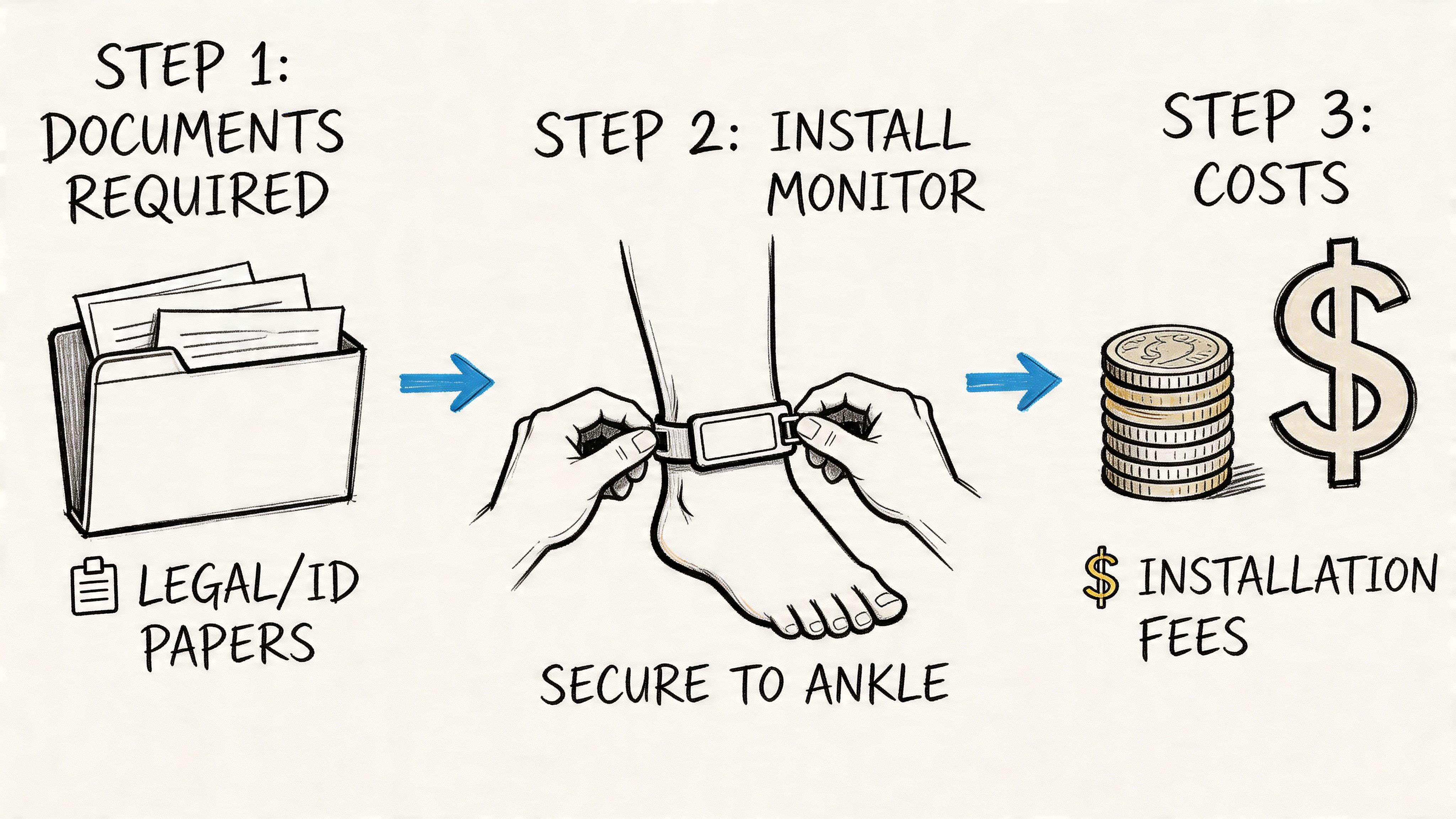
The install appointment is usually simple, but it moves fast. A staff member verifies your identity, reviews the court order, places the device on your ankle, and explains the rules you are expected to follow from that point on. Some clients also get instructions about charging equipment, reporting times, or follow-up visits, depending on the system ordered in their case.
Bring every paper you have. That usually means your release order, bond paperwork, photo ID, and any contact information for the monitoring company.
If something sounds unclear, stop and ask. A monitor works a lot like a set of house rules you did not write. Once you leave, the court expects you to know them.
What costs are involved
The monitor itself is only part of the expense. Many people are already dealing with bond costs, lawyer fees, missed work, towing, or child care problems. Monitoring adds another monthly obligation, and the hard part is that the total is not always obvious on day one.
Costs often include setup fees, daily or weekly monitoring charges, replacement fees if equipment is damaged, and sometimes charges tied to missed appointments or service calls. The provider may quote one number at install, but your real cost depends on how long the order stays in place and whether any extra issues come up.
As noted earlier in the article, one common provider lists daily alcohol monitoring in a general range of about $10 to $15 per day. That gives you a rough planning number, not a promise about your case. For a fuller budgeting breakdown, see this guide on how much ankle monitors cost.
Hidden costs matter here. Gas to get to appointments, time away from work, skin-care supplies if the device rubs, and emergency phone calls after hours can all turn a manageable condition into a financial problem if you do not plan ahead.
Who gets paid and why that matters
In many cases, you are paying a private monitoring company, not the court, for the equipment and supervision. That matters because a billing problem with the provider can turn into a bond problem fast if your account falls behind or you miss a required appointment.
Before you leave the install appointment, get clear answers to these questions:
- When is the first payment due?
- What payment methods are accepted?
- What happens if a payment is late?
- Who do you call after hours if the device alerts or malfunctions?
- Are there fees for rescheduling, service visits, or damaged equipment?
Write the answers down. Stress makes people forget details, and small misunderstandings can get expensive.
If you are arranging affordable bail bonds or emergency bail bonds in Forsyth County, build monitoring into the release budget from the start. Posting bond gets you out. Staying current with the monitor helps keep you out.
How 24-7 Best Bonding Helps You Navigate Monitoring
Posting bond gets someone out. It doesn't answer every question that starts after release. That's where local guidance makes a real difference, especially when the case involves a DUI, a no-drinking order, or another condition tied to alcohol monitoring.
Families calling for bail bonds near me, 24 hour bail bonds, or a bondsman near Forsyth jail are usually in a hurry. They want fast action, but they also want someone who understands the practical implications of Forsyth County release conditions. That includes knowing that release can involve more than money. It can involve deadlines, extra instructions, and approved service providers.
Why local knowledge matters
A bail bondsman who works in Forsyth County regularly understands the pressure points that delay release. The question usually isn't only "Can bond be posted?" It's also "What has to happen next so this person doesn't get jammed up again?"
That kind of support can help with:
- Clarifying paperwork: Release documents can be hard to read when stress is high.
- Coordinating next steps: Clients often need to understand what must happen right after release.
- Reducing avoidable mistakes: Missed calls, missed appointments, and sloppy follow-through can create serious problems.
Support beyond the bond
When someone is arrested in Cumming, or a family member from Alpharetta, Suwanee, Buford, or Dawsonville is trying to arrange release fast, they usually need more than a transaction. They need calm instruction.
That means helping them understand things like:
- what the court likely expects,
- how urgent post-release compliance can be,
- why alcohol-monitoring rules must be followed precisely,
- and when they need to loop in their lawyer right away.
Good bail support doesn't end when the jail door opens. For many clients, that's when the questions actually begin.
Why this matters in high-stress cases
DUI bail, warrant assistance, and emergency release cases often come with confusion and fear. People don't know how fast release can happen, what they need to pay, or what conditions will follow them home. A steady local bondsman helps turn that chaos into a checklist.
That's valuable because bond problems often aren't caused by bad intentions. They're caused by misunderstanding. In a monitored case, misunderstanding is expensive.
Frequently Asked Questions About Alcohol Ankle Monitors
Can I shower with an alcohol ankle monitor
Usually, you'll be given specific care instructions by the monitoring provider, and you need to follow those instructions exactly. Don't assume normal bathing habits are fine just because the device looks sealed. Showering may be allowed under certain conditions, but soaking, submerging, or exposing the device to more water than allowed can create problems.
Can I swim or use a hot tub
Don't do that unless the provider has clearly approved it. Water exposure rules vary by device and provider instructions. If you guess wrong, you may damage the unit or trigger a compliance issue.
Does an alcohol monitor also track my location
Not always. Some devices focus on alcohol detection only. Others, such as combined systems discussed earlier, can also support curfew or location-related supervision. If you don't know what your device tracks, ask the provider directly and get the answer in plain language.
What if the strap breaks or the unit gets damaged
Report it immediately. Don't wait and hope the provider won't notice. Don't try to repair it yourself. A quick report shows responsibility. A delayed report can look like concealment.
What if I have to be around cleaning products or sanitizer at work
Raise that issue early with your lawyer and the monitoring company. If exposure is part of your job, document it carefully and follow any instructions you receive. Courts tend to respond better when people identify a problem before it turns into a violation report.
Can I use lotion near the monitor
The safer answer is to avoid products with alcohol near the device area unless the provider has specifically told you something is acceptable. Product exposure is one of the easiest ways to create a preventable headache.
What if my leg starts hurting or the device is rubbing my skin
Document it right away. Take photos, notify the provider, and contact your lawyer if the issue is serious. Don't remove or alter the device on your own. A medical concern should be handled through reporting and proper documentation.
How long do I have to wear it
The answer depends on the court order in your case. Some people wear a monitor during pretrial release. Others wear it as part of probation or another court-directed period. Read your paperwork and ask for clarification if any end date or review date is unclear.
If you need help with Forsyth County bail bonds, 24 hour bail bonds near me, DUI bail, warrant assistance, or fast jail release in Cumming, Dawsonville, Alpharetta, Suwanee, or Buford, 24-7 Best Bonding is available around the clock. Their team serves Forsyth County with clear guidance, responsive communication, and practical help when minutes matter most.