
If you're searching payment bond online right now, you're probably not thinking about bond terminology. You're trying to get someone out of the Forsyth County jail as fast as possible, and you need a clear answer on what to do next.
The important part is this. Paying online can speed up the start of the process, but the payment itself isn't what gets someone released. A licensed local bondsman still has to verify the booking, confirm the bond, complete the paperwork, and work directly with the jail. That's where families often get stuck. They assume "online" means automatic. In real life, fast release comes from having the right information ready and getting it into the hands of someone who knows Forsyth County procedure.
Before You Can Pay Online What You Need First
When a family calls in a panic, the fastest calls are the ones where they already have the basics ready. You don't need a stack of financial documents. You need the right identifiers so the bondsman can locate the person, confirm the bond, and start moving.
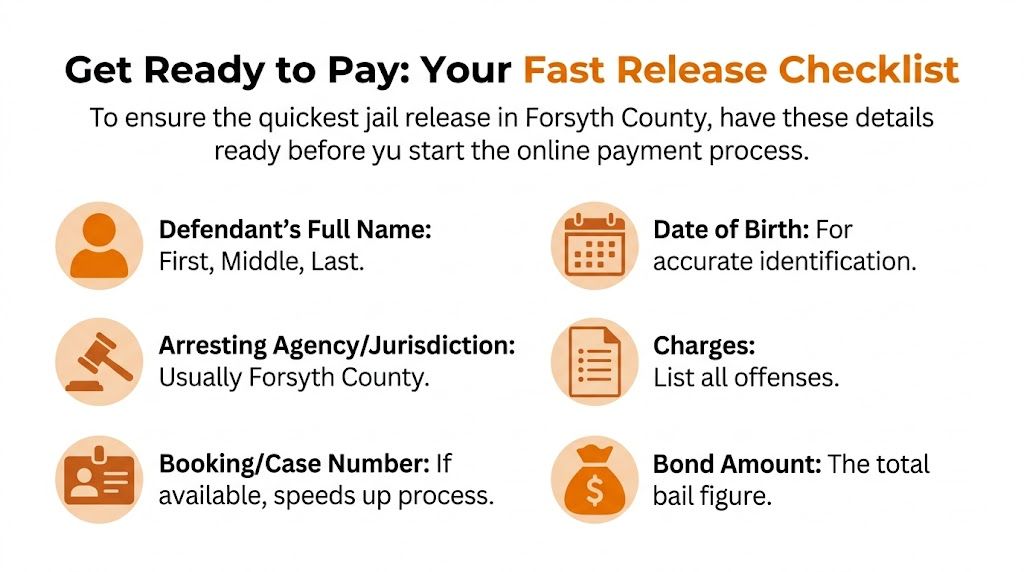
A practical comparison from the surety world makes the point well. Large bond underwriting can involve years of financial records, but for a jail release the key is getting the defendant's identifying details right, and one verified source notes that completing this first step correctly prevents 35% of common processing delays in that bond context (document requirements for bond applications).
Gather these details before you call
Have as many of these as you can:
- Full legal name: First, middle, and last name matter. Nicknames slow things down.
- Date of birth: This helps separate your loved one from anyone with a similar name.
- Charges: Even a rough description helps confirm the case.
- Booking or case number: If you have it, the lookup goes faster.
- Arresting agency or jurisdiction: In many cases it's Forsyth County, but not always.
- Bond amount: If you've been told one, pass it along. If not, the bondsman can verify it.
- Your own contact information: The agent needs to reach you quickly if the jail updates anything.
Why this matters for fast release
A local bondsman doesn't want to call the jail with partial information and guess. Every mismatch creates another round of verification. That means more waiting for you and more waiting for the person in custody.
Practical rule: If you only have time to gather three things, get the full legal name, date of birth, and booking number first.
That small step cuts confusion immediately. It also helps when you're calling from Cumming, Dawsonville, Alpharetta, Suwanee, Buford, or from out of town trying to coordinate everything by phone.
What to do if you're missing part of the information
Don't freeze if you don't have every detail. Call anyway. But before you do, check any release paperwork, jail roster information, or messages from the defendant for spelling, birth date, or charge information.
If you're not sure what a bondsman will ask for, this guide on what you need to bail someone out is a useful starting point. The cleaner the intake, the sooner the payment step can happen and the sooner the release paperwork can start.
How to Make Your Payment Bond Online Securely
Families often ask the same question. "Can I just pay online and get this handled right now?" The short answer is yes, you can often make the payment online. But the smart way to think about it is that you're using a secure payment method to activate a real person who starts the release work immediately.
One verified source on online bond applications in another surety setting says many people look for instant online bonding, but expert human involvement still matters, and it notes delays and rejections affect 20-30% of purely automated small business surety applications (online payment bond realities). That lines up with what families run into with jail releases. The payment may be digital. The release is not automatic.
What you're actually paying for
In a bail case, the online payment usually covers the bond premium, which is the fee required to post the bond through the bondsman. That premium is separate from the full court-set bond amount.
What matters to you in the moment is simple:
| Step | What happens |
|---|---|
| Verification | The agent confirms the inmate, charges, and bond details |
| Agreement | The co-signer reviews and signs the bond paperwork |
| Payment | The premium is paid through a secure online process |
| Action | The bondsman submits the bond and works the release with the jail |
The safest way to handle online payment
Use a process that includes both secure digital payment and direct communication with a licensed local agent. That protects you from paying first and asking questions later.
Watch for these basics:
- Clear explanation of the charge: You should know what the payment covers before submitting it.
- Direct contact with an agent: If no one is available to explain next steps, that's a problem.
- Signed paperwork before or alongside payment: A real bond requires real documentation.
- Local jail familiarity: The agent should already know how Forsyth County handles intake and release.
Online convenience is useful. Jail release still depends on a person doing the work correctly.
If you want to see how a local online payment process is handled, review this page on paying a bail bond online. The strongest setup is always hybrid. Secure payment on one side, immediate human action on the other.
The Forsyth County Jail Release Process After You Pay
Once payment clears and the paperwork is signed, families usually expect the jail doors to open right away. Sometimes the release moves quickly. Sometimes the jail has its own processing queue. The key thing is that the bond work starts immediately, even if the physical release takes longer.
What the timeline usually looks like
A typical Forsyth County release flow goes like this.
First, the bondsman confirms that the defendant is bondable and that no hold or condition is blocking release. Then the bond documents are completed and submitted. After that, the jail processes the release on its side, which can include its own internal checks before the person is discharged.
The person in custody isn't released the moment you click "pay." They're released after the jail accepts the bond and finishes its procedure.
What the bondsman is doing in that window
This is the part families don't always see. After payment, the bondsman isn't waiting around. They're checking for errors, matching names and charges, making sure the paperwork is accepted, and staying on top of the handoff to the jail.
A broader surety reference helps explain the underlying idea. Financial guarantees in the United States trace back to 1894 under the Heard Act, and the system later expanded under the Miller Act, reflecting the long-standing role of a financial instrument backed by trust and obligation (surety industry historical overview). Bail works on that same basic principle. The bond is a formal guarantee, and the local relationship with the court and jail is what turns the paperwork into action.
After payment, the waiting you feel is usually jail processing time, not inactivity from the bondsman.
What you should do while waiting
Keep your phone close. If the agent calls for one missing signature or one clarifying detail, a quick response helps keep the process moving.
It also helps to set expectations with the family. If you're trying to understand typical timing after bond submission, this page on how long it takes to post bail gives useful context. Fast action on the front end matters. So does patience while the jail completes release on the back end.
Handling Special Cases Like DUI Bail and Warrants
A standard bond is one thing. DUI bail and warrant assistance are different because procedure matters more, and mistakes cost time.
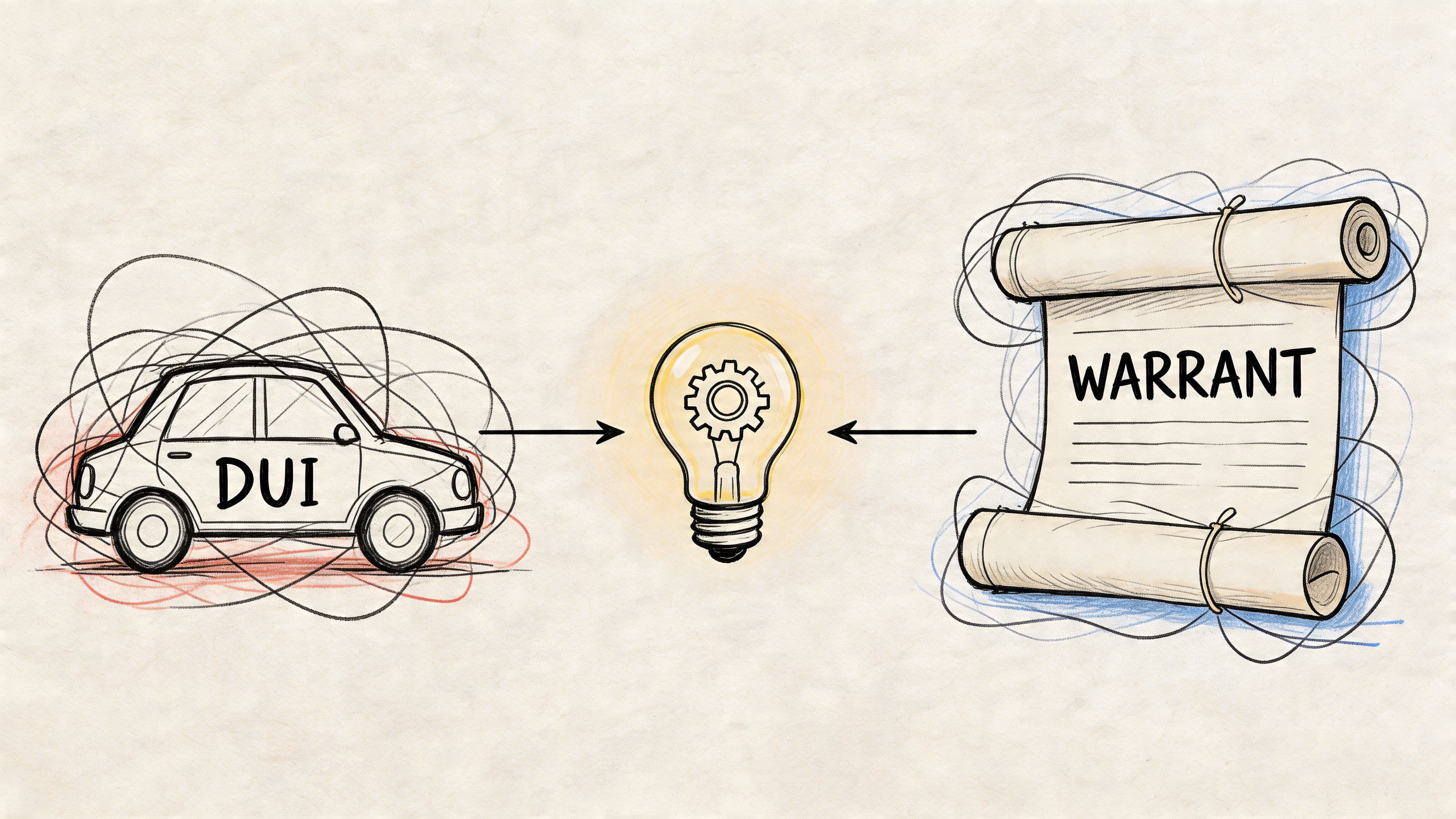
A verified source on bond claims in construction notes that missing a required procedure can destroy a valid claim, and it states that missed windows account for 40% of denials in state courts in that context (payment bond claim procedure). The legal setting is different, but the lesson applies cleanly to bail. Procedure isn't a side issue.
DUI bail
A DUI arrest may involve extra release conditions. Before anyone promises a timeline, the bondsman should confirm whether the court or jail has any specific requirements attached to the bond.
That matters because a family can pay quickly and still face delay if a condition hasn't been checked. Good local handling means someone looks for that issue before it becomes a problem.
Warrant walk-throughs
If someone has an active warrant, the cleanest path is often a planned surrender, sometimes called a walk-through. The idea is straightforward. The bond arrangements are prepared in advance so the person can turn themselves in and move through the process with less chaos.
That doesn't erase the seriousness of the warrant. It does reduce surprises.
- Call before surrendering: Don't guess what the jail will require.
- Verify the warrant details: Name mismatches and old information can create avoidable delays.
- Arrange the bond in advance: The smoother the prep, the smoother the release side tends to be.
In high-stress cases, experience shows up in small procedural choices. That's what keeps a difficult situation from becoming a drawn-out one.
Understanding Your Bail Bond Agreement and Responsibilities
The paperwork doesn't exist just to process payment. It defines who is responsible for what after release. If you're the co-signer, your role is serious, and you need to understand it before you sign anything.
What your signature means
Your signature is a legal promise tied to the bond. You are agreeing to support the defendant's appearance in court and to follow the terms in the bond agreement.
A verified source discussing bond claim rights in construction says courts have rejected 25% of claims for improper claimant status in that setting, underscoring how much legal status matters (claimant status and bond responsibility). Bail has the same need for clarity. The right person must sign, and that person must understand the obligation.
Key point: A co-signer isn't just helping with payment. A co-signer is taking on defined legal responsibility.
What families usually need to understand
These are the parts that matter most in plain English:
- Court appearance matters: The defendant must appear as required until the case is resolved.
- The premium is the fee for the bond: It's the cost of obtaining the bondsman's service and guarantee.
- Communication matters after release: If court dates change or problems come up, silence creates risk.
- Collateral depends on the case: Some bonds may be handled without collateral, while others may require added security based on the circumstances.
A simple way to think about the agreement
The bond agreement sits at the intersection of money, trust, and court compliance. The family focuses on getting their loved one home. The court focuses on appearance. The bondsman stands in the middle and guarantees performance under that agreement.
That only works when everybody understands their part. If the defendant misses court or disappears, the situation stops being a quick release matter and becomes a compliance problem. Reading the agreement carefully at the start is one of the best ways to avoid trouble later.
Your 24-Hour Bail Bonds Partner in Forsyth County
When an arrest happens, families don't need hype. They need someone to answer the phone, explain the process clearly, and move fast. That's why local knowledge matters so much in Forsyth County.
A bondsman serving Cumming, Dawsonville, Alpharetta, Suwanee, Buford, and nearby North Georgia communities should already understand the rhythm of local jail release, DUI bond issues, warrant walk-throughs, and the difference between online payment convenience and actual release work. That's what helps with searches like bail bonds near me, 24 hour bail bonds near me, emergency bail bonds, inmate release Forsyth County, and bondsman near Forsyth jail. People making those searches aren't browsing. They need help now.
Choose the agent who gives direct answers. Ask what information they need immediately, how the online payment works, when paperwork will be signed, and what can slow release after the bond is posted. Calm, accurate guidance is worth a lot when your family is under pressure.
If you're trying to arrange fast jail release, deal with a DUI bail, handle a warrant, or figure out how to post bail in Forsyth County, the best move is simple. Call a local professional who can start the process right away and stay with you until the release is complete.
If you need immediate help, 24-7 Best Bonding is available around the clock for fast, courteous bail bond assistance in Forsyth County. Call 770-888-4585 any time, day or night, for help with jail release, DUI bail, warrant assistance, and online payment questions.