
If you are in Forsyth County, GA and just found out a loved one from Cumming was moved to the emanuel probation detention center twin city ga, the confusion is normal. Families call expecting this to work like a jail bond at the Forsyth County Detention Center in Cumming, then find out the person is no longer sitting on a standard local hold.
That shift matters.
A probation case that starts in Cumming can end with placement in a state detention center in Twin City. For families in Cumming, Alpharetta, Suwanee, Johns Creek, Sugar Hill, Dawsonville, or Gainesville, the hardest part is usually not locating the person. It is understanding what happened, what does not apply anymore, and what to do next.
A Forsyth County GA Guide to the Emanuel Probation Detention Center
A common call comes in after a family checks the Forsyth County Detention Center, cannot get a straight answer about release, and then learns their son, husband, or brother has been sent to Twin City. They were expecting a bond amount, a cosigner conversation, maybe a trip to the jail lobby in Cumming. Instead, they are dealing with a probation sanction in a different part of Georgia.
That is where people lose time.
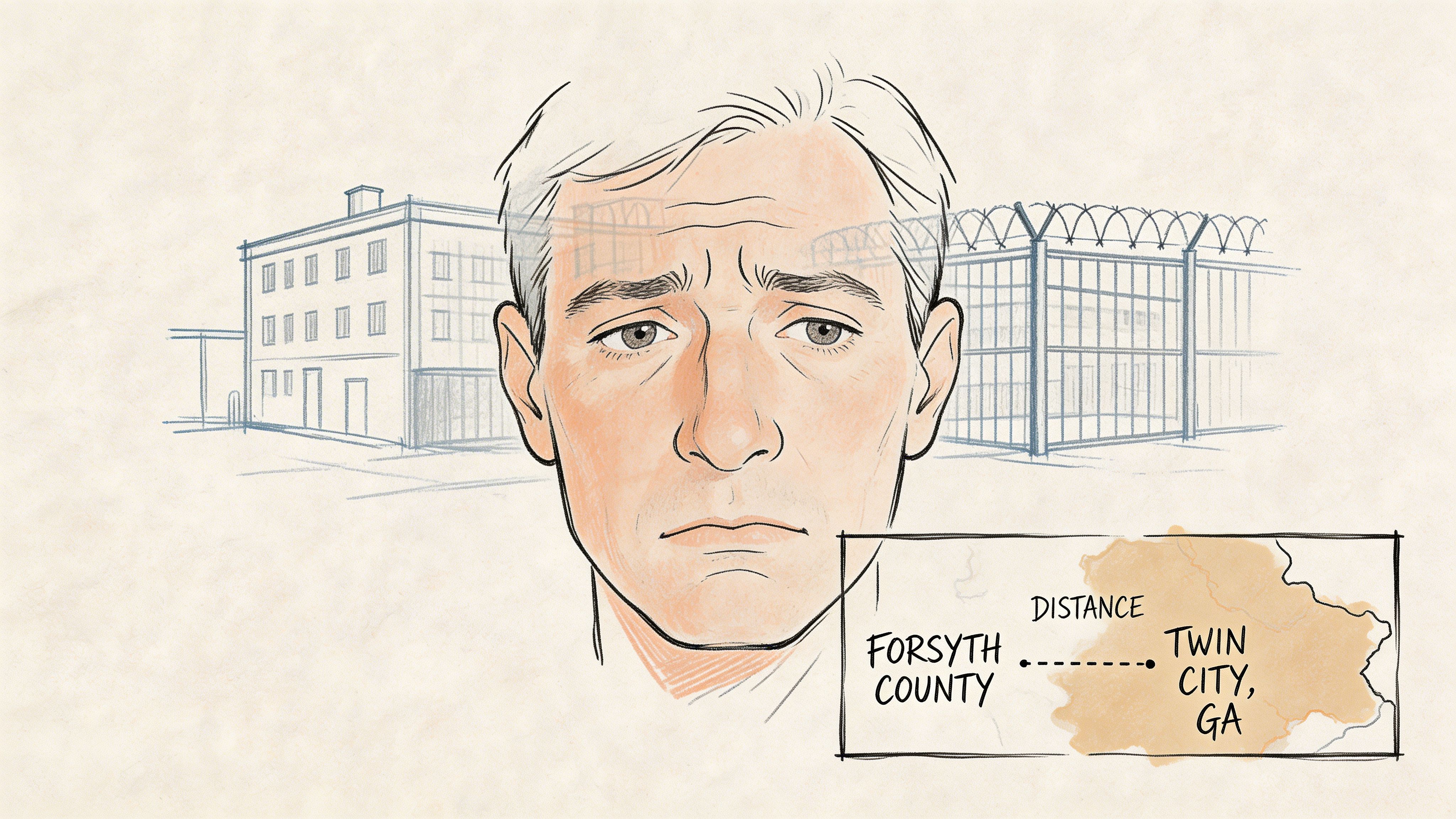
The first thing to understand is simple. Emanuel Probation Detention Center is not the same as the Forsyth County jail. If the case began with a new arrest in Cumming, a probation warrant, or a violation reported to the court, the person may have moved from a local jail situation into a state probation detention placement.
That changes the questions you need to ask.
Instead of asking only, “How much is the bond?” families usually need answers to these:
- Was there a probation violation hearing in Forsyth County Superior Court or another local court handling the probation matter?
- Was the person sanctioned to a probation detention center instead of being fully revoked?
- Is there still a pending local charge at the Forsyth County Detention Center, or is the active issue now the probation placement?
- Who is supervising the probation case back in Forsyth County?
When a person moves from a local jail hold to a probation detention center, families often waste days chasing bond information that no longer controls release.
In a normal local arrest, families in Cumming usually think about bond types, cosigners, or whether Georgia’s 10 percent cash bond requirement applies to a court-set cash bond. They may compare a surety bond against a property bond, ask about weekend processing, and try to estimate release time once the Forsyth County Sheriff’s Office finishes paperwork.
A probation detention placement is different. The legal center of gravity often stays in Forsyth County, but the person is physically in Twin City.
The Path from a Forsyth County Probation Violation to Emanuel PDC
Most families first see only the end result. The person is gone from the local system and shows up in Twin City. The important part is the chain of events that got them there.
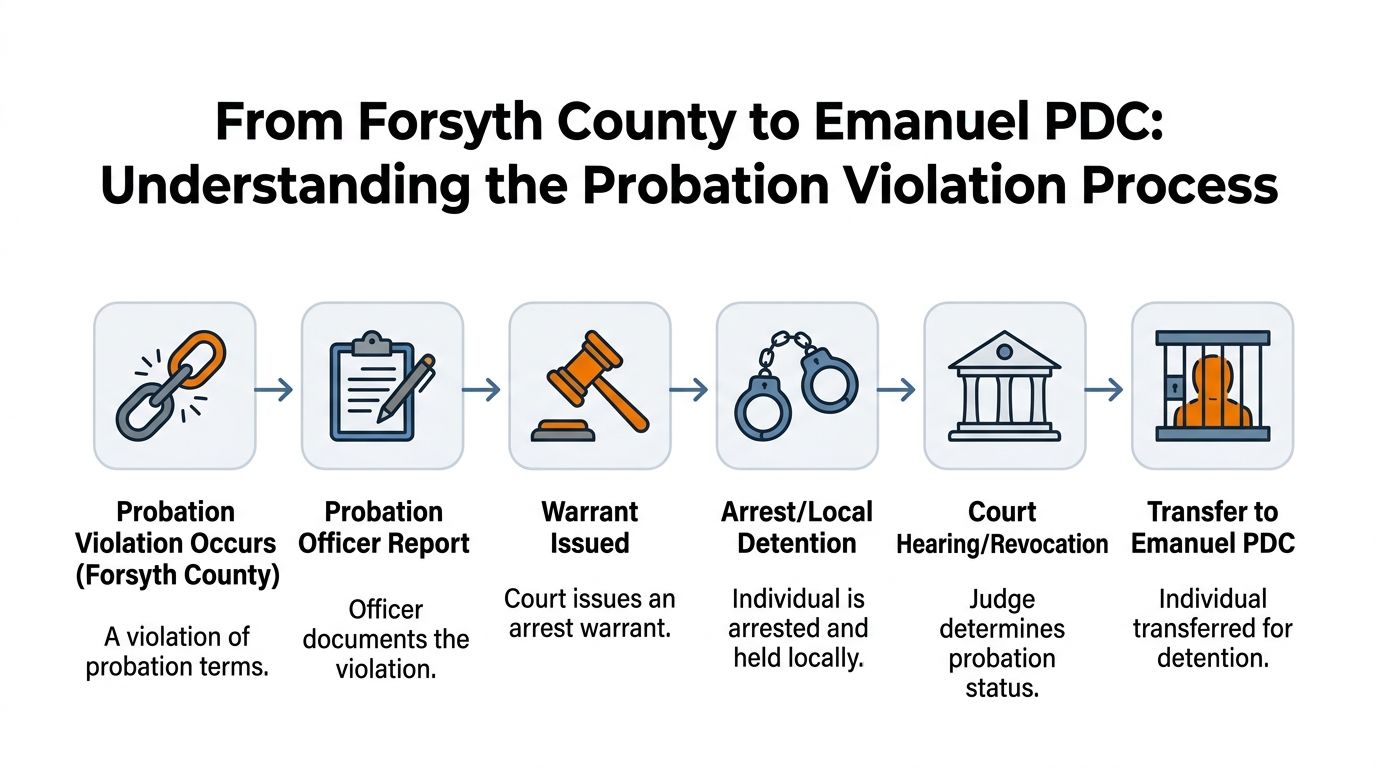
How it usually starts in Forsyth County
A probation problem often begins one of two ways.
The first is a technical violation. Missed reporting, failed conditions, noncompliance, or another probation issue can trigger action by the supervising officer.
The second is a new arrest in Cumming or nearby. That new charge may place the person in the Forsyth County Detention Center while the court also looks at the probation case.
From there, the local process matters more than most families realize:
- A probation officer reports the violation
- A warrant or hold follows
- The person is detained locally
- A court reviews the probation issue
- The judge decides on the sanction
Sometimes families expect the local bond process to solve everything at step four. It may not.
Why a Twin City placement happens
A probation detention center is used as a sanctioning option for probationers who need tighter supervision than ordinary community-based probation. Public information on this process has been thin, especially for families trying to understand it from another county. The state’s own public-facing material leaves a real gap on release procedures and family guidance, particularly for people dealing with a transfer from Forsyth County to Twin City, as noted on the Georgia Department of Corrections Emanuel Detention Center page.
That gap causes two common mistakes.
One mistake is assuming the person can still be bonded out just like a fresh local arrest in Cumming. The other is assuming nobody in Forsyth County matters anymore because the person is now housed elsewhere.
Both are wrong.
The underlying probation case, reporting conditions, and sanction terms usually trace back to the local court and supervision structure. If the person was arrested first in Forsyth County, then there may also have been the usual local steps people know from standard jail release matters:
| Local Forsyth County step | What families often expect |
|---|---|
| Booking at the Forsyth County Detention Center | Immediate bond amount |
| Magistrate review or hearing | Quick release decision |
| Bond type decision | Surety bond, cash bond, or property bond |
| Jail processing | Same-day release |
That framework works for many ordinary local arrests. It does not always control a probation detention placement.
A probation sanction can grow out of a local Cumming arrest, but once the court orders detention in a state facility, the family has to shift from bond thinking to probation-status thinking.
If your family is in Cumming, Dawsonville, Alpharetta, Johns Creek, Suwanee, Sugar Hill, or Gainesville, that distinction is the difference between chasing the wrong answer and taking the right next step.
A Guide to the Emanuel Probation Detention Center in Twin City GA
Families settle down faster once they have hard facts. The basic profile of the facility matters.
The Emanuel Probation Detention Center opened on October 18, 1994, and it was one of Georgia’s first correctional facilities built entirely with offender labor, according to the Georgia state facility record. It sits on 32 acres in rural Emanuel County and operates as a medium-security facility.
What the facility is
This is not a county jail for fresh arrests out of Cumming.
It is a state correctional setting used for adult male felons and probationers who need a more controlled environment than regular community programs. The same state record lists a rated capacity of 369 beds and describes six open dormitories with double and triple bunk beds.
Where it is located
Use this information carefully and verify current procedures before mailing, traveling, or making arrangements:
- Physical address: 121 Casa Drive, Twin City, GA 30471
- P.O. Box: P.O. Box 1430
- City: Twin City, Georgia
What daily life looks like
The facility’s mission centers on structure.
State descriptions show a highly structured, regimented schedule with supervised unpaid work details in surrounding counties and trustee assignments in nearby communities. The same public records also describe an 8-acre vegetable garden with three greenhouses, part of the facility’s self-sufficiency and work-based routine.
For families, that tells you something important. This is a program-driven environment. It is not a waiting room for a bond payment.
Why families from Forsyth County should care about these details
Knowing the type of facility helps you avoid the wrong assumptions.
A parent in Cumming may hear “detention center” and think county jail rules. A spouse in Alpharetta may think a bond company can post paperwork and begin release. A friend in Gainesville may expect the same weekend bond rhythm they saw in another local case.
That is usually not how this setting works.
Here is the quick comparison families need:
| Question | Forsyth County jail case | Emanuel PDC placement |
|---|---|---|
| Main issue | Pretrial custody | Probation sanction |
| Release path | Bond may apply | Program completion or court-directed outcome |
| Local court role | Immediate and direct | Still important for underlying probation terms |
| Family focus | Bond amount and cosigner | Status, communication, visitation, compliance |
The more precise your understanding is, the less likely you are to waste time on the wrong phone calls.
How to Support a Loved One Detained at Emanuel PDC
Once you know your loved one is at the emanuel probation detention center twin city ga, the practical work begins. Families do better when they stop trying to force a bond answer and instead focus on confirmation, communication, and compliance.

Confirm the exact location first
Do not rely on secondhand information from another inmate, social media, or an old booking entry.
Use the Georgia Department of Corrections offender search tool to confirm where the person is housed and how the name is listed. Transfers can create confusion, especially when a person first moved through the Forsyth County Detention Center in Cumming.
When you search, keep this checklist in mind:
- Use the full legal name if possible
- Try alternate spellings if the first search fails
- Check for transfer lag if the move happened recently
- Match the facility name carefully so you do not confuse Twin City with another Georgia detention location
If you are also trying to understand how ordinary local release works in a standard jail case, this guide on how to bail someone out of jail helps explain the difference between jail bond situations and what you are facing now.
Learn the visitation rules before you drive
Public facility information indicates visitation is held on Saturdays and Sundays from 9 AM to 3 PM in the state facility materials linked earlier in this article. Before making a trip from Cumming, Suwanee, Johns Creek, or Dawsonville, call ahead and confirm the current requirements.
Do not assume county jail habits apply.
A facility like this may require approved visitor status, matching identification, and strict dress and conduct rules. If a family member gets turned away, that usually comes down to paperwork, timing, or a rule that was not checked in advance.
Bring identification that matches exactly. Small mismatches in names or missing approval are the kind of avoidable problems that ruin a long drive.
Follow mail and money rules exactly
Families often help by sending money, letters, and approved photos. That support matters, but only if it is done by the book.
Before sending anything, verify:
- Approved mailing format
- Whether photos are allowed and in what form
- Commissary or deposit procedures
- Limits on what can be included in correspondence
A good rule is this. If you are unsure whether something is allowed, leave it out until staff confirms it.
Keep your communication useful
The strongest family support is steady and practical.
Tell your loved one about home, work, and next steps. Keep the tone calm. Do not fill every call or letter with anger about the system. That usually does not help the person finish the program or prepare for the conditions waiting back in Forsyth County.
Three things families should track in writing:
- Who you spoke with
- What was confirmed
- What still needs follow-up
That record becomes valuable when the case touches both Twin City and local probation supervision back in Cumming.
Understanding the Release Process from a Georgia PDC
This is the question families ask first, and it is the place where people get the most frustrated.
They ask, “Can we post bond and get him out?”
Usually, not from a PDC placement itself.
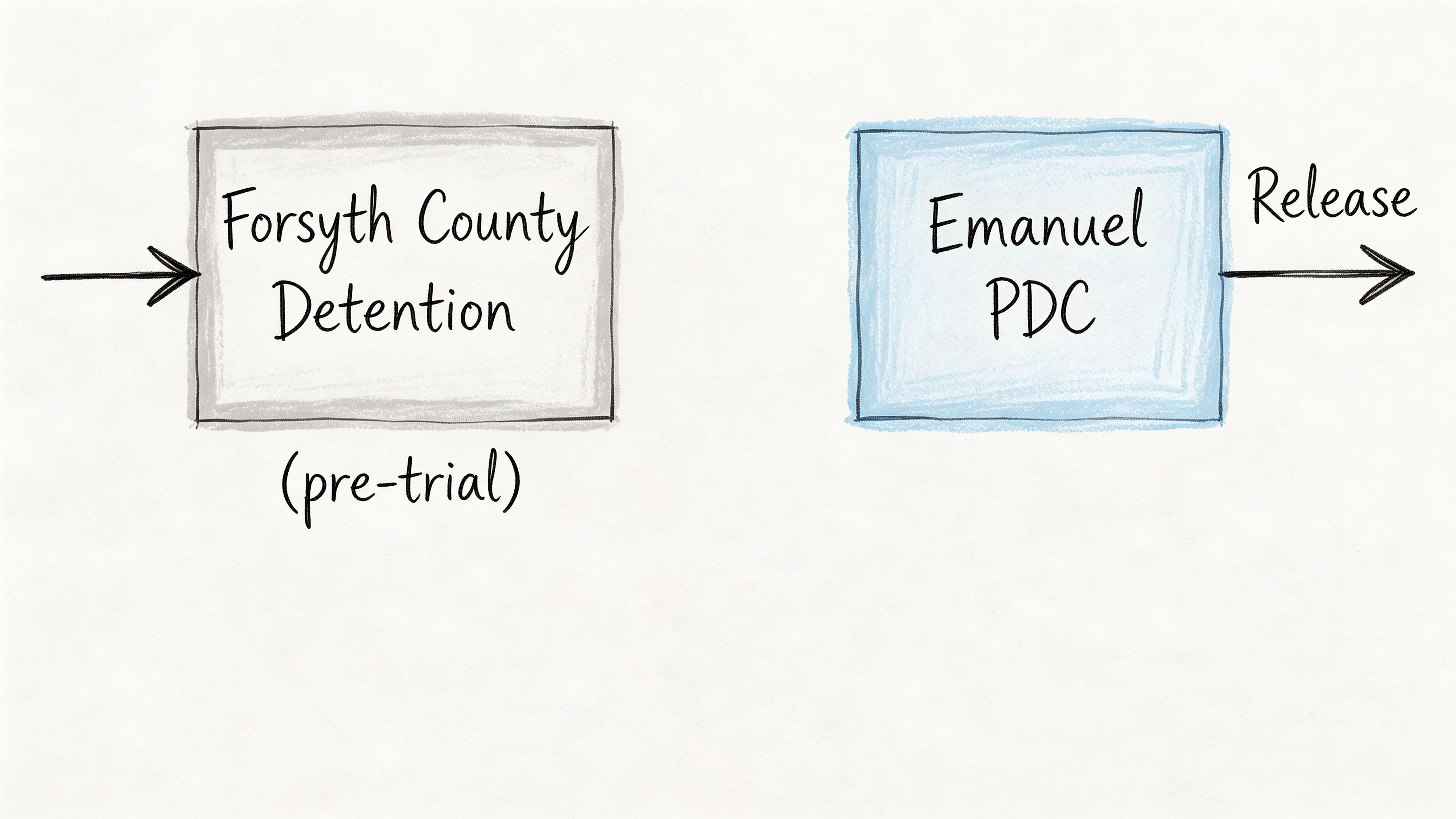
Why a bail bond is different from a PDC release
A person sitting pretrial in the Forsyth County Detention Center in Cumming may be waiting on one of the usual release paths:
- A magistrate bond hearing
- A preset bond
- A surety bond
- A property bond
- A cash bond
- Weekend or holiday processing after bond is set
In those cases, families may need to know about cosigner requirements, identification, employment information, and whether Georgia’s 10 percent bond requirement applies to the specific court-ordered bond structure.
A PDC is different because the person is not waiting for pretrial release. The placement itself is the sanction.
What controls release instead
According to the state facility description for Emanuel PDC, program stays generally last 60 to 180 days, with an average stay of 90 days, and the structured programming includes supervised unpaid work details and the facility garden operation, all within a regimented rehabilitation schedule in the Georgia detention center program record.
That means the release question usually becomes:
- How long was the sanction?
- Is the person receiving credit where applicable?
- Are there any holds or other cases still pending?
- What conditions apply when the person returns to community supervision?
Families often confuse this with pretrial release because the person may have started in the county jail first. If you want the cleanest explanation of that distinction, this overview of what is pretrial release helps clarify what release before trial means versus what a state probation detention sanction means.
What works and what does not
What works is verifying the actual probation sanction, the expected completion window, and any remaining Forsyth County issues.
What does not work is calling around for a bond amount after the person has already entered the PDC system.
The right question is usually not “How fast can they bond out?” The right question is “What exactly must happen before Forsyth County clears them to come home?”
That is also why families should keep local court details organized. If the person still has a pending Cumming case, an unresolved probation condition, or a reporting requirement waiting after release, those details matter more than general jail bond language.
Why Your Forsyth County Bail Bondsman is Your Local Advocate
Even when the person is housed in Twin City, the family’s practical problem often remains in Forsyth County.
The local court history is here. The original arrest may have happened here. The probation supervision trail often points back here. The questions that matter most usually involve people and offices in Cumming, not just the facility hours away.
Why local knowledge still matters
A local bondsman in Cumming understands how families think because most of them start with the same assumptions.
They want to know whether the person had a hearing, whether another local charge is still active, whether a cosigner will be needed if a separate case still has a bond, whether the Forsyth County Sheriff’s Office has completed local processing, and whether the next court date is in Forsyth County Magistrate Court or Forsyth County Superior Court.
Those are local questions.
For families in Alpharetta, Johns Creek, Suwanee, Sugar Hill, Dawsonville, and Gainesville searching for a bondsman “near me,” the value is not only bond paperwork. It is having someone who knows the local jail rhythm, local court flow, and how a probation problem in Cumming can spill into an out-of-county placement.
Where families usually get stuck
The biggest delays often come from one of these issues:
- Mixing up the county jail case with the probation case
- Not knowing whether there is still a local bond issue in Cumming
- Failing to track which court handled the probation action
- Not preparing for what happens after release from the Twin City facility
A local guide can help sort those tracks apart.
If you want a basic explanation of that role, this page on what is a bail bond agent gives the general framework. In real life, the practical value is that someone local can help you ask the right questions about the Forsyth County side of the case while your loved one is physically elsewhere.
For families in North Georgia, that can mean less confusion, fewer wasted calls, and better preparation for the day the person comes back under local supervision.
Forsyth County FAQ for Emanuel PDC Placements
Q: Can you post a bond to get someone out of Emanuel PDC in Twin City?
A: Usually no. If the person has been placed in Emanuel PDC as a probation sanction, release is generally not handled like a standard bond at the Forsyth County Detention Center in Cumming. The key issue is the probation sanction and completion requirements, not posting money.
Q: How is Emanuel PDC different from the Forsyth County Detention Center in Cumming?
A: The Forsyth County Detention Center is the local jail where a person may be booked after an arrest in Cumming. Emanuel PDC is a state probation detention facility used for structured sanctioning. One is tied to local jail custody and bond processing. The other is tied to probation enforcement.
Q: Could a new arrest in Forsyth County lead to placement in Twin City?
A: Yes. A new arrest in Forsyth County can trigger action on an existing probation case. If the court finds a violation and orders a detention sanction, the person may be transferred from local custody to a state facility such as Emanuel PDC in Twin City.
Q: Does the Forsyth County court still matter after the transfer?
A: Yes. The local court history, probation terms, and any related case activity in Cumming still matter. Even if the person is housed in Twin City, the legal path that placed them there usually connects back to Forsyth County supervision and court action.
Q: Can families still help if the person is already out of county?
A: Yes. Families can help by confirming location, following visitation rules, sending approved support, and keeping clear records of probation and court information. The best help is organized help, not guesswork.
Q: If I am in Alpharetta, Johns Creek, Suwanee, Sugar Hill, Dawsonville, or Gainesville, can I still get help with a Forsyth County-based case?
A: Yes. If the probation issue or original arrest is tied to Cumming or Forsyth County, local guidance still matters even when the person is housed elsewhere. The local side of the case often controls what happens next.
If your loved one’s case started in Cumming or anywhere in Forsyth County, and you need straight answers fast, call 24-7 Best Bonding. They help families sort out local jail holds, probation-related confusion, bond questions, cosigner needs, court timing, and fast next steps. For immediate help with a Forsyth County case, call 770-888-4585 and speak with a local bondsman who understands the Cumming process.
Meta Title: Emanuel PDC Guide for Forsyth County GA Families
Meta Description: Emanuel Probation Detention Center Twin City GA guide for Forsyth County, GA families. Learn the Cumming case path, release issues, and next steps.
Suggested URL Slug: /emanuel-probation-detention-center-twin-city-ga-forsyth-county-guide/
Internal Link Suggestions:
- /2025/12/22/how-to-bail-someone-out-of-jail/
- /2025/12/28/what-is-pretrial-release/
- /2026/01/01/what-is-a-bail-bond-agent/
- Local service page for 24 hour bail bonds in Cumming
- Local service page for probation violation bonds in Forsyth County
Schema Recommendations:
- LocalBusiness
- Service
- FAQPage