
Finding out a judge has ordered an alcohol ankle monitor can be an unfamiliar and stressful experience. If you are navigating this as a condition of release in Forsyth County, it’s important to understand what it means. These devices are a standard tool used by the courts to ensure compliance with release conditions, allowing an individual to be at home rather than in custody.
The process can seem complicated, but it is manageable. With clear information and the right support, you can handle the requirements step by step.
What to Do Right Now
The most helpful approach is to act calmly and purposefully. A few direct steps will get things moving in the right direction. This is a procedural system, and we can help you navigate it.
Your first step should be to contact an experienced, local bail bonding company that serves Forsyth County and nearby areas like Cumming, Alpharetta, and Gainesville. A professional agent does more than post a bond; they are your guide through the process. They understand what the local courts require for alcohol monitoring and can help coordinate the steps for you.
What to Have Ready
To help your bonding agent act as quickly as possible, try to have this information on hand when you call.
- Full Name of the Person Charged: The individual's complete legal name.
- Booking Number: This is not always required, but it helps locate someone in the system much faster.
- Location of Arrest: Knowing if the arrest was in Forsyth County, Hall County, or another jurisdiction is important.
- Charges: A general understanding of the charges helps the agent understand the bond conditions.
Our role is to slow things down, explain the process clearly, and provide a path forward. You do not have to figure this out on your own. We are available 24/7 to offer discreet, professional help and can start the process over the phone.
How Alcohol Ankle Monitors Actually Work
If a court has ordered an alcohol ankle monitor, you likely have questions about how the device functions. It may seem intimidating, but its purpose is straightforward: to provide an automated, reliable way to confirm sobriety without requiring constant lab tests.
Let's clarify the technology so you know what to expect.
Most alcohol monitors used in Forsyth County, like the well-known SCRAM (Secure Continuous Remote Alcohol Monitor) bracelet, use a science called transdermal analysis. It can be thought of as a breathalyzer for your skin. The concept is simpler than it sounds.
The Science: A Breathalyzer for Your Ankle
When alcohol is consumed, the body metabolizes it. A small but measurable amount of that alcohol is released as vapor through the skin via perspiration—an involuntary process.
The ankle monitor is designed to do one thing: capture and measure that vapor.
It rests snugly against the skin, where a small fuel cell sensor samples the air just above it. This is not a one-time test; it happens continuously.
- Continuous Sampling: The device automatically tests for alcohol vapor approximately every 30 minutes, 24/7.
- Data Storage: It records every reading, creating a complete timeline of sobriety.
- Tamper-Proof Design: The bracelet is fitted securely and includes sensors that can detect if someone attempts to remove it or block the sensor.
This constant, passive monitoring provides the court with an uninterrupted and trustworthy record of compliance.
The process typically starts with a court order, which then leads to a professional who can set up the device and explain the rules.
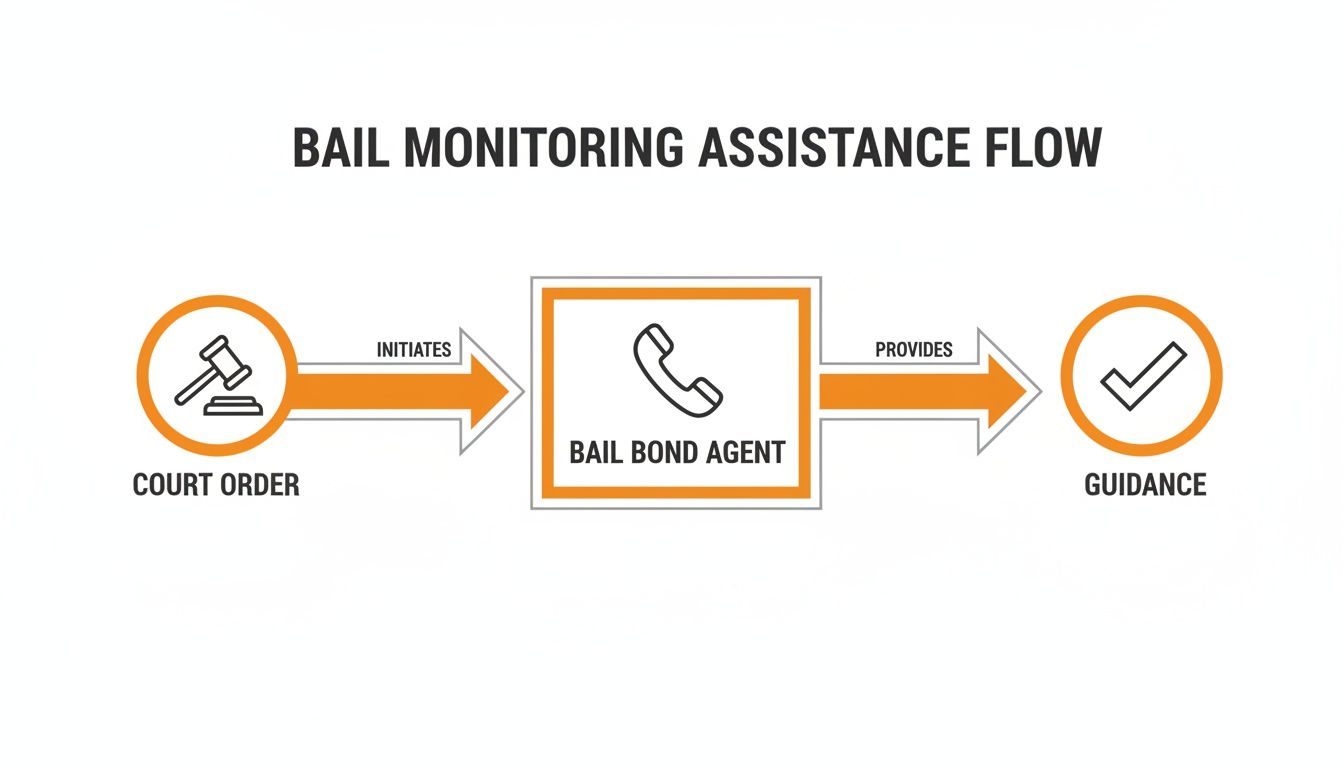
As this illustrates, a bail bond agent is often the central point of contact for helping you navigate the court's monitoring requirements.
How Sobriety Data Gets to the Court
A common misunderstanding is that the ankle monitor tracks your location in real-time like a GPS device. Most alcohol monitors do not. The device simply stores the alcohol readings it collects throughout the day.
You will have a small base station in your home. Once a day, at a preset time, the ankle monitor automatically connects to that base station and uploads its stored data. The base station then transmits the report to the monitoring agency. It is a hands-off process.
The system is designed to be predictable. Its purpose is not to catch someone in a "gotcha" moment, but to provide a consistent, verifiable record that court orders are being followed.
The technology is very reliable. False positives are extremely rare, which is why courts in Forsyth County and across the nation trust the results.
While transdermal monitors are common, they are not the only option. To get a fuller picture, you can read our guide on the different types of ankle monitors used in bail conditions.
How Does It Know If Someone Has Been Drinking?
The technology behind transdermal alcohol monitoring is based on established science. The bracelet functions like a breathalyzer for the skin.
Every 30 minutes, the ankle monitor collects and tests insensible perspiration—the tiny, unnoticeable amount of moisture your skin naturally releases. It is looking for alcohol vapor, creating a constant timeline of your Transdermal Alcohol Concentration. This automated process gives the courts a reliable, around-the-clock picture without the need for inconvenient breath or blood tests.
Understanding Transdermal Alcohol Concentration (TAC)
Transdermal Alcohol Concentration (TAC) is the measurement of alcohol that escapes through the skin after consumption.
This is not a guess. Extensive scientific studies show a strong link between TAC and Blood Alcohol Concentration (BAC), with the peaks in both readings correlating closely. The data is so precise that a peak TAC of just ≥0.011 g/dL can predict a single drink with 97.9% accuracy.
- Continuous Tracking: It captures alcohol levels 24/7, not just during a scheduled test.
- High Sensitivity: The device can detect even very low levels of alcohol shortly after it is consumed.
- Automated Alerts: If readings exceed court-ordered limits, an alert is automatically sent to the monitoring agent.
Built-in Anti-Tamper Sensors
These devices are designed to be fair and secure. They are equipped with sensors that can detect any attempt to remove or tamper with them.
If someone tries to take the bracelet off, a motion detector and a skin contact sensor will immediately alert the monitoring authorities. Some models also flag unusual changes in temperature or pressure, which could indicate an attempt to block the sensor or loosen the strap.
Key Takeaway: The combination of constant, automated sampling and built-in anti-tamper safeguards makes the system both rigorous and fair for all parties involved.
How to Avoid Common False Positives
A common concern is a "false positive." This can happen when environmental alcohol—from products like hand sanitizer, cologne, or certain cleaners—comes into contact with the skin and registers as a TAC spike.
Fortunately, this is easy to avoid by being mindful of what you apply to your skin near the monitor.
- Avoid using hand sanitizer on the ankle or leg where the device is worn.
- Use soaps that do not contain alcohol when washing the area.
- Inform your monitoring agent about any medicated lotions or skincare products you use.
Following these simple steps helps ensure the readings remain accurate, maintaining trust in the monitoring process.
Real-World Accuracy and Reliability
These devices are highly reliable. Across the country, they have been shown to have a false positive rate below 0.14% per day.
In England, after these "sobriety tags" were implemented in 2022, over 97% of all monitored days were completely alcohol-free. This type of clear, verifiable data supports recovery and has been shown to reduce the chances of re-offending.
| Metric | Value |
|---|---|
| False Positive Rate | ≤0.14% per day |
| Alcohol-Free Days (UK) | 97% |
| Recidivism Reduction | 50% for repeat offenders |
This solid data is why courts in Forsyth County and other jurisdictions trust that these devices provide accurate, reliable proof of compliance.
A Proven Track Record Since 2003
Transdermal monitoring is not a new technology. The first commercial devices from SCRAM became available in 2003.
Since then, studies have consistently shown their effectiveness. For example, a report from Responsibility.org found that repeat DUI offenders who wore a SCRAM device for 90 days were half as likely to re-offend as those who did not (10% vs. 20%). The real-time alerts for drinking or tampering allow for immediate intervention, not days or weeks later.
At Best Bonding, our agents in Forsyth County take the time to explain the science and show you exactly how to comply with the rules. We will walk you through preventing accidental readings and make sure the device fits properly, helping you understand the technology and your day-to-day responsibilities.
Daily Sampling and Instant Alerts
Every day, the monitor automatically samples your perspiration every 30 minutes—you do not have to do anything.
If your TAC rises above the limit set by the court, the system immediately sends an alert to the monitoring agency.
- Sampling Interval: Every 30 minutes.
- Data Upload: Information is sent automatically through a home base station.
- Alerts: Sent instantly for confirmed drinking events or any tampering.
This constant cycle ensures the courts have up-to-date, transparent information, giving you a clear way to demonstrate your sobriety and feel confident in your compliance.
The Data Reporting and Alert Process
Once an alcohol ankle monitor takes a reading, it initiates a specific, predictable process. It is not about constant, live surveillance; it is about collecting data methodically and reporting it. Understanding this can reduce anxiety and show that staying compliant is a matter of following the rules.
The ankle monitor itself is a data collection tool. It is designed to sample and store your Transdermal Alcohol Concentration (TAC) readings, usually every 30 minutes, building a complete sobriety record for each 24-hour period.
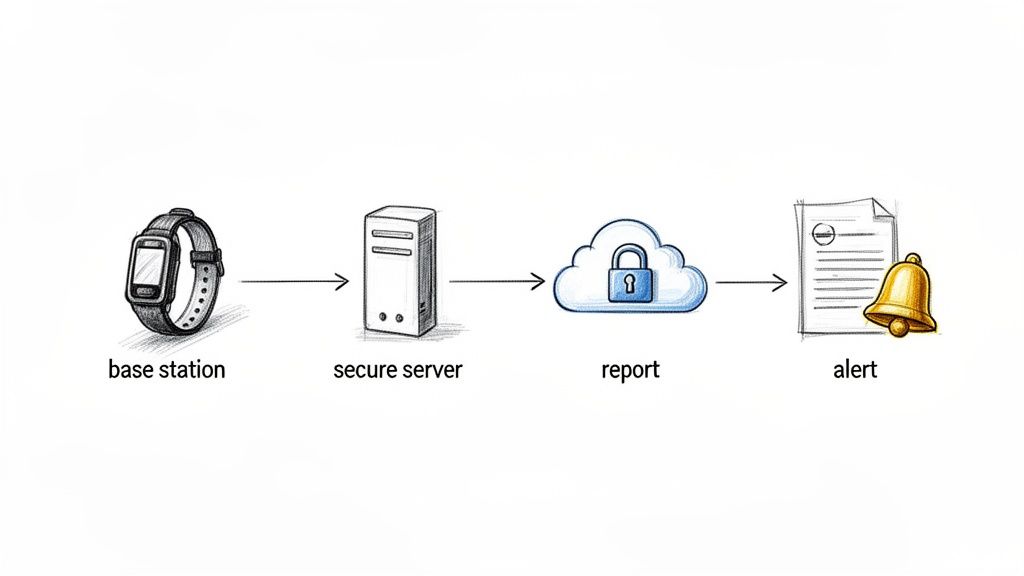
From Your Ankle to the Agency
The device does not broadcast data 24/7. Instead, it holds the stored information and uploads it at a scheduled time, typically once per day. This happens automatically whenever the monitor is in range of its paired home base station—a small unit plugged into an outlet at your home.
The base station acts as the communications hub. It pulls the stored data from your ankle monitor and sends it securely to the monitoring agency's servers. The process is hands-off, designed to be as simple and non-intrusive as possible. Once the data is received, trained professionals review the daily report for any flags.
What Triggers an Alert
An alert is only sent to the court or your supervising officer when the system detects a specific, predefined event. Knowing what these triggers are is key to getting through the monitoring period without issues.
Generally, an alert is sent for one of three main reasons:
- A Confirmed Drinking Event: If the data shows a TAC reading that indicates alcohol consumption, it is flagged.
- A Tampering Attempt: The monitor has sensors to detect if it has been removed, submerged in water, or if something is blocking the sensor.
- A Missed Data Upload: If the monitor cannot connect with the base station to send its daily report, an alert is generated to ensure there are no gaps in monitoring.
The entire reporting system is built on data and procedure. Once you understand how it works—how data is collected, sent, and reviewed—you can see it as a predictable tool to prove sobriety, not a source of constant stress.
If you have questions about what happens after an alert or how to care for the device to avoid problems, it is important to get clear information. You can learn more about what to expect by reviewing these essential rules for wearing an ankle monitor. This knowledge can empower you to handle the monitoring period with confidence.
A Practical Guide to Living With an Ankle Monitor
Adjusting to an ankle monitor takes a little time, but it can quickly become a normal part of your daily routine. It is less a burden and more a simple set of new habits. A few practical adjustments are all that is needed to stay compliant and get through the monitoring period smoothly.
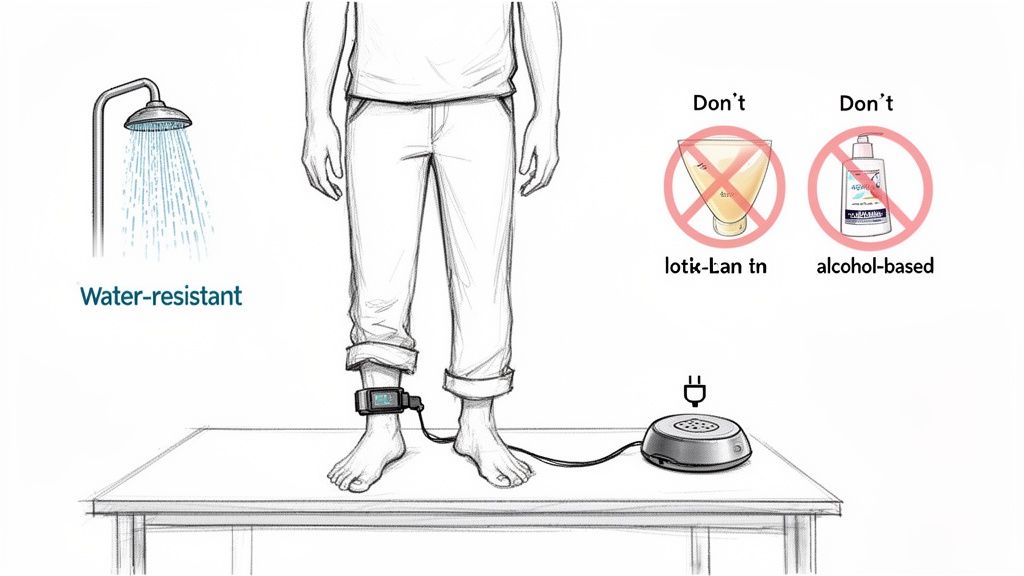
The device is designed for 24/7 wear and is built to handle normal daily life. Knowing the basic do’s and don’ts is key to navigating this process with confidence and avoiding accidental violations.
Daily Routines and Personal Care
One of the first questions people ask is about simple things like showering. The answer is straightforward.
These ankle monitors are water-resistant, but they are not waterproof. This means showering with the device on is fine. However, you cannot submerge it, so taking a bath, going swimming, or using a hot tub is not permitted.
While showering, let soap and water run over it naturally. Do not scrub the device. When you are done, be sure to pat the monitor and the skin around it completely dry with a towel. This is important for preventing skin irritation and ensuring the sensor functions correctly.
Sleeping with the monitor can also feel awkward at first. A simple solution is to place a small pillow between your ankles or wear a tall, soft sock over the device. This prevents it from bumping your other leg or catching on blankets.
Choosing the Right Clothing
Most people prefer to keep the ankle monitor discreet, and the right clothing makes that easy. The goal is to find options that cover the device without being too tight or uncomfortable.
- Pants: Loose-fitting pants, boot-cut jeans, or slacks work well. They hang naturally over the device, keeping it out of sight.
- Socks: Taller, thicker socks can be pulled up over the monitor. This not only hides it but also provides a cushion against your leg.
Products and Substances to Avoid
This is a very important point. The monitor is sensitive and designed to detect alcohol. It cannot tell the difference between the alcohol in a beverage and the alcohol in cologne. An accidental alert can create unnecessary complications, but it is easy to prevent.
To avoid a false positive, be mindful of anything containing alcohol that might come into contact with the skin around the monitor.
Here are the most common products to keep away from the leg wearing the device:
- Body Sprays, Perfumes, and Colognes: These are high in alcohol content.
- Alcohol-Based Lotions: Always check the ingredient list before applying lotion near the monitor.
- Certain Cleaning Products: Strong fumes from products like rubbing alcohol or glass cleaner can trigger an alert in a small, unventilated space.
- Hair Spray and Mousse: These often contain alcohol that can settle on your skin.
A little caution goes a long way in preventing accidental readings. If you are ever unsure about a product, the safest approach is to check with your monitoring agent first.
To make things even simpler, here's a quick checklist for your daily routine.
Daily Compliance Checklist for Your Ankle Monitor
This table summarizes key daily actions to ensure you stay in compliance and avoid accidental issues while wearing an alcohol ankle monitor.
| Do | Do Not |
|---|---|
| Check your monitor’s battery level daily. | Submerge the device in water (no baths or swimming). |
| Pat the monitor and surrounding skin completely dry after showering. | Use alcohol-based products like lotions or sprays near the device. |
| Wear loose-fitting pants or tall socks to cover the device. | Tamper with or try to remove the strap in any way. |
| Charge the device exactly as instructed by your agent. | Forget to report any damage or issues with the device immediately. |
| Contact your monitoring agent immediately if you have any questions. | Expose the device to strong chemical fumes in enclosed areas. |
Following these simple guidelines will help make the monitoring period a manageable part of your day-to-day life.
How a Bail Bonding Company Helps with Monitoring Requirements
Receiving a court order for alcohol monitoring is stressful enough without having to figure out the rules on your own. This is where an experienced, local bail bond company becomes an important resource. We do more than arrange for release from jail in Forsyth County, Hall County, or nearby areas like Johns Creek; we guide you through a process that can feel confusing.
Think of us as your primary resource for understanding and meeting the court's requirements.
Clarifying the Steps and Requirements
After a judge sets bail and adds a monitoring condition, the first question is often, "What do I do now?" Our agents provide immediate, clear answers. We are familiar with the local procedures in Cumming, Gainesville, and the surrounding areas, so we can explain what to expect and when.
We can walk you through:
- Which monitoring company you need to contact for the device.
- What paperwork and ID you need to have ready.
- The typical timeline for getting the monitor installed and activated.
- The initial setup fees and daily costs associated with the service.
This guidance removes the guesswork. It helps you avoid common mistakes or delays that could complicate matters.
Your Guide Through the Process
We have helped many families in the North Metro Atlanta area through this exact situation. A bail bond agent acts as your procedural guide, providing calm, step-by-step instructions so you know what is expected at every stage.
Our commitment is to offer discreet, professional, and patient support. We understand the stress you are under, and our goal is to bring clarity and a steady hand to help you move forward.
From your first call, our job is to demystify the process. We explain the technology, the rules you must follow, and who to contact if you have a problem with the device. For many people, just having a knowledgeable person to call 24/7 makes all the difference.
If you need to arrange bail that includes alcohol monitoring, you do not have to figure it out alone. An experienced bonding company in Forsyth County can manage the details so you can focus on your family.
A Partner in Compliance
A bail bonding company is your first line of support for ensuring all court orders are met correctly from day one. We bridge the gap between the judge's order and what you need to do to comply.
We provide the information you need to get the bond posted and the monitoring set up properly, supporting a smooth and timely release. If you or a loved one needs immediate help with bail and monitoring in Forsyth or Hall County, call us. We are here to give you clear, direct guidance and start the process.
Frequently Asked Questions About Alcohol Monitors
If you have been told you need an alcohol monitor, you likely have many questions. It can be a confusing process. Here are straightforward answers to the questions we hear most often from families in Forsyth and Hall Counties.
Can I Shower With an Alcohol Ankle Monitor On?
Yes, you can shower with the monitor on. These devices are built to be water-resistant, so the spray from a normal shower will not cause any issues.
However, water-resistant is not the same as waterproof. You cannot submerge it, which means no baths, swimming, or hot tubs. After you shower, be sure to pat the skin around and under the monitor completely dry to help prevent irritation and ensure the sensor works correctly.
What Happens If the Monitor Sends an Alert?
If the device detects alcohol or senses it is being tampered with, it sends an alert to the monitoring agency. This is not an automated system that assumes guilt.
A trained professional always reviews the data first to confirm if a true violation occurred. If they confirm it, they follow a specific protocol, which usually means notifying the court and your supervising officer. The key point is that a person always reviews the data before any action is taken.
Who Is Responsible for Paying for the Service?
In most cases, the individual required to wear the monitor is responsible for paying for it. The costs typically include a one-time installation fee for setup, plus a daily fee for the monitoring service.
These costs can vary depending on the company and the type of monitor. It is something to factor in as you prepare to meet the conditions of your bond release.
How Long Will I Have to Wear the Monitor?
The court determines the length of time you will need to wear the monitor. It is a specific condition of your bond or court program.
The timeframe can range from a few weeks to a year or more, depending on the details of your case and the judge's order. Complying with this requirement is a crucial part of satisfying your release conditions.
If you need help understanding a bond that involves alcohol monitoring in Forsyth or Hall County, call Best Bonding. We can walk you through the process and explain what to do next.