
If you have heard the term ‘supervised release,’ it can add another layer of confusion to an already stressful time. For families here in Forsyth County and across North Georgia, understanding these terms is the first step toward feeling more in control. Our goal is to provide clear, simple explanations.
Simply put, supervised release is a period of monitoring that happens after a person has completed a prison sentence. It is designed to help them transition back into the community in a structured way.
If you are dealing with a recent arrest in Forsyth County, GA, and need help with bail bonds, the process you are facing is actually called pretrial release. We are here to help with that immediate need, 24/7.
Understanding the Basics of Supervised Release
When a family member is navigating the legal system, knowing the correct terms can bring a little more clarity. Supervised release is a specific part of a sentence ordered by a judge at the very beginning, at the time of sentencing.
It is not an early release program like parole. Instead, it is a required follow-up period served in the community after all prison time has been completed. The goal is to provide a structured transition back into daily life and reduce the chances of a person reoffending.
This is very different from the situation immediately following an arrest, where the focus is on securing release from jail while the case is pending. That initial phase is called pretrial release. To better understand that crucial first step, you can learn more about what pretrial release involves and how it works.
Knowing the difference is important for families. Supervised release is a post-prison phase, while pretrial release is what a bail bond company like ours helps with right after an arrest in places like Cumming or Gainesville.
Think of the timeline this way:
- Pretrial Release: This is where a bonding company steps in to help someone get out of jail to wait for their court dates from home.
- Prison Sentence: This is the period of incarceration, if ordered by the court.
- Supervised Release: This is the monitored period that begins only after the full prison sentence has been served.
This structure is a standard part of the justice system, particularly in federal cases. It is not a surprise penalty—it is a planned part of the original sentence intended to support a successful return to the community. Understanding this can help take some of the mystery out of the process. The focus is on accountability and providing resources to help a person move forward after their time is served.
Supervised Release Versus Probation and Parole
It is easy to confuse the terms supervised release, probation, and parole. They all sound similar, but for families in Forsyth and Hall Counties, knowing the difference helps you understand what to expect.
While they all involve supervision within the community, they begin at entirely different stages of the legal process.
Think of it this way: one happens instead of prison, one can be an early exit from prison, and one happens after a prison sentence is fully served.
The diagram below shows where supervised release fits in—it’s not an early release, but the final phase of a sentence that begins after incarceration ends.
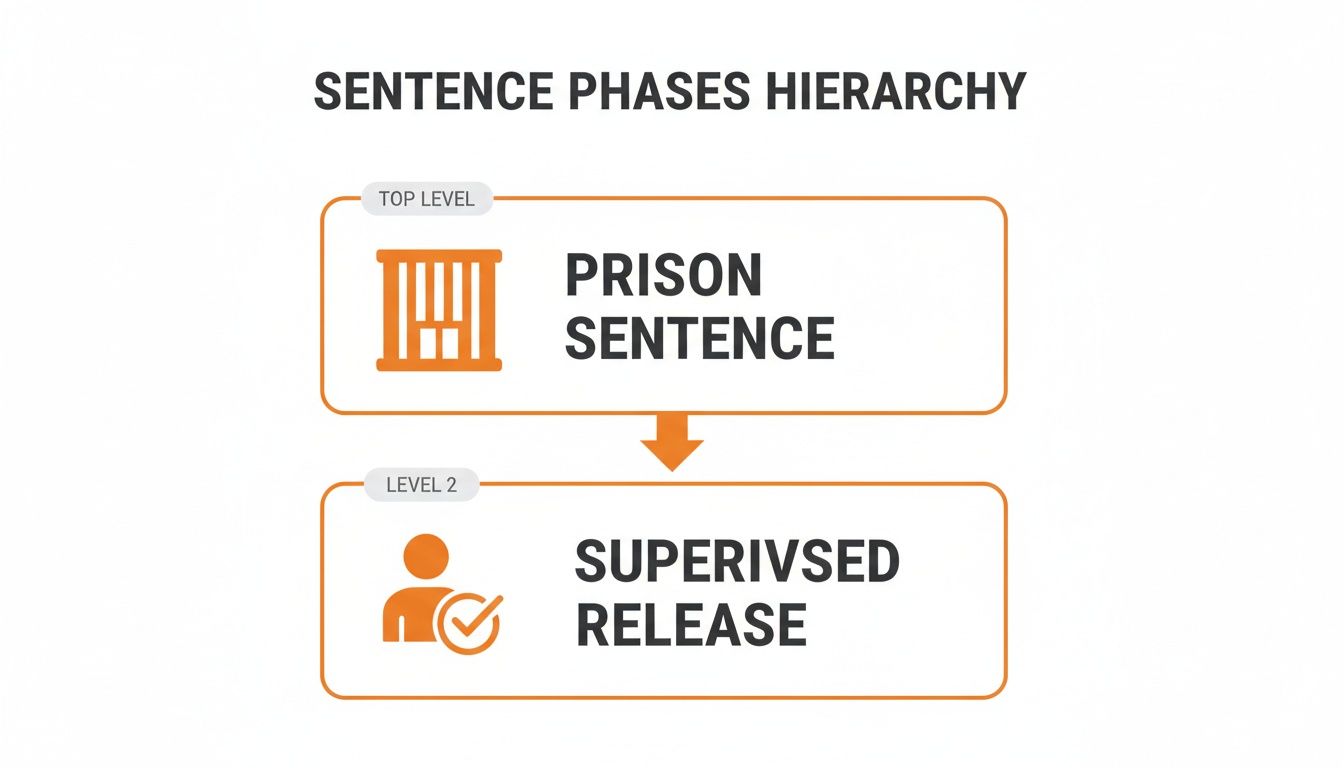
As you can see, supervised release is not a break from a sentence. It is the final, community-based chapter.
Supervised Release vs Probation vs Parole at a Glance
This simple table breaks down the key differences.
| Term | When It Occurs | Who Orders It | What It Replaces |
|---|---|---|---|
| Probation | As an alternative to incarceration | A judge, at sentencing | Jail or prison time |
| Parole | During a prison sentence | A parole board, after review | The rest of a prison sentence |
| Supervised Release | After a prison sentence is completed | A judge, at sentencing | Nothing—it is an added period |
Let's look more closely at what each one means for you and your family member.
Key Differences to Understand
Knowing which situation applies helps you ask the right questions and offer the right support.
Probation is a sentence that can keep someone out of jail or prison. A judge may order probation instead of incarceration, allowing the person to remain in the community as long as they follow specific rules, like maintaining a job and checking in with an officer. If a person violates probation, the judge can revoke it and order them to serve the original jail time.
Parole is an early, conditional release from prison. It is not guaranteed. An inmate becomes eligible, and a parole board reviews the case to decide if they can serve the remainder of their sentence in the community. It is typically granted based on good behavior and rehabilitation, not as a standard part of the original sentence.
Supervised Release is different. It is a mandatory period of monitoring that happens after a person has already served their entire prison sentence. A federal judge includes it as part of the original sentence from day one. It is not an early release—it is an additional, required phase of supervision that starts the day they are released from custody.
This distinction is the most important one to understand. It frames the expectations for everyone involved. For someone leaving prison, supervised release is simply the next required step, governed by a set of rules they must follow to stay free and rebuild their life in communities like Cumming, Alpharetta, or Johns Creek.
Typical Rules and Conditions for Supervised Release
Once someone begins supervised release, their day-to-day life is guided by a specific set of rules. These conditions are not intended as punishment; they are structured steps to help a person get re-established and remain accountable.
For families, knowing what to expect can make a significant difference in providing the right support. While every case is unique, the court sets two types of conditions: standard and special.
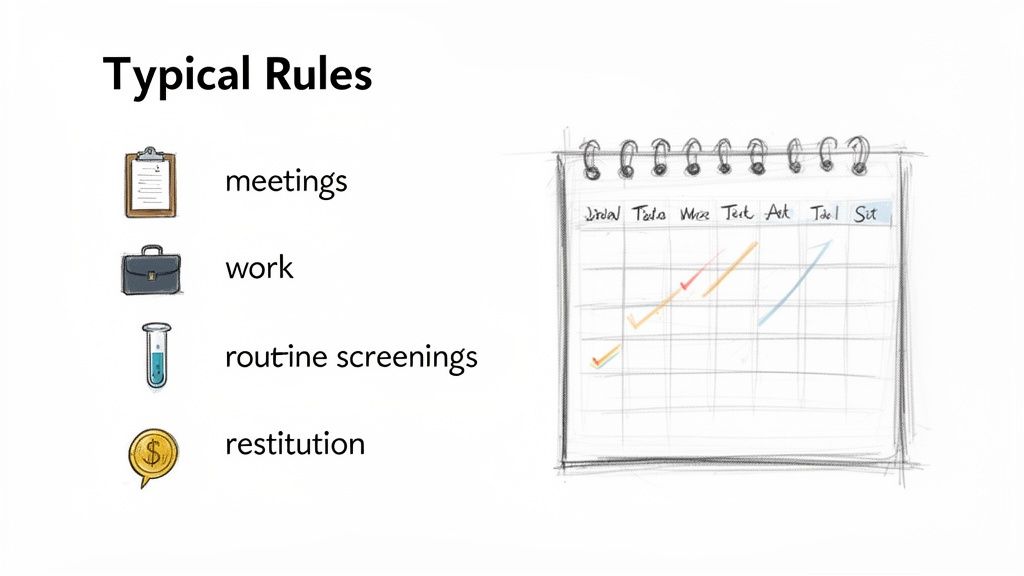
Standard Conditions for Everyone
Think of standard conditions as the foundation. These are fundamental requirements that apply in nearly every case and create the baseline for supervision.
Common standard conditions include:
- Reporting to a Probation Officer: This means regular check-ins to discuss progress and challenges.
- Maintaining Employment: The person is usually required to find and keep a steady job or show they are actively looking for work.
- Avoiding Criminal Activity: Committing any new offense is a serious violation.
- Submitting to Drug and Alcohol Testing: Routine screenings are standard to ensure the person remains substance-free.
- Notifying Officer of Changes: Any change of address or employment must be reported to the probation officer.
These rules provide a clear, predictable framework. The goal is to build a stable environment where someone can focus on successfully rebuilding their life. Following the rules is about showing a commitment to moving forward.
Special Conditions Tailored to the Case
In addition to the standard rules, a judge can add special conditions. These are customized requirements based on the details of the original offense or the person's history, designed to address specific needs.
Here are a few examples of special conditions:
- Counseling or Treatment Programs: This could mean required attendance at substance abuse treatment, anger management classes, or mental health counseling.
- Paying Restitution: If the original offense resulted in a financial loss to a victim, the court may order a payment plan to repay that money.
- Geographic Restrictions: A person might be prohibited from visiting certain places or contacting specific people, such as victims or co-defendants.
- Electronic Monitoring: In some cases, a judge may require an ankle monitor to track a person's location. You can learn more in our guide to the common rules associated with ankle monitor usage.
Understanding both standard and special conditions gives your family a clear roadmap of what to expect. It helps get everyone on the same page, working toward the successful completion of the supervised release term.
Why You Are Hearing About Supervised Release More Often
If it seems like the term “supervised release” is mentioned more frequently, you are correct. This part of the justice system has become a standard component of nearly every sentence, especially in federal court.
For families, this trend can be reassuring. It means supervised release is not an unusual punishment added to a loved one's sentence. Instead, it is a common, structured step that can help reduce some of the anxiety around the process.
A Standard Part of Modern Sentencing
In the past, parole was the more familiar term for post-prison supervision. That changed with the Sentencing Reform Act of 1984, which largely replaced the parole system at the federal level with the more structured framework of supervised release.
The goal was to make sentencing more consistent. Now, a judge determines the entire sentence at once—both the time to be served in prison and the period of supervision that will follow. This way, a plan for reentry is part of the sentence from the beginning.
Because of this shift, supervised release is now an almost universal part of federal prison sentences. In fact, data from the United States Sentencing Commission shows that over 90% of defendants sentenced to prison also receive a term of supervised release. This high number demonstrates how integrated this phase has become. You can review these trends in federal sentencing from the USSC for more details.
Viewing supervised release as a standard procedure helps remove some of the fear and uncertainty. It is a planned phase designed to provide structure and support during the critical transition back to life in communities like Cumming, Alpharetta, and Johns Creek.
What This Means for Families
For families supporting a loved one, this move toward standardized supervision provides a clearer roadmap. You will know the full timeline from the sentencing hearing, including how long the monitoring period will last after incarceration. This clarity makes long-term planning more manageable.
Of course, immediately after an arrest, the focus is always on pretrial release—and that is where a bail bonds company provides help. But understanding the entire picture is valuable. Knowing that supervised release is a common part of the journey can bring a sense of stability during a difficult time.
Understanding What Happens if a Violation Occurs
It is natural to worry about what happens if the rules of supervised release are not followed. While thinking about this can be stressful, knowing the process can help your family provide the right support to keep things on track.
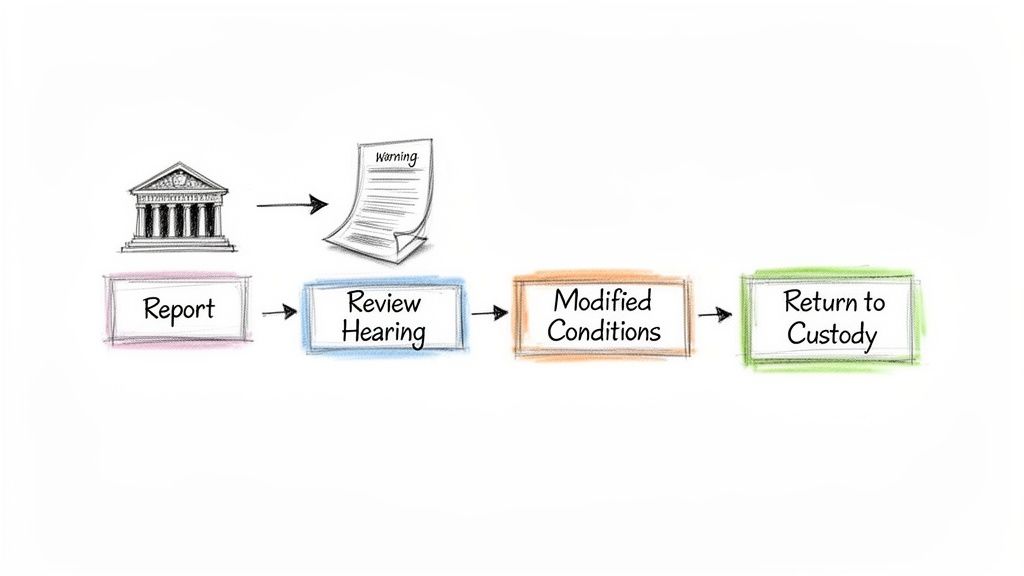
If a probation officer believes a condition has been violated, the first step is to report it to the court. This does not automatically mean failure; it begins a formal review process.
The Violation Review Process
The process typically starts with a court hearing. A judge will review the probation officer’s report and give the individual a chance to explain their side of the story. The final decision rests with the judge.
This process is a reminder that supervised release is legally considered a continuation of the original sentence. It is sometimes called a 'split sentence'—where someone serves time in prison and then finishes the remainder under supervision in the community. These terms can range from one year to much longer, with an average of around four years. You can see how federal law structures these sentences by reviewing the legislative text on post-release supervision.
Potential Outcomes of a Violation
The consequences of a violation depend on its seriousness. A judge has several options.
- A Formal Warning: For a minor, first-time issue, the judge might issue a warning and emphasize the importance of following the rules.
- Modified Conditions: The judge could decide to tighten the restrictions. This might mean more frequent check-ins, new counseling requirements, or other limitations.
- Revocation of Release: For serious or repeated violations, the judge has the authority to revoke the supervised release and send the person back to prison.
Open and honest communication with the probation officer can help address challenges before they become formal violations. This proactive approach is the best way to complete the term successfully. In many ways, staying compliant mirrors the requirements of pretrial release. Learning about what happens if you miss court can offer more perspective on why these obligations are taken so seriously.
How We Help With the Immediate Pretrial Release Process
While this guide explains supervised release—a phase that happens after someone serves a sentence—your immediate concern right now is likely the pretrial stage following an arrest. This is the moment where you need clear guidance, and it’s where our experience with the local systems in Forsyth County, Cumming, and Hall County can help.
Our entire focus is on helping you navigate that first critical step: securing pretrial release from jail. This is a completely separate process from the post-sentence supervision we have discussed. Our job is to provide the bail bond needed to get your loved one home while they await trial.
Your First Call for Clear Guidance
When you feel overwhelmed, the last thing you need is more confusion. We can slow things down and walk you through the bonding process with simple, direct steps. You do not have to figure this out on your own.
Our team is here 24/7 to provide calm, steady support when you need it most. We will:
- Listen to your situation with respect and discretion.
- Explain exactly what information is needed to start the bail process.
- Clearly outline the steps for posting a bond in Forsyth or Hall County.
- Answer your questions patiently and professionally.
The most important thing to remember is that pretrial release and supervised release are two very different things. We specialize in the immediate need—posting a bail bond in Forsyth County to help ensure your family member does not have to wait in jail for their court date.
Dealing with an arrest is stressful enough. Let us handle the complexities of the bonding process so you can focus on supporting your family. We are a local Georgia bonding company dedicated to providing straightforward help to our neighbors in Cumming, Alpharetta, and Johns Creek.
If you need help in Forsyth or Hall County, call and we’ll explain what to do. We can start everything over the phone and guide you step by step.
Your Questions About Bail and Release, Answered
When a loved one is arrested, you likely have many urgent questions. This section provides calm, direct answers to common concerns about the bail process.
To be clear, bail and pretrial release are separate from the long-term process of supervised release, which happens after a case is resolved. Right now, let’s focus on the immediate steps to bring your loved one home.
How do I start the bail bond process?
The first step is a simple phone call. When you contact a professional bonding company, we will ask for some basic information and guide you through the process, one step at a time. We are available 24/7 to help you get started right away in Forsyth County, Cumming, and the surrounding North Metro Atlanta area.
What information will I need to provide?
To get started, we typically need the person's full name, their date of birth, and the jail where they are being held, such as the Forsyth County or Hall County detention centers. If you do not have all of this information, please call us anyway. We can often help you find what is needed.
Can the bail bond process be handled over the phone?
Yes. In most cases, we can handle everything needed right over the phone and through email. Our goal is to make this process as straightforward as possible for your family, so you do not have to worry about travel during an already difficult time. We handle every step with the respect and discretion your family deserves.
How long does it take to be released after a bond is posted?
Once we post the bond with the jail, the timing is in the facility's hands. Release times can vary depending on their internal procedures and how busy they are. While our experience with local jails in Forsyth and Hall County gives us a good idea of what to expect, we cannot guarantee a specific timeline.
If you need immediate help with the bail bond process in Forsyth County, GA, Best Bonding is here to provide clear answers and guide you through what comes next. Call now to get clear next steps and start the process.