
When you get a call that a loved one has been arrested, it’s easy to feel overwhelmed and unsure of what to do. The most helpful thing you can do right now is take a calm breath and focus on gathering a few key pieces of information. This situation is stressful, but the path to getting someone released is a clear, step-by-step process.
Having these details ready before you call a bail bonding company will make everything move more quickly and smoothly. At Best Bonding, serving Forsyth County, GA and surrounding communities like Cumming and Hall County, we use this information to locate your loved one in the system and provide you with accurate answers right away.
What to Do Right Now: Your Quick Checklist
- Gather Key Information: You'll need the person's full legal name, date of birth, and the jail where they are being held (e.g., Forsyth County Jail, Hall County Jail).
- Have Your ID Ready: As the co-signer, you will need a valid, government-issued photo ID.
- Call a Local Bonding Company: An experienced agent can verify the bond amount and explain the next steps clearly.
Your Immediate Checklist for Posting Bond in Georgia
Here’s a simple, manageable list of what you'll need to get started.
Information About the Person in Jail
First, we need to accurately identify the person who has been arrested. Being precise here is key, so please double-check if you can.
- Their Full Legal Name: We need their complete first, middle, and last name, exactly as it appears on their driver's license or ID. Nicknames or shortened names will not work with the jail's system.
- Their Date of Birth: The person's full date of birth is one of the main ways the jail identifies an individual.
- The Jail's Location: You'll need to know which facility is holding them. Are they at the Forsyth County Jail in Cumming, the Hall County Jail in Gainesville, or another local jail in the North Metro Atlanta area? If you're not sure, our guide on how to find someone in jail in Georgia can walk you through the process.
What You'll Need as the Co-Signer
As the person arranging the bond (also known as the co-signer or indemnitor), you’ll need a couple of things on your end as well.
- A Valid Government-Issued Photo ID: This can be your driver’s license, a state ID card, or a passport. We need this to verify your identity when you sign the bond agreement.
- A Way to Pay: You’ll need to cover the non-refundable bond premium. This is the fee for our service, and it's typically a percentage of the total bail amount. Most professional bonding companies accept major credit cards, and we can often discuss other payment options if needed.
To make it even simpler, here’s a quick reference table of everything we just covered.
Information and Documents Needed at a Glance
| Information Needed | Why It's Required | Where to Find It |
|---|---|---|
| Detainee's Full Legal Name | To accurately locate the individual in the jail system. | Driver's license, legal documents, or ask a family member. |
| Detainee's Date of Birth | Serves as a primary identifier for the jail. | Same as above. |
| Name of the Jail | So the bondsman knows where to post the bond. | The person who called you, or online inmate search tools. |
| Your Photo ID | To verify your identity as the co-signer. | Your wallet (driver's license, state ID). |
| Payment Method | To pay the non-refundable premium for the bond. | Your credit/debit card. Discuss other options if needed. |
Getting these few items together is the single most productive thing you can do right now.
With the person's name, birthdate, and location, plus your own ID and payment information, you are ready to have a clear and efficient conversation. It puts you in the best position to get things moving and bring your loved one home.
How the Bail Bond Process Works in Georgia
The legal system can feel like a maze, but the bail bond process itself is actually quite straightforward—especially when you have an experienced local guide. Once you've gathered the essential information about your loved one, the path from your first phone call to their release follows a clear sequence. We have helped hundreds of families in Forsyth County, Hall County, and nearby communities like Alpharetta and Johns Creek through this exact situation, so allow us to walk you through it.
When you call a bonding company, the first thing an agent will do is use the information you collected to confirm where the person is being held and the exact bail amount set by the court. This initial step is critical, and it moves much faster when you have all the right details ready.
Understanding the Agreement and Payment
After confirming the details, the next step is handling the paperwork. The most important document is the indemnity agreement, which is a contract between you (as the co-signer or "indemnitor") and the bail bond company. This agreement outlines your main responsibility: ensuring the person you're bonding out appears for all their court dates.
This is also when you'll take care of the payment. It's important to understand the two different figures involved:
- The Bail Amount: This is the full amount the judge sets (for example, $10,000). Think of it as the court's insurance policy to guarantee the accused person returns.
- The Bond Premium: This is the non-refundable fee you pay us for our service. In Georgia, this fee is typically between 10% to 15% of the total bail amount.
So, for a $10,000 bail, your premium would be somewhere between $1,000 and $1,500. By paying that premium, the bonding company takes on the risk of posting the full $10,000 with the court for you.
At its core, a bail bond agent’s job is to provide a financial guarantee to the court on your behalf. This allows you to secure someone's release from jail for a small fraction of the total bail, so you don't have to drain your savings or tie up your own assets.
This visual lays out the simple flow, from getting the information together to calling a local agent to start the process.
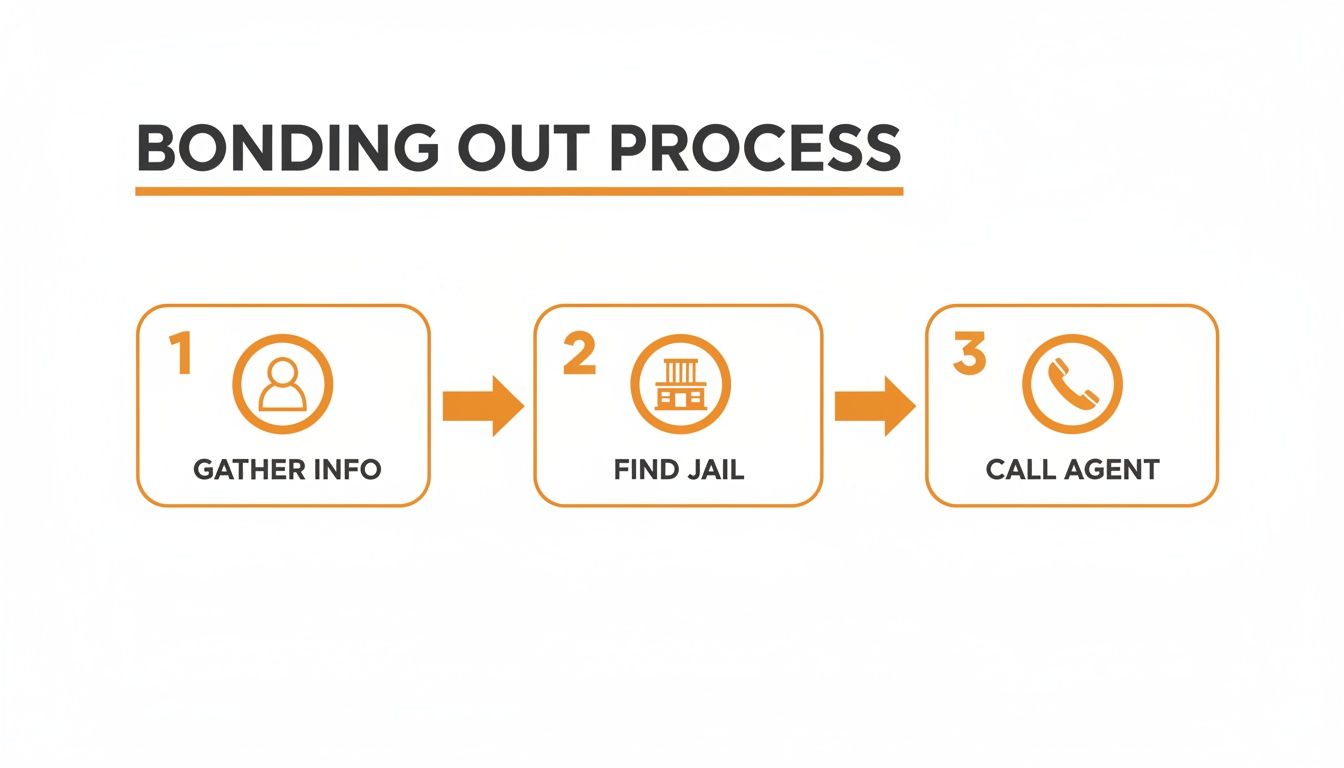
As you can see, the process is designed to be sequential and clear, removing a lot of the guesswork during what is already a stressful time.
Posting the Bond at the Jail
Once the paperwork is signed and the premium is paid, your part is largely complete. From there, the bail bond agent physically goes to the jail—whether it's the Forsyth County Jail in Cumming or another facility in a nearby community—and "posts" the bond with the staff.
This action is what formally guarantees the full bail amount to the court. As soon as the jail staff accepts and processes our bond paperwork, they will begin the administrative steps to get the individual released.
Understanding the Co-Signer's Role and Responsibilities
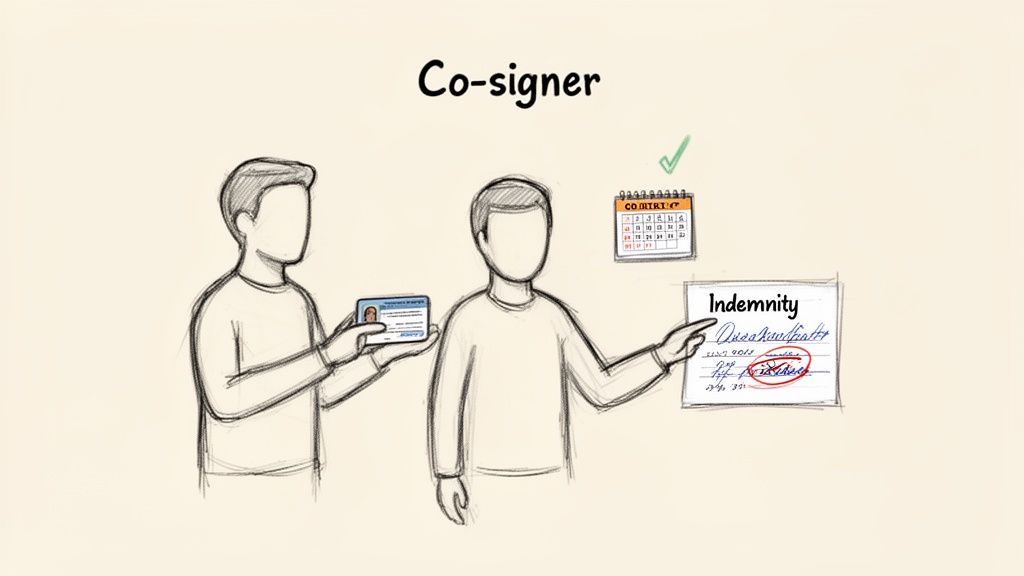
When you agree to help someone get out of jail with a bail bond, you step into a legal role called a co-signer, or sometimes an indemnitor. It's an act of trust, and it comes with real responsibilities. We want you to know exactly what you are agreeing to, so you can make a decision you’re comfortable with.
Deciding to co-sign goes beyond just helping with the bond fee. You are making a commitment to us and the court system. You are giving your word that the person who was arrested will appear for court until their case is resolved.
The Primary Responsibility of a Co-Signer
Your number one job as a co-signer is to ensure the defendant gets to every single court date. That is the core of the entire agreement. When we post a bond, we are promising the court the full bail amount if the person fails to appear. As the co-signer, you are backing that promise.
Think of your signature on the indemnity agreement as your personal guarantee. You are vouching for the defendant and accepting the financial risk associated with their release from jail.
The Core Commitment: By co-signing, you are financially guaranteeing the defendant's appearance in court. This is the single most important part of your role.
Financial Obligations and Potential Consequences
It’s crucial to understand the financial side of this commitment. You pay a small, non-refundable fee to secure the bond, but your signature makes you responsible for the full bail amount if the defendant fails to appear in court. For instance, on a $20,000 bond, you are financially responsible for that entire $20,000.
If the defendant misses a court date, the judge forfeits the bond and demands the full $20,000 be paid. At that point, we must turn to you—the co-signer—to cover that debt. This is a situation no one wants, which is why it’s so important to stay in communication with the defendant and remind them of their court schedule. You can get a better sense of how this works if you learn what a bail bond agent does and how we work with co-signers.
Basic Requirements to Become a Co-Signer
To be an indemnitor, you typically just need to meet a few basic requirements. These are in place to ensure you are in a stable position to take on this responsibility.
- You must be at least 18 years old.
- You need a valid, government-issued ID to verify your identity.
- You’ll need to show proof of stable employment or income.
Being a co-signer is a serious role, but it is a manageable one. It’s also one of the most powerful ways you can support someone during a difficult time. By understanding your responsibilities from the start, you can move forward with confidence.
Navigating the Costs and Payment Options for Bail
When an arrest happens, money is almost always a primary concern. Let's address it directly. Understanding how the costs break down can remove a lot of uncertainty and show you a clear path forward.
The good news is the system is not designed for you to pay the entire bail amount out of pocket.
When a judge sets bail—say, at $10,000—you are not expected to show up with that amount in cash. This is where a bail bond company steps in, and it all starts with the premium.
The Bond Premium Explained
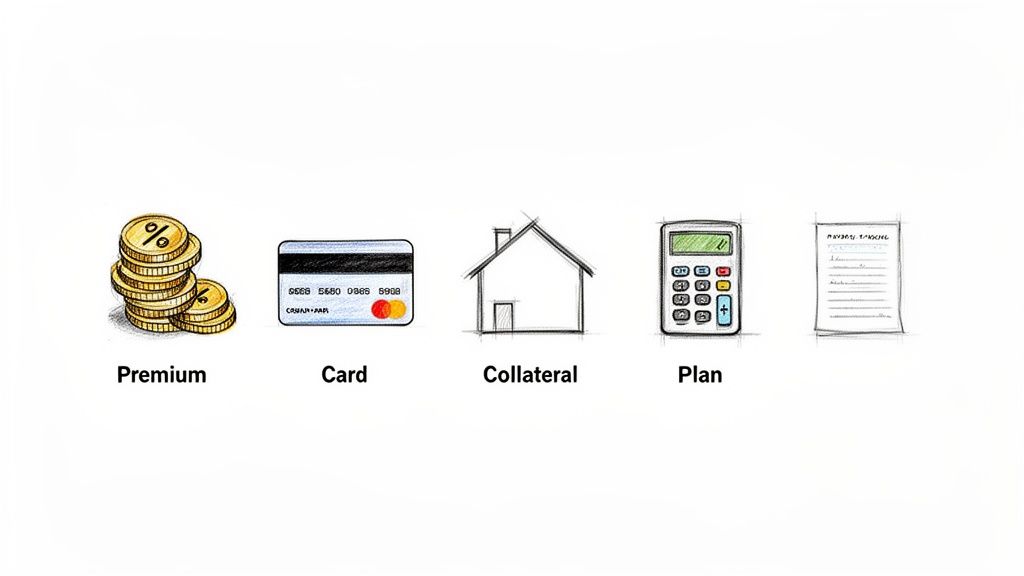
The premium is a non-refundable fee you pay the bonding company. In exchange, we post the full bail amount with the court on your behalf, guaranteeing the defendant's appearance.
In Georgia, this fee is typically 10-15% of the total bail. So for that $10,000 bond in Forsyth County, you would pay us a premium somewhere between $1,000 and $1,500. This makes getting someone out of jail manageable, preventing families from having to deplete their savings to secure a release.
We know that even the premium can be a sudden, unexpected expense. That's why we accept several forms of payment to make things easier. Most families find that using a major credit or debit card is the quickest and most straightforward way to get the process moving.
When Collateral Might Be Needed
For much larger bail amounts or in certain higher-risk situations, we may ask for collateral. This term shouldn't be intimidating. Collateral is simply an asset of value—like a car title or property—that you pledge to secure the bond.
Think of it as an extra layer of security that guarantees the court will receive the full bail amount if the defendant does not show up for their court dates.
Please know that collateral is not required for most bonds. It usually only comes into play in more serious cases, and if it's a possibility, we will have a direct, upfront conversation with you about it. There will be no surprises.
The best part? As long as the defendant makes it to all their court appearances, your collateral is returned to you in full once the case is concluded.
We are here to make this as clear and accessible as possible. To help you get even more prepared, we put together a guide that goes into more detail on the bail bond payment options available in Georgia. Our goal is to give you the information you need to make the right decision for your family.
What to Expect After the Bond is Posted
Getting the bond posted brings a great sense of relief, but it’s not the end of the process. It simply means you are moving into the next phase: the actual release and the responsibilities that follow. Our support doesn't stop once we've posted the bond—we are here to ensure you know exactly what’s coming next.
Once we hand over the bond paperwork to the staff at the Forsyth or Hall County jail, they begin their own internal release process. This part is not instant. The actual time it takes can vary based on factors completely outside of our control.
A question we hear all the time is, "How long will it take for them to get out?" We post the bond paperwork as quickly as possible, but the jail’s release timeline depends on their current workload, staffing levels, and specific internal procedures. It usually takes a few hours, but patience is necessary during this final administrative step.
The Release and What Comes Next
When your loved one is finally released, they are free to go home. But that freedom comes with very important conditions set by the court. This is the most critical part of the entire post-release period.
The person who was released on bond has two main obligations they must honor:
- Attend All Court Appearances: They must be present for every single court date, without exception. Missing even one will cause the bond to be forfeited, and a new warrant will likely be issued for their arrest.
- Follow All Conditions of the Bond: The judge may have set other rules, such as no-contact orders, required check-ins, or travel restrictions. Following these conditions is not optional.
Your Role and Our Continued Support
As the co-signer, your job to help ensure the defendant gets to court continues until the case is completely finished. It helps to keep communication open and perhaps even track court dates together. Our team is also here to send reminders and answer any questions you might have about the court process.
We know our job isn't done just because the jail doors have opened. We remain a resource for you, providing the same steady guidance you received when you first called. The goal is a smooth journey from start to finish, and that includes helping you navigate everything that comes after the release.
Common Questions We Hear Every Day
When you're in a situation like this, your head is likely full of questions. That is completely normal. We have helped hundreds of families through this same process in Forsyth and Hall Counties, and we have answered just about every question you can imagine.
Here are the most common concerns we hear, with direct answers to give you some clarity.
What Info Do I Need to Get Started?
To get the process started quickly, we only need three pieces of information. If you have this ready when you call, we can usually locate your loved one in the system and get you an exact bond amount right away.
- The person’s full legal name
- Their date of birth
- Which jail they're in (e.g., Forsyth County Jail or Hall County Jail)
With just that information, we can figure out the rest and tell you exactly what the next steps are.
Can We Do All This Over the Phone?
Yes, absolutely. We know that coming to our office in Cumming isn't always possible, especially during such a stressful time. Our primary goal is to make this as easy on you as we can.
We can handle all the paperwork over the phone and through email, whether you are right here in Forsyth County or helping from another state.
Being able to handle the entire bonding process remotely is a vital service for many families. It means you don't have to wait to start the process of getting your loved one out, no matter where you are. We will get the documents sent to you electronically so things can begin moving immediately.
How Long Until They're Actually Released?
This is easily the number one question we are asked. Once we have the agreement completed with you, we post the bond at the jail as fast as possible. From that point on, however, the actual release timeline is up to the jail staff.
Processing the paperwork and releasing someone can take anywhere from a few hours to several hours. It all depends on how busy the jail is at that moment. Once we officially submit the bond, we can usually give you a better estimate based on what we are seeing at the facility in Forsyth or Hall County that day.
What If They Miss a Court Date?
This is the most critical part of the agreement. As the co-signer, you are financially responsible for the full bail amount if the defendant does not appear for court. It is a serious responsibility, and it's vital to make sure the person you bonded out attends every single one of their hearings.
If something comes up—a true emergency or a scheduling mistake—the most important thing you can do is call your bail agent immediately. Keeping us informed allows us to understand the situation and see what options might be available. The courts do not take missed appearances lightly, so acting fast is always the best way to keep a difficult situation from getting worse.
If you need help in Forsyth County, Hall County, Alpharetta, or Johns Creek, our team at Best Bonding is available to provide clear, steady guidance. We are here when you need us. Call now to get clear next steps and start the process.