
When a loved one has been arrested, the legal system can be confusing and stressful. One of the first steps you may hear about is a "preliminary hearing." This is an important checkpoint where a judge reviews the case to decide if there is enough evidence to move forward.
For families in Forsyth County, understanding this stage is key, and it often begins with securing a person's release from jail. A local bonding company can provide clear guidance during this uncertain time.
If you need help in Forsyth or Hall County, call and we’ll explain what to do. Best Bonding is available 24/7 at 770-888-4585.
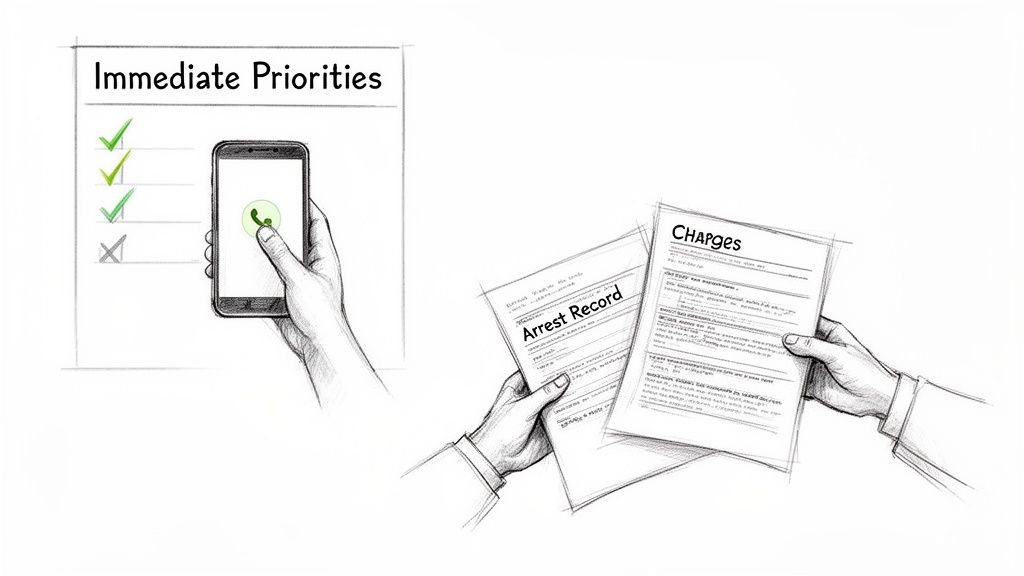
What to Do Right Now
- Call a Local Bonding Company: The first step is to secure release. This allows your loved one to return home and prepare for court from a stable environment.
- Contact a Defense Attorney: Once release is arranged, the next call should be to a qualified attorney who can provide legal advice and representation.
- Gather Paperwork: Collect any documents related to the arrest, such as booking information or citations, to share with your legal counsel.
The Purpose of a Preliminary Hearing
It is common to think a preliminary hearing is a trial where a judge decides if someone is guilty or innocent. However, its purpose is much more specific. The hearing is a screening process for the state's case.
The judge’s only role is to determine if there is enough probable cause to continue with the charges. "Probable cause" is a much lower standard of proof than the "beyond a reasonable doubt" required for a conviction at trial. The prosecutor simply needs to show that a crime was likely committed and that the accused person may be connected to it.
This hearing is an important safeguard in the Georgia justice system. It is designed to prevent cases based on weak or unfounded charges from proceeding further.
Why This Hearing Matters
- It Tests the Evidence: This is often the first opportunity for a defense attorney to see the state's evidence and question witnesses, usually the arresting officer.
- It Protects the Accused: The hearing ensures the state has a legitimate reason to proceed with a case, filtering out charges that lack sufficient evidence.
- It Informs the Defense Strategy: By observing the prosecution's arguments, a defense attorney can begin to build a stronger strategy for the case ahead.
For more details on the initial steps after an arrest, you can learn more about what happens after an arrest. Being released on bond is crucial, as it allows the accused to work closely with their attorney to prepare.
A preliminary hearing is not a trial. It is a procedural step to determine if there is enough evidence for the case to proceed. Being present, prepared, and represented by an attorney is essential.
A Step-by-Step Guide to the Courtroom Process
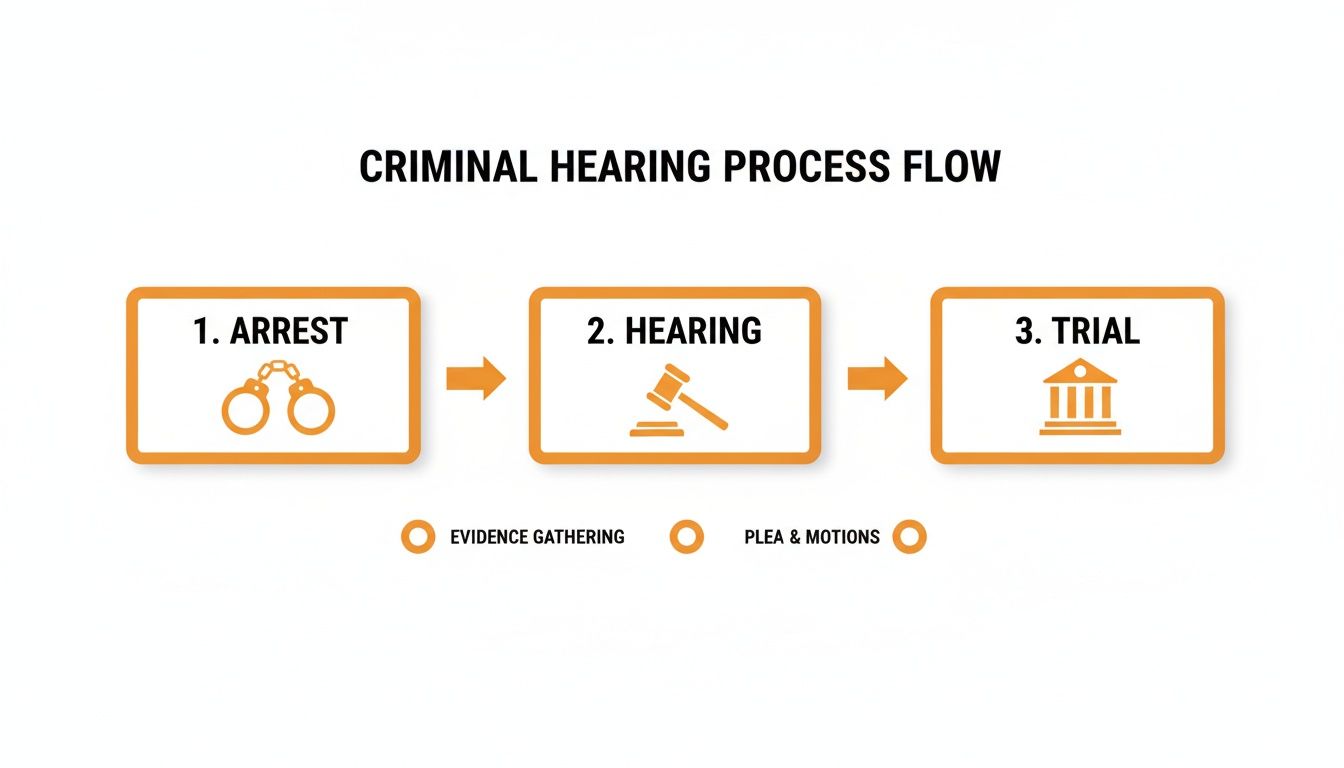
Walking into a courtroom in Forsyth or Hall County can be an unfamiliar experience. Knowing what to expect during a preliminary hearing can help reduce some of the stress. This hearing is a structured checkpoint, not a full trial.
As the flowchart shows, this hearing serves as a filter after an arrest but before a case can proceed to trial, ensuring only cases with sufficient evidence move forward.
Who Is in the Courtroom?
Understanding the role of each person in the room can help you follow the proceedings.
- The Judge: The judge acts as a neutral referee. Their job is to listen to the evidence and decide if there is probable cause for the case to continue.
- The Prosecutor: This is the attorney representing the state. They will present evidence, usually through a witness, to support the charges.
- The Defense Attorney: This is the lawyer for the person accused. Their role is to protect their client's rights and challenge the prosecution's evidence.
What Happens During the Hearing
Once the case is called, the process follows a predictable order.
- The Case is Called: A court clerk announces the case, and both the prosecutor and defense attorney state they are ready to proceed.
- The Prosecution Presents Evidence: The prosecutor calls a witness, typically the arresting police officer, to testify.
- The Witness Testifies: The officer describes the events leading to the arrest and the evidence collected.
- The Defense Cross-Examines: The defense attorney has the opportunity to question the witness. This is a chance to identify inconsistencies or weaknesses in the state's case.
- The Judge Makes a Ruling: After hearing the evidence and arguments, the judge decides if the prosecutor has shown enough probable cause.
The cross-examination is a critical part of the hearing. It is the defense attorney's first formal opportunity to challenge the state's version of events and gather information for the defense.
This process is different from an arraignment, which is another court appearance that happens later. To understand the distinction, you can learn more about what happens during an arraignment.
The Three Possible Outcomes of a Hearing
After both sides have presented their case, the judge will make a ruling. This decision is not about guilt or innocence but is focused solely on whether there is enough probable cause for the case to continue. The hearing can end in one of three ways.
Outcome 1: Case Dismissed
The best possible outcome is a dismissal. This occurs if the judge finds that the prosecutor did not present enough evidence to establish probable cause. If the case is dismissed, the charges are dropped, and the matter is concluded. For someone out on a bail bond, a dismissal also concludes their obligations for that bond.
Outcome 2: Case "Bound Over"
The most common outcome is for the case to be "bound over" for trial. This means the judge determined that the prosecution met the standard of probable cause. The case is then sent to the next level of the court system, such as Superior Court in Forsyth or Hall County, to move toward arraignment and a potential trial. If a case is bound over, all bail bond conditions remain in effect.
Outcome 3: Charges Are Reduced
In some situations, the judge may find there is probable cause for a crime, but not for the original charge. The charges can then be reduced to a lesser offense, such as a misdemeanor. This can change the direction of the case and may lead to new plea negotiations. The bail bond typically remains active, and all court requirements must still be met.
The ability to prepare for a hearing from home is a significant advantage. National data shows many individuals are detained before trial because they cannot afford bail. Securing release allows for better preparation and communication with legal counsel. You can read more about the impact of pretrial detention from the Prison Policy Initiative.
How Bail Bonds Help Your Defense
During any court proceeding, the person accused has fundamental rights. Being out on bail is often the most practical way to ensure those rights can be exercised effectively. Securing release with a bail bond allows someone to actively participate in building their own defense, which is very difficult to do from jail.
The Advantage of Preparing from Home
Being released on bond provides significant practical advantages for preparing a defense.
- Meeting with Your Attorney: You can meet with your lawyer privately and on a flexible schedule, rather than during restrictive jail visiting hours.
- Assisting in Your Defense: Being free allows you to help your attorney by gathering documents, identifying potential witnesses, and reviewing evidence.
- Maintaining Stability: Staying out of jail helps you keep your job and support your family, demonstrating stability to the court.
The ability to prepare for your hearing is a cornerstone of a fair legal process. It allows you to work with your attorney to challenge the prosecution’s claims and protect your rights.
The time between an arrest and a hearing can be short. Federal statistics show that while many defendants are released before trial, any misstep can result in that release being revoked. Acting quickly to secure a bail bond in Forsyth or Hall County helps you prepare from a position of strength. You can learn more from data on federal pretrial release and misconduct.
Working with an experienced bonding company in Cumming, GA, is an important step toward giving your defense the best possible chance to succeed.
We Provide Clear Guidance Through the Bonding Process
The period between an arrest and a preliminary hearing can be confusing. Having a calm, experienced local partner on your side makes a significant difference. When you call us for help with bail bonds in Forsyth County, you are getting a guide who understands the local court and jail systems.
We have helped many families in Forsyth, Hall, Cumming, Alpharetta, and Johns Creek navigate this exact situation. Our goal is to provide straightforward guidance and help restore stability during a difficult time.
How Our Bonding Process Works in Georgia
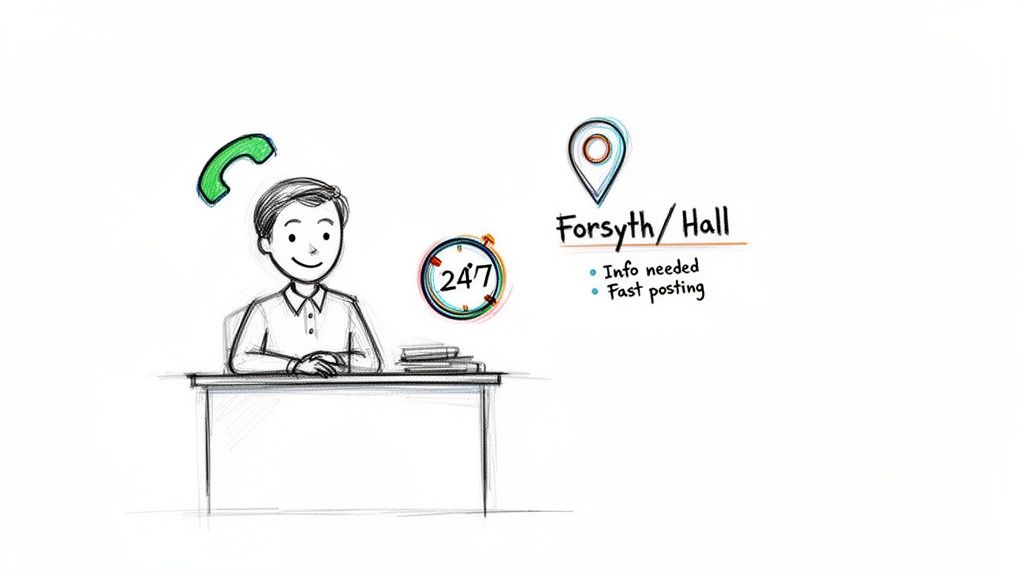
We keep the process simple and discreet. When you call, we will calmly explain what information is needed, and we can often handle everything over the phone.
- Call Us 24/7: A single phone call is all it takes to start. We are always available because arrests can happen at any time.
- Provide Basic Information: We will ask for the defendant's name, where they are being held, and help you find any information you might not have.
- We Handle the Rest: We act quickly to post the bond and manage the release process, allowing your family to focus on preparing for the hearing.
Our role is to provide a clear path to getting your loved one home. By handling the details of the release process, we give you the space to focus on what matters most: preparing a strong defense for the upcoming hearing.
With a local team familiar with the processes in Forsyth and Hall County, you get the reassurance of working with someone who knows the area. We are committed to respectful, discreet service.
Frequently Asked Questions About Hearings and Bail Bonds
It is normal to have questions after an arrest, especially about bail bonds and court dates. We have provided answers to some of the most common concerns we hear from families in Forsyth County.
Do I still have to attend my hearing if I am out on bond?
Yes, absolutely. Attending every scheduled court date is a mandatory condition of your release on a bail bond. Missing a court date will result in the bond being forfeited and a new warrant being issued for your arrest.
Can a judge change the bail amount at the hearing?
It is possible. During a preliminary hearing, a judge can review the bail amount and may decide to raise, lower, or even eliminate it based on the evidence presented. This is an important topic to discuss with a defense attorney beforehand.
What happens if a case is "bound over"?
If a case is "bound over," it means the judge found enough probable cause for the case to proceed to the next stage in the court system, which is typically an arraignment in Superior Court. Your bail bond remains active, and you must continue to attend all future court dates.
What information do you need to start a bail bond?
To begin the process, we usually just need a few key pieces of information:
- The defendant’s full name and date of birth
- The name of the jail where they are located (e.g., Forsyth County Jail)
- The charges they are facing
Our agents can help you gather this information over the phone.
Navigating the legal system is challenging, but you do not have to do it alone. If you need to arrange for someone's release in Forsyth County, Hall County, Alpharetta, or Johns Creek, Best Bonding Forsyth is here to provide clear next steps.
We can start everything over the phone and guide you step by step. Call us anytime at 770-888-4585 or visit our website at https://bestbondingforsyth.com.