
When a judge in Forsyth County or a nearby court orders alcohol monitoring as a condition of release, it can feel intimidating and confusing. The first question most people have is, "How does an alcohol ankle bracelet actually work?" It’s a reasonable question, and having a clear answer can reduce a lot of stress.
Unlike a breathalyzer, this device—often called a SCRAM monitor—is different. It works by testing for alcohol 24/7 through the skin. This process, called transdermal analysis, takes a sample approximately every 30 minutes, creating a continuous, reliable record of sobriety for the court.
If you need help navigating bail bonds in Forsyth County, GA, our team at Best Bonding is available 24/7. We provide calm, clear explanations to help you through the process. Call now to get straightforward next steps.
Understanding Continuous Alcohol Monitoring
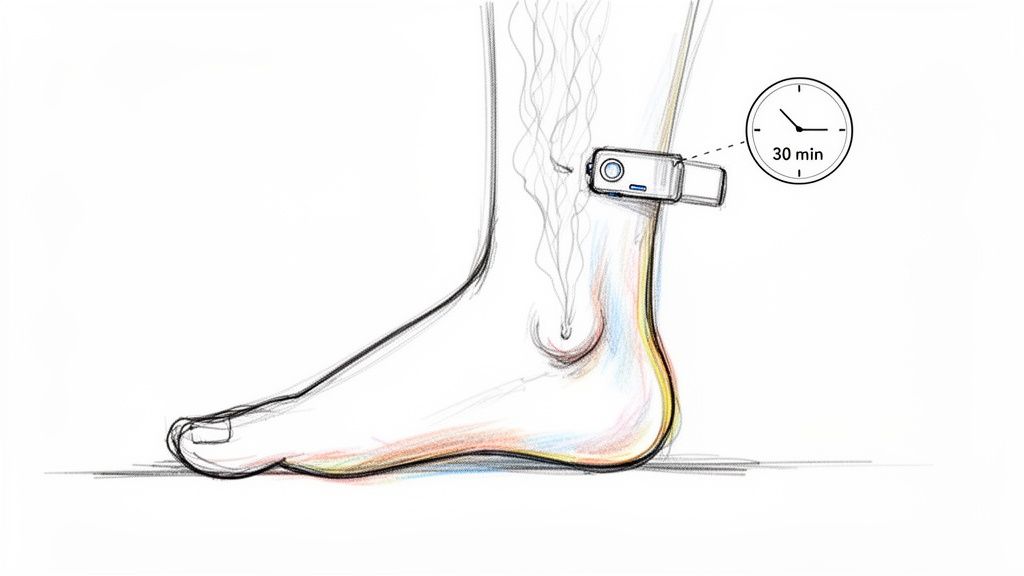
When someone is released on bond in Forsyth County or nearby areas like Cumming and Hall County, the court often sets specific conditions to ensure compliance. For any alcohol-related charge, continuous alcohol monitoring is a common requirement. This is where the ankle bracelet comes into play.
Its purpose is to provide an unbiased, around-the-clock report of a person’s sobriety. This technology allows someone to remain in their home, keep their job, and manage their daily life—all while demonstrating compliance with the court's orders. It replaces the need for random, inconvenient tests with a full, non-stop picture of sobriety.
How the Technology Works in Simple Terms
Think of the bracelet as a small, automated lab on your ankle. Your body naturally releases a tiny, invisible amount of vapor through your skin throughout the day. If you have consumed alcohol, that vapor will contain a measurable trace of ethanol.
To give you a clearer idea, here’s a quick summary of what these devices do and don't do.
Key Functions of an Alcohol Ankle Bracelet
| Function | How It Works | Purpose |
|---|---|---|
| Transdermal Testing | Samples the insensible perspiration (vapor) from your skin every 30 minutes to test for alcohol. | Provides continuous, 24/7 monitoring without requiring the user to do anything. |
| Data Transmission | Securely and automatically sends collected data to a central monitoring station for analysis. | Creates a complete and objective record for the supervising agency or court. |
| Tamper Detection | Includes sensors that detect if the bracelet has been removed, damaged, or obstructed. | Ensures the data is reliable and that the device is being worn as required. |
| GPS Tracking (Optional) | Some models also include GPS to monitor location, but this is a separate function from alcohol detection. | Often used for house arrest or to enforce location-based restrictions. |
The technology itself, which has been used since 2003, is well-established. The bracelet fits snugly on the ankle, where its sensors can operate correctly. If the device confirms alcohol consumption, it generates an alert that is sent directly to the supervising agency. You can find more details on this monitoring technology on the Office of Justice Programs website.
It's important to remember that the goal of this device is accountability, not punishment. It provides a clear and consistent way to demonstrate a commitment to staying sober while a legal case moves forward.
Understanding the basics of what an ankle monitor is and how it works can take much of the anxiety out of the situation. Knowing what to expect allows you to focus on meeting your obligations. For families across North Metro Atlanta, from Johns Creek to Alpharetta, this clarity can make a stressful time more manageable.
How Does It Actually Detect Alcohol?
It may sound like science fiction, but the technology behind an alcohol-monitoring ankle bracelet is straightforward. It’s all based on a process called transdermal testing.
Think about how you perspire when you get warm. Your body naturally releases tiny amounts of moisture through your skin. In much the same way, when someone drinks alcohol, their body metabolizes it, and a small, measurable amount escapes as an invisible vapor through the skin.
That vapor is what the ankle monitor is designed to detect. The device is a small, automated lab strapped to your ankle, constantly sampling the air around the skin for any trace of ethanol. Because it checks around the clock, it gives a complete picture of sobriety, which is why courts in Forsyth County and Hall County rely on it for bail compliance.
What About False Alarms?
This is a very common question: How does it know the difference between alcohol someone drank and alcohol from something like hand sanitizer or cleaning supplies? The technology is designed to tell them apart by looking at patterns.
When you drink alcohol, it enters your bloodstream and is processed by your body over several hours. This creates a very distinct data pattern—a smooth curve that rises as the alcohol is absorbed and then slowly falls as it’s eliminated.
Environmental exposure, such as splashing on cologne, creates a different picture. It’s a sharp, sudden spike that disappears almost as quickly as it appeared. The device’s software is programmed to recognize these different signatures.
A confirmed drinking event is not triggered by a single high reading. It is identified by the entire data profile over several hours, which dramatically reduces the chances of a false positive from accidental contact.
The 3 Key Parts of an Alcohol Monitor
An alcohol ankle bracelet isn't just one sensor. It’s a smart system with a few critical parts working together to ensure reports are accurate and reliable. Once you understand the components, the device makes more sense. If you're curious about other devices, you can read more about the different types of ankle monitors used in court cases.
Here are the three main components that make it all work:
- The Electrochemical Sensor: This is the heart of the system. It’s a tiny fuel cell that reacts only to ethanol vapor. When it detects alcohol, it creates a small electrical current. The stronger the current, the more alcohol is present.
- Onboard Data Storage: The sensor takes a reading about every 30 minutes, and each one is time-stamped and saved directly on the device. This creates a minute-by-minute log that gets sent to the monitoring center. That stored data is what allows an analyst to see the full absorption and elimination curve.
- Anti-Tamper Features: To ensure monitoring is uninterrupted, the bracelet includes multiple security features. Temperature sensors confirm it’s attached to a person, infrared sensors check for anything blocking the skin, and special straps will know instantly if the device is cut or removed. Any attempt to interfere with it triggers an immediate alert.
Understanding Alerts for Alcohol and Tampering
When a judge orders an alcohol-monitoring ankle bracelet, knowing what triggers an alert—and what doesn't—is critical. These systems are designed to be accurate, not to cause issues with false alarms. They use a data-driven process to confirm a potential drinking event before anyone is notified.
If the sensor picks up alcohol vapor from your skin, it doesn't immediately send an alarm. Instead, the device's software analyzes the data pattern over several hours. It’s looking for the distinct "curve" that shows alcohol being absorbed and then eliminated by the body. This helps it ignore random, brief spikes that might come from something like hand sanitizer or cologne.
Only after the device confirms a pattern that matches actual drinking does it send the data to the monitoring agency. A trained analyst typically reviews the report before it is sent to a probation officer or the court.
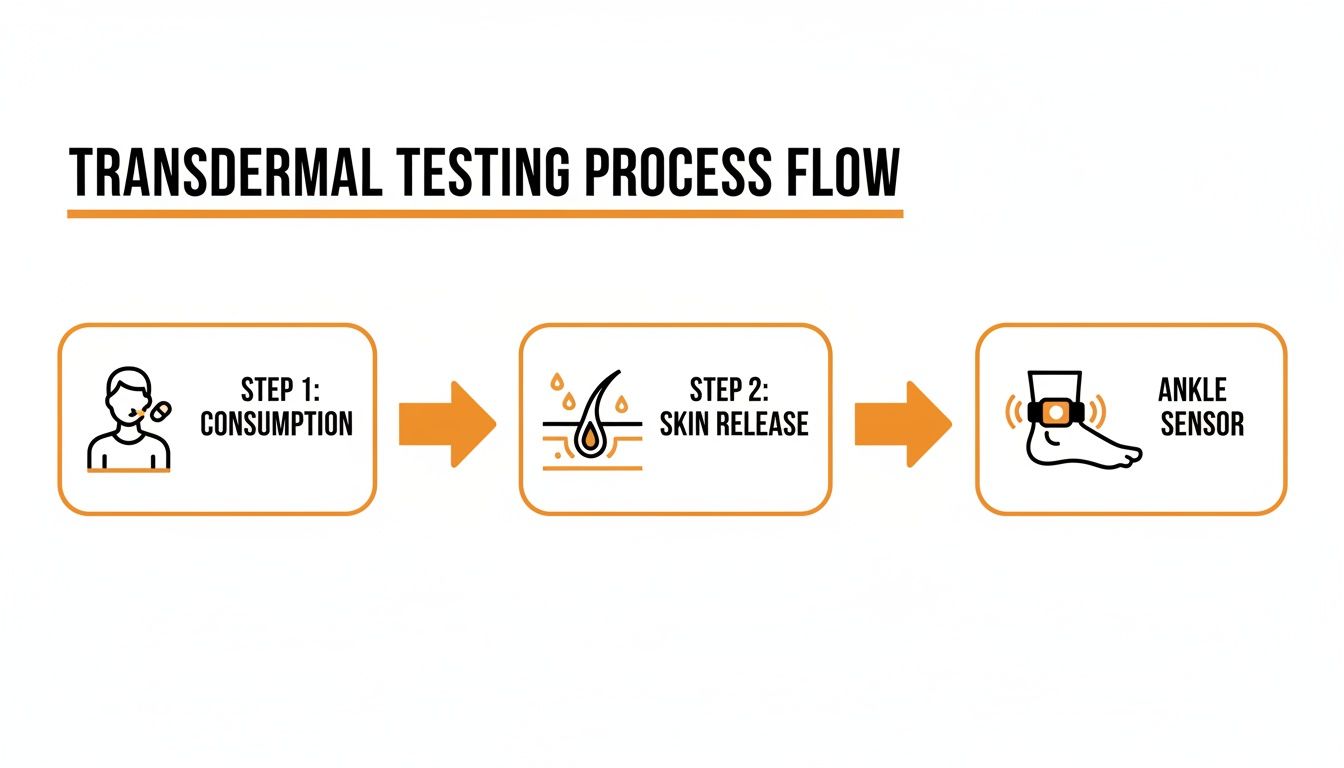
The key takeaway is that the sensor isn’t taking a single snapshot. It’s recording the entire story of how the body is processing alcohol over time.
Responding to Tamper Alerts
The bracelet does more than just detect alcohol. It’s also packed with sensors to make sure it stays on and is working correctly 24/7. Any attempt to interfere with the device will generate an immediate tamper alert, which is treated as seriously as a confirmed drinking violation.
These alerts are built to be extremely reliable, creating a secure system that courts in Forsyth and Hall Counties trust for accurate, round-the-clock monitoring.
Here are the most common actions that will trigger a tamper alert:
- Cutting or Damaging the Strap: The strap contains a fiber-optic cable. If that cable is cut, stretched, or broken, an instant alert is generated.
- Blocking the Sensor: You cannot put anything between the sensor and your skin. Trying to slide paper, thick fabric, or a heavy layer of lotion underneath will obstruct the reading, and an infrared sensor will report it.
- Trying to Remove It: The bracelet is fitted securely. Any attempt to pry it open or force it off will damage the unit and trigger an immediate alert.
- Submerging in Water: While the device is water-resistant enough for a daily shower, it should not be submerged. Taking a bath or going swimming can damage the electronics and will almost certainly send a tamper notification.
The bracelet generates different types of alerts to communicate specific issues. Understanding what they mean is key to avoiding problems.
Alert Types and Their Meanings
| Alert Type | What It Means | Potential Consequence |
|---|---|---|
| Confirmed Drinking Event | The sensor detected a pattern of alcohol absorption and elimination consistent with consumption. | A violation report is sent to the court or supervising officer, which could lead to a bond revocation hearing. |
| Tamper Alert | The device's sensors detected an attempt to cut, remove, or obstruct the bracelet. | This is treated as a serious violation, often resulting in immediate notification to the court and a potential arrest warrant. |
| Communication Failure | The device has been unable to connect to the monitoring base station to upload its data. | You will be contacted to resolve the issue. If it persists, it may be reported as a potential non-compliance issue. |
| Low Battery | The device's battery is critically low and needs to be charged. | Failure to charge the device could lead to it shutting down, resulting in a communication failure or tamper alert. |
Each alert is taken seriously by the monitoring agency. The goal is to maintain an unbroken and accurate record for the court.
Compliance Is the Only Way Forward
Trying to circumvent this technology is not a good idea. It is designed to be incredibly difficult to bypass. Research shows just how effective these devices are. One major study found that 96% of participants returned their devices intact. It also showed that most tamper events were directly linked to detected drinking, proving the system’s reliability. You can read more about the study's findings on tamper events and compliance.
The easiest way to complete your monitoring period without any issues is to comply with the rules. Avoid alcohol completely, and do not damage or obstruct the device. Doing so provides the court with a clean record, shows you’re taking your responsibilities seriously, and helps your case move forward—which is the goal for anyone dealing with the bail process in Cumming, Alpharetta, or anywhere else.
Life With the Bracelet: Your New Normal
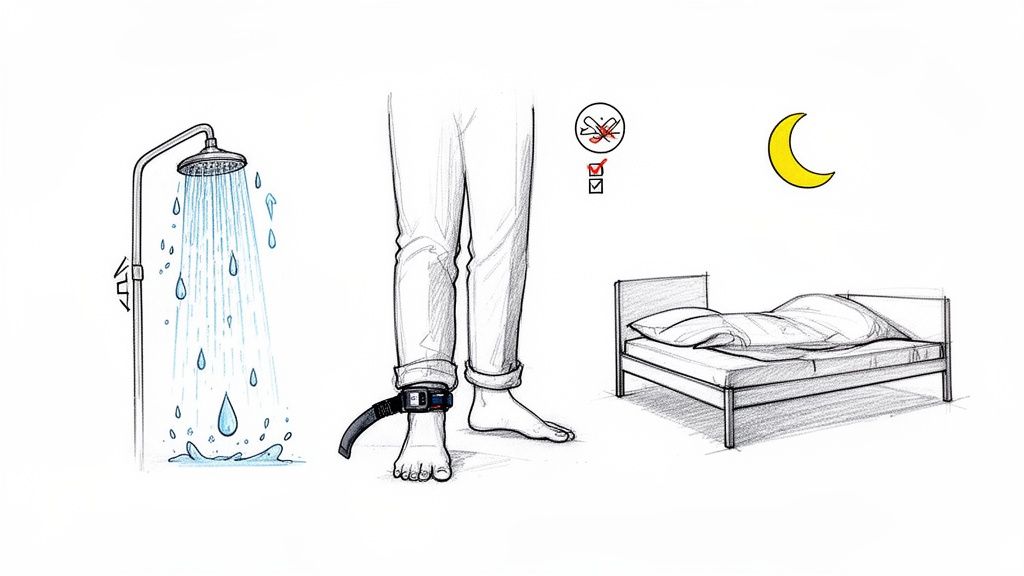
Adjusting to an alcohol monitoring bracelet feels a little strange at first. But knowing the practical, day-to-day realities can take the guesswork out of the equation and help you settle into a new routine.
The good news is that these devices are designed to fit into your life, not take it over. You can still go to work, take care of your family, and handle your daily business. The key is to learn how to incorporate the device's requirements into your existing schedule.
Daily Hygiene and Care
One of the first questions people ask is about showering. These devices are water-resistant, so showering with them on is perfectly fine.
However, there is a critical distinction: they are not waterproof. This means you must avoid submerging the bracelet in water. For the duration of your monitoring, that means no baths, swimming pools, or hot tubs. After you shower, make it a habit to gently pat the device and the skin around it dry.
Keeping the area clean and dry isn't just about the device—it's for your own comfort, too. A quick tip: stay away from any alcohol-based lotions, sprays, or powders near the bracelet, as they can sometimes interfere with readings.
Clothing, Comfort, and Sleep
You don’t need a new wardrobe to accommodate an ankle bracelet. Most people find that their regular socks and pants cover the device just fine, making it fairly unnoticeable.
- Pants: Straight-leg or boot-cut pants and jeans will fit right over the bracelet without any issue.
- Socks: Many people wear a simple tube sock over the device. This creates a soft barrier that prevents it from rubbing against your skin or catching on clothing, especially while you sleep.
- Sleeping: It might take a night or two to find a comfortable sleeping position. Some people find that a small pillow between their ankles helps, preventing the device from bumping their other leg.
After a few days, most people report that they barely notice it’s there anymore.
The experience is designed to hold you accountable, not to be a constant source of discomfort or disruption. The most successful approach is to treat it as a temporary but necessary part of your daily routine.
Managing Data Uploads and Connectivity
The bracelet doesn't transmit data 24/7 like a cell phone. Instead, it quietly collects its readings throughout the day and then uploads them at specific times.
This is usually handled by a small base station in your home that connects to a phone line or cellular network. You'll just need to be within range of that station for a set period each day—often overnight while you're sleeping—so it can send the data. It’s a simple but crucial part of your daily responsibilities.
If you want to learn more, our guide explains some common questions about how much ankle monitors cost and the services that come with them.
Understanding these daily logistics helps demystify the process. When you know what to expect, you can focus on meeting your obligations and moving forward.
The Bracelet's Accuracy and Limitations
When a court in Forsyth County orders an alcohol ankle bracelet, it's natural to have questions about how well it actually works. It's important to trust the technology, and understanding its strengths—and its limitations—is the key to a stress-free monitoring period.
These devices are incredibly precise when it comes to detecting alcohol consumption. They do this by taking constant readings and looking for a very specific pattern: the slow rise and fall of alcohol being processed by the body. This methodical, data-driven approach makes them a reliable tool for courts.
How Reliable Is the Technology?
Generally speaking, continuous alcohol monitors are very reliable. They aren't easily fooled by a single, accidental splash from an alcohol-based hand sanitizer or cleaning product. The system is designed to tell the difference between environmental exposure and actual drinking by analyzing data over several hours.
Research backs this up, showing that these devices are highly effective at identifying drinking events. One study found that transdermal sensors detected 72.8% of reported drinking episodes, with newer models performing even better. You can review the findings on sensor detection rates if you want a closer look at the science. It's this level of accuracy that gives courts from Cumming to Gainesville confidence in the technology.
The system's strength lies in its consistency. It’s not looking for a single blip, but a clear and sustained pattern that confirms alcohol was metabolized by the body.
This built-in confirmation process is what prevents most false positives. The device doesn't fire off an alert at the first hint of alcohol; it waits to confirm the unique signature of consumption, which looks very different from a brief, external contact.
Avoiding Accidental Alerts
Even though the technology is smart, taking a few simple precautions can provide complete peace of mind and ensure you don't have to worry about an accidental alert. The goal is to avoid any situation that could create confusing data for the monitoring agency.
Here are a few straightforward tips to keep in mind:
- Avoid Topical Products with Alcohol: Steer clear of using lotions, colognes, perfumes, or body sprays containing alcohol on or anywhere near the ankle bracelet.
- Be Mindful of Cleaning Products: When using alcohol-based household cleaners or industrial solvents, make sure the room is well-ventilated and try to avoid direct contact with the device.
- Do Not Submerge the Bracelet: The monitor is water-resistant, so showering is fine. But it is not waterproof. Never submerge it in a bath, hot tub, or swimming pool.
Following these simple guidelines helps maintain a clean data record—which is the best way to prove you're in compliance. If you ever think an alert was triggered by mistake, call your monitoring agent right away to explain what happened. Open communication is always the best policy. Knowing how an alcohol ankle bracelet works is the first step toward a smooth and successful monitoring experience.
How We Help You Navigate Bail Conditions
When a judge in Forsyth County, Cumming, or Hall County requires an alcohol monitoring device as a condition of bail, it can feel like another complicated hurdle in an already stressful situation. It’s important to remember that this is just one part of the process, and you don’t have to figure it out alone.
At Best Bonding, our role is to bring clarity to the entire bail process. While we are a bail bonds company and don't provide the monitoring devices ourselves, we have years of experience helping local families navigate these exact circumstances. We know the system and can provide the calm, straightforward guidance you need.
Our focus is on making sure you understand all your obligations—from securing the bond for release to following through with court-ordered conditions like alcohol monitoring.
Your Resource for the Bail Process
Think of us as your central point of contact for anything related to securing a bail bond. We answer your questions, explain the steps, and help you feel confident about what comes next. After a person is released from jail, they will need to coordinate with a separate, court-approved service to get the ankle monitor installed.
We provide the information you need to take that next step successfully. Our team has helped hundreds of people in situations just like yours, which gives us the practical knowledge to help you avoid common mistakes or delays.
The most important thing is to have a clear plan. We help you create that plan by explaining each requirement, so you can focus on one step at a time without feeling overwhelmed by the process.
This is especially true in places like Forsyth County, Alpharetta, and Johns Creek, where each court may have its own specific procedures.
Guiding You After Release
Our support doesn't end when your loved one is released. We're still here to answer questions and make sure you're on the right track to meet all bail conditions. Complying with monitoring requirements is critical for keeping the bond in good standing and for the positive outcome of the legal case.
We can help by:
- Explaining the conditions set by the court in plain language.
- Providing general information on what to expect with court-approved monitoring services.
- Being available 24/7 for any questions you have about the bail bond agreement itself.
When you work with a local bonding company in Forsyth County, you get more than just a transaction. You get an experienced guide who understands the local process. If you need help, call us. We are here to provide clear next steps and start the process right away.
Frequently Asked Questions About Alcohol Monitoring Bracelets
When a court orders an alcohol monitoring device, it's natural to have questions about how it will impact daily life. Getting clear answers upfront can ease a lot of stress and help you prepare for the monitoring period with confidence.
We've put together answers to some of the most common questions we hear from families in Forsyth and Hall Counties.
Can I Shower with an Alcohol Ankle Bracelet?
Yes, you can. These devices are designed to be water-resistant, so you can and should maintain your normal daily hygiene, including showering.
However, it's critical to remember they are not waterproof. You must avoid fully submerging the bracelet in water. That means no swimming, taking baths, or getting into a hot tub while you're required to wear it. After showering, pat the device and the skin around it dry with a towel.
How Does It Know I Didn’t Just Spill Alcohol on It?
This is an excellent question that gets to the heart of the technology. The device is smart enough to tell the difference between environmental exposure—like a spilled drink—and actual consumption. It comes down to data patterns.
When you drink alcohol, your body metabolizes it and releases it through your skin's pores over several hours. This creates a gradual, predictable curve in the data as your transdermal alcohol content rises and then falls. A spill causes a sharp, unnatural data spike that disappears almost immediately. The system’s software is built to recognize that signature and filter out these types of events.
Does the Alcohol Ankle Bracelet Have GPS Tracking?
That depends on the specific device ordered by the court. Some ankle monitors are combination units that include both alcohol detection and GPS location tracking. But many devices used purely for sobriety monitoring do not have a GPS component at all.
The specific functions of your device will be spelled out in the court-ordered conditions of your release. It's crucial to get clarification from the court or your assigned monitoring agency to understand exactly what features are active on your bracelet.
What if I Have Questions About My Bail in Forsyth County?
If you need help making sense of the bail process or have questions about release conditions in Forsyth County, Cumming, or anywhere in the North Metro Atlanta area, that is exactly what we are here for. We know that navigating the court's requirements can feel overwhelming, but you do not have to figure it out alone.
When you need clarity and a steady hand to guide you through the bonding process, call Best Bonding. We can explain the steps, clarify what is needed, and help you get the process started quickly and discreetly. We are available 24/7 to provide the information you need. Call us now at https://bestbondingforsyth.com.