
When a loved one is arrested in Forsyth County, GA, the first question is always, "How do we get them released?" While many people are familiar with paying a cash bond or using a bail bonds service, another possibility exists: a personal recognizance bond.
This is often called a PR bond or Release on Recognizance (ROR). It is a way for an individual to be released from jail without having to pay any money upfront. Instead of a financial payment, a PR bond is secured by a person's written promise to appear for all future court dates. It is a process handled by the court system, not a bonding company.
The Foundation of a Recognizance Bond
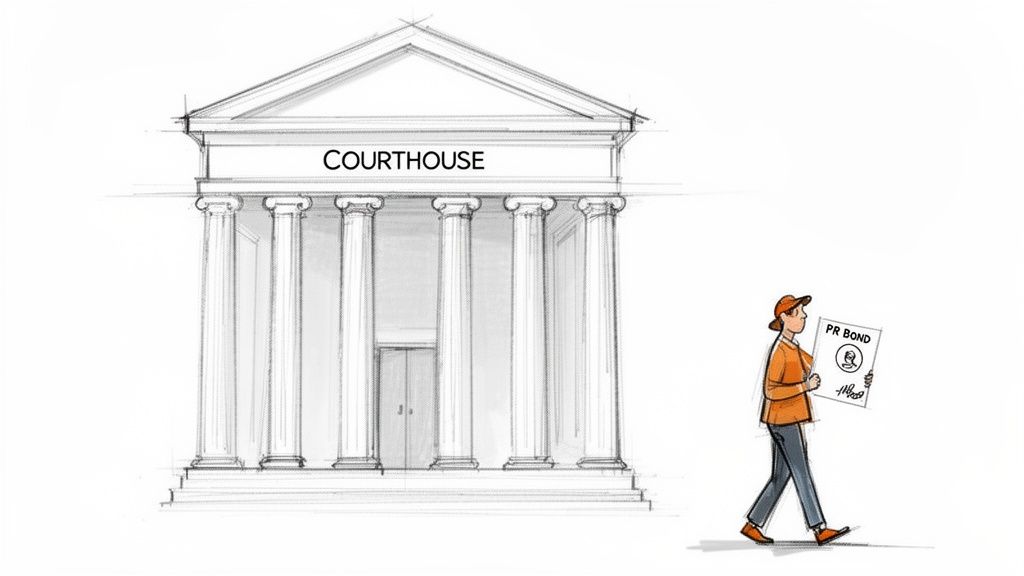
Think of it as the court saying, "We trust you to return." Instead of requiring a financial guarantee like a cash bond or a surety bond, the judge accepts the individual's word as the bond itself. It’s a no-cost release option that helps manage jail populations by allowing low-risk individuals to await trial from home, regardless of their ability to pay bail.
A Promise to the Court
A PR bond is a formal agreement built on trust. When an individual signs the paperwork, they are making a direct promise to the judge and the court system.
This promise comes down to two simple requirements:
- Appear for every single scheduled court date.
- Follow any and all conditions the judge sets for the release.
If they uphold their end of the agreement, they can remain out of jail while their case proceeds—all without any financial cost for the release itself. This allows them to return to work, care for their family, and assist in their own legal defense. You can learn more about how this fits into the bigger picture by reading our guide on pretrial release in our article.
To provide a clearer picture, let's compare a PR bond with the more common surety bond you would get from a bonding company like ours.
| Feature | Personal Recognizance (PR) Bond | Surety Bond (Bail Bondsman) |
|---|---|---|
| Cost | No upfront cost for release. It is granted by the court. | Requires a non-refundable fee (typically a percentage of the total bail amount). |
| Guarantee | The defendant's personal promise to appear in court. | A financial guarantee from a licensed bail bonding company. |
| Collateral | No collateral is required. | May require collateral (like property or a vehicle) to secure the bond. |
| Eligibility | Granted by a judge based on factors like criminal history and ties to the community. | Available to most defendants as long as the fee is paid and terms are met. |
This table shows the fundamental difference: one is based on the court's trust, the other on a financial transaction.
Not an Automatic Option
It is important to understand that a PR bond is not a right. It is a privilege granted entirely at a judge's discretion.
Before granting a PR bond in places like Cumming, Alpharetta, or Gainesville, a judge will carefully review the individual's background. They must balance the person's freedom with community safety and the need to ensure the case moves forward. It is a judgment call on whether the person can be trusted to uphold their promise to the court.
How Judges Decide Who Qualifies for a PR Bond
Being released on a personal recognizance bond is a decision made by a judge. In Forsyth and Hall County courts, the decision comes down to an assessment of risk. A judge must carefully weigh whether an individual is likely to appear for their court dates without any money being required.
The process is a risk assessment. The judge seeks to answer two key questions: Is this person likely to return to court? Do they pose a danger to the community if released?
Community Ties and Stability
One of the first things a judge considers is how connected a person is to the local area. Strong community ties are a significant factor because they suggest an individual is less likely to flee.
Judges will look for clear signs of stability, such as:
- Local Residency: How long has the person lived in Forsyth County, Cumming, or a neighboring community like Alpharetta? Someone who has established roots is seen as a lower flight risk.
- Family Support: Having close family in the area is a powerful anchor. It shows a support system and a reason to remain.
- Steady Employment: A stable job demonstrates responsibility and provides a practical reason to stay and see the case through.
Simply put, the more a person has to lose by leaving, the better their chances are of being granted a PR bond.
Nature of the Charge and Criminal History
The specifics of the case itself are very important. A judge will always consider the seriousness of the charge. Non-violent, minor offenses are more likely to qualify for a PR bond than serious felonies.
An individual's past record is also closely examined. A clean record or only minor offenses from a long time ago works in their favor. On the other hand, a history of failing to appear in court or previous violent convictions will almost certainly make a PR bond unavailable. This part of the process is a major focus during court, and you can find more general information by reading our guide on what happens at a bail hearing.
A judge’s decision on a personal recognizance bond is a careful balancing act. They weigh the individual's personal circumstances against their legal history and the nature of the current charges to make a judgment call on trust and reliability.
At the end of the day, every situation is unique. The judge in a Forsyth County courtroom will look at all these pieces together to make a final decision. There are no guarantees, and it all comes down to their assessment of an individual’s character and circumstances.
The Step-by-Step Process for a PR Bond Release
If a judge in Forsyth County grants a personal recognizance bond, what happens next? Knowing what to expect can make a confusing and stressful time a little easier to manage.
Even though every case has its own details, the release process generally follows the same path, moving from the judge's decision in the courtroom to the final steps at the jail.
From Court Order to Release Paperwork
The process begins the moment the judge makes their ruling, which typically happens during a first appearance or a dedicated bond hearing. Once the PR bond is granted, a series of administrative tasks begins behind the scenes. It's important to remember this part takes time—it is not instant.
First, the court’s order must be officially documented and sent over to the jail. Court clerks create the formal release orders and ensure they are transmitted correctly to the staff at the detention center.
After the jail receives the official order, the staff begins the "out-processing" procedure. This involves a final check for any other outstanding warrants or holds, gathering the person's personal property, and preparing the final release documents. The individual will have to sign the PR bond agreement, which is their formal, written promise to the court.
The flowchart below provides a general idea of what a judge considers before this process even starts.
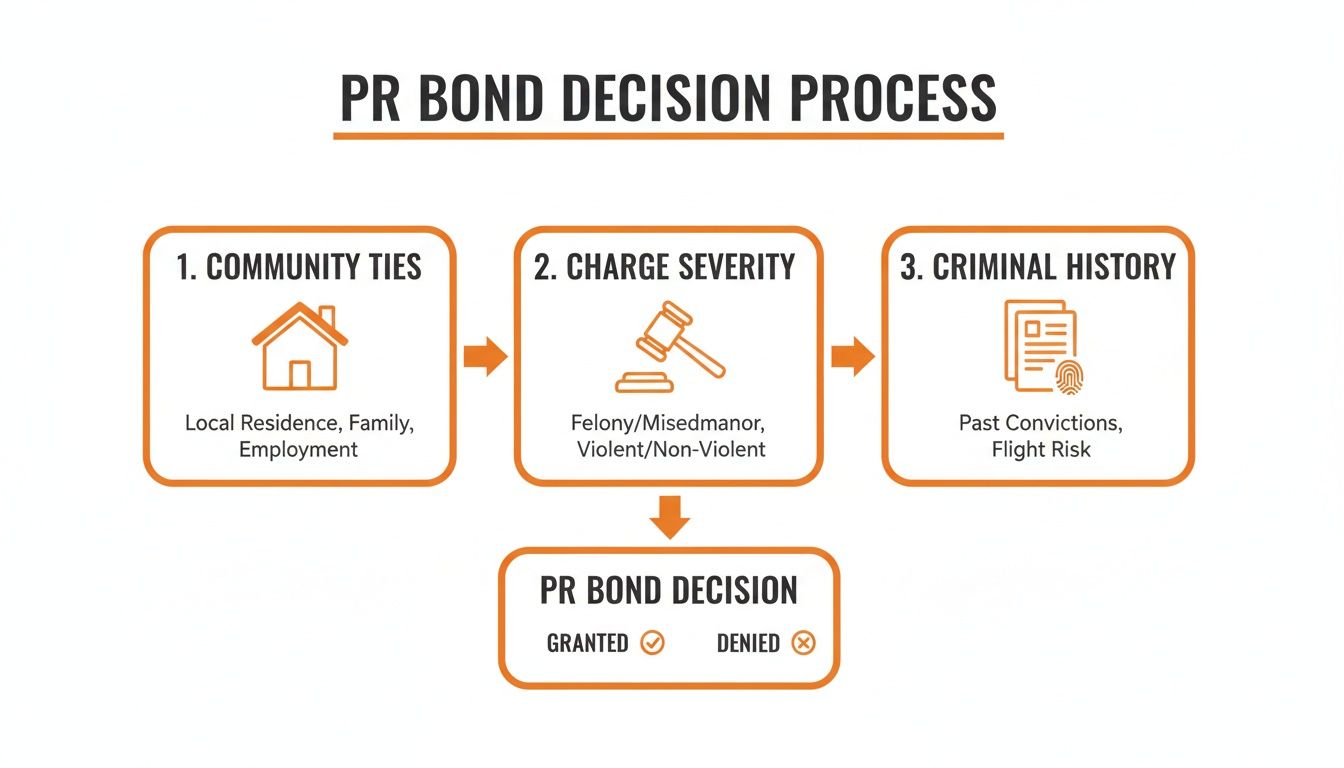
As you can see, a judge weighs a person's ties to the community, the seriousness of the charge, and their criminal history to decide if they can be trusted to return to court.
Understanding the Conditions of Release
Signing the release paperwork is a significant step. The documents will outline the specific conditions the judge has ordered, which are the rules that must be followed to remain out of jail while the case proceeds.
These conditions often include requirements such as:
- Regular Check-ins: This might mean reporting to a pretrial services officer by phone or in person.
- Travel Restrictions: The individual might be ordered not to leave Forsyth County or the state of Georgia without the court's permission.
- No-Contact Orders: They could be legally forbidden from contacting the alleged victim or anyone else involved in the case.
- Substance Abuse Counseling or Testing: If charges are related to drugs or alcohol, the judge may require participation in certain programs.
It is absolutely critical to understand and follow every one of these conditions. A violation of any rule, no matter how small it seems, can cause the PR bond to be revoked, resulting in an immediate return to jail. The promise made to the court is not just about showing up for hearings—it's about following all the rules, all the time.
What Happens If You Violate a PR Bond Agreement
A personal recognizance bond is an agreement built entirely on the court's trust. When a judge grants one, they are releasing someone based on their promise to appear for all hearings and follow every rule set for them. But what happens if that promise is broken?
Violating a PR bond is a serious matter with immediate consequences. The court views it as a direct breach of the trust that was extended. The response is swift, and it’s important to understand how seriously the system takes this.
The Immediate Consequences of a Violation
The moment someone on a PR bond misses a court date or breaks a condition of their release, the legal process moves quickly. The first thing a judge will do is revoke the personal recognizance bond. The trust is considered broken, and the agreement is voided.
At the same time, the court issues a bench warrant for that person's immediate arrest. This warrant is entered into law enforcement databases. This means any interaction with police, whether in Forsyth County or elsewhere, will likely lead to an arrest.
The moment a PR bond is violated, the situation changes dramatically. The leniency shown by the court is replaced by a formal order for arrest, and any future chance of a no-cost release is almost certainly gone.
Facing a New, More Difficult Situation
After an arrest on a bench warrant, the individual will be brought back before a judge, but under much different circumstances. The court is no longer inclined to offer the benefit of the doubt.
A new bond will almost certainly be set, but another PR bond is highly unlikely. Instead, the judge will probably set a high cash or surety bond amount. From the court's perspective, the person is now a flight risk, and a significant financial guarantee will be required before considering release again. Additionally, new criminal charges like "Failure to Appear" could be filed, adding another layer of legal problems to the original case.
Breaking that initial promise not only complicates the current situation but also creates new legal challenges. To get a clearer picture of what can happen when a financial bond isn't fulfilled, you can read more about what is bail forfeiture in our detailed guide. The simplest path is always to honor the court's trust from the beginning.
What to Do When a PR Bond Is Not an Option
Hearing a judge deny a personal recognizance bond can feel like a setback, but it is not the end of the road. It simply means the court requires a financial guarantee that the person charged will appear for their future court dates. This is the point where a professional bonding company can provide a clear path forward.
When a PR bond is not granted, the judge sets a specific bail amount in dollars. Your next step is a surety bond. This is an agreement between the court, the defendant, and a licensed bail bonds company like Best Bonding Forsyth.
We provide the financial guarantee to the court on your behalf. Instead of paying the entire bail amount in cash, you pay our company a non-refundable percentage of the total. We then post the full bond amount with the court, allowing for the release of your loved one.
Taking Action with a Surety Bond
Starting the surety bond process is straightforward, and having some basic information ready when you call helps us move quickly. We can immediately begin the release process in Forsyth County, Johns Creek, or any of the surrounding North Metro Atlanta communities.
To begin, we will ask for a few details:
- The defendant’s full name and date of birth.
- The jail where they are being held (e.g., the Forsyth County Jail).
- The total bond amount set by the judge.
- The charges they are facing, if you know them.
With this information, we can quickly verify the details with the jail and walk you through the next steps calmly and clearly.
When a PR bond isn't an option, a surety bond provides the necessary financial assurance the court requires. It’s a reliable and common solution that allows families to secure a timely release without bearing the full financial weight of the bail amount.
Our job is to handle the financial paperwork and logistics with the court system, offering a steady, professional hand during a stressful time. We’re available 24/7 to answer your questions and guide you every step of the way. For families in Forsyth, Hall County, and Alpharetta, one phone call is all it takes. We can explain everything over the phone and start the process immediately.
Your Local Guide for Navigating Bail in Forsyth County
Trying to understand the arrest and bail process can be overwhelming, especially when you encounter terms like a personal recognizance bond. The most important thing to remember is that you do not have to figure it all out alone.
At Best Bonding Forsyth, our purpose is to provide clear, calm explanations and simple next steps to guide you through this difficult time. We have helped hundreds of families right here in Forsyth County with steady, professional support when they needed it most.
Whether a judge granted a PR bond and you have questions, or if a financial bond was set and you need immediate help, our team is here. We have extensive experience with the local systems in Forsyth, Hall County, and surrounding communities like Cumming and Alpharetta.
Facing the bail process is stressful, but having clear information and an experienced local guide makes all the difference. Understanding your options, from a personal recognizance bond to a surety bond, empowers you to make the best decision for your family.
If you need a reliable bonding company that provides straight answers and is available 24/7, we are ready to help. One phone call is all it takes to have an experienced professional on your side. We can start everything over the phone and guide you step by step.
Your Top Questions About PR Bonds, Answered
When families learn about personal recognizance bonds, they often have specific questions. Here are straightforward answers to the most common inquiries we receive.
Do I Have to Pay Anything for a PR Bond?
No, the release itself is granted by the court at no cost. Unlike a surety bond that requires you to pay a fee to a bonding company, a PR bond is based entirely on a written promise to appear in court, not on money.
However, that promise is legally binding. If it is broken, there can be serious financial penalties and a new, much higher bond may be set.
How Long Does Release Take on a PR Bond?
The timeline varies. Once a judge grants the bond, the court must process the order and transmit it to the jail. From there, the jail staff has its own out-processing steps to complete.
Even though you skip the payment and paperwork steps of a surety bond, this administrative process can still take several hours. It is not an instant release.
Can We Ask the Judge for a PR Bond?
While you cannot personally negotiate with a judge, a criminal defense attorney is the appropriate person to make that request. During a first appearance or a formal bond hearing, a lawyer can present evidence of a person's ties to the community, employment, and other positive factors.
This information helps the judge make an informed decision, but the choice to grant a PR bond is 100% at the judge's discretion.
A personal recognizance bond is entirely at the discretion of the court. Factors like the nature of the charge, criminal history, and local ties heavily influence the judge's decision-making process in Forsyth County.
What Is the Difference Between a PR Bond and a Signature Bond?
In Georgia, there is no practical difference. The terms "personal recognizance bond" and "signature bond" are often used interchangeably to describe the same thing.
Both refer to a no-cost release from jail that is secured by the defendant’s signature and their promise to return to court. Both are granted based on the court's trust.
What Happens If a PR Bond Is Denied?
If a judge denies a PR bond, the next step is to set a specific dollar amount for bail. At that point, you generally have two options: pay the full cash amount directly to the court or contact a licensed bail bondsman.
A bonding company provides a surety bond, which is a financial guarantee to the court, for a fraction of the total bail amount.
If you need help navigating the next steps after a bond decision in Forsyth or Hall County, Best Bonding Forsyth is here to provide clear explanations and fast, professional service 24/7. Call now to get clear next steps and start the process. Learn more at https://bestbondingforsyth.com.