
Receiving a phone call that a loved one is in jail can be a jarring experience. Your mind starts racing, and it's easy to feel overwhelmed. The most important thing you can do in that moment is take a breath, stay calm, and focus on gathering a few key pieces of information.
Once you have the person's full legal name, date of birth, and the jail where they are being held, a local bonding company in Forsyth County can begin the process of arranging their release. This guide is here to provide calm, clear steps during a stressful time.
If you need help now in Forsyth County, GA, or the surrounding communities, our team is available 24/7. Call now to get clear next steps and start the process.
What to Do Right Now: Your First Steps
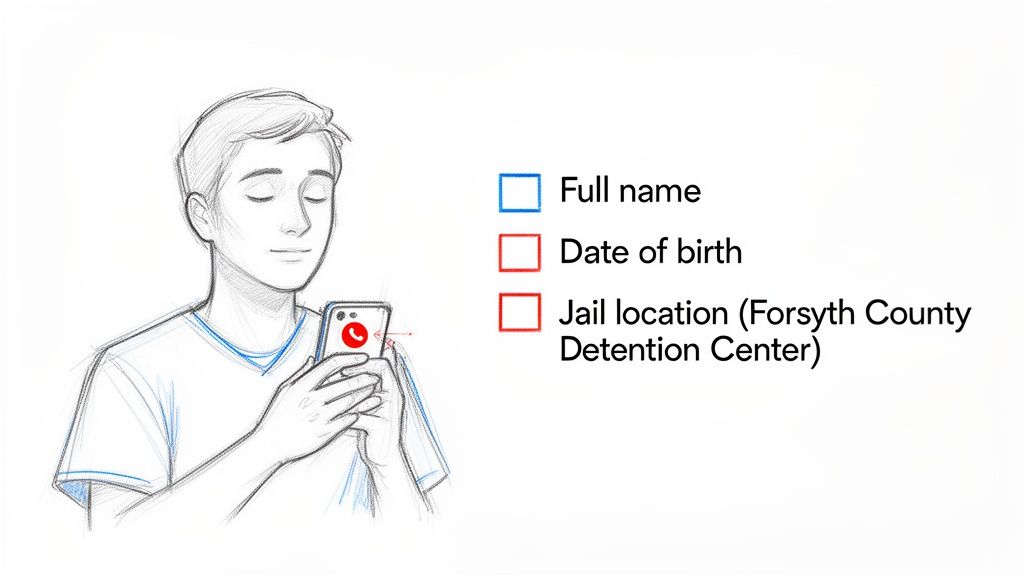
It’s natural to feel a sense of urgency, but focusing on the facts is the most helpful action you can take. Emotional decisions can lead to delays or mistakes, while a clear head helps you move forward productively. Right now, your goal is to collect information, not make assumptions.
The Three Critical Pieces of Information
Before a bondsman can take action, they need specific details to find the individual in the system and confirm their identity. These three items are the foundation of the entire bail process.
- Full Legal Name: Nicknames won't work here. We need the person's complete, official name, including any middle names or suffixes (like Jr. or III). Jail records are precise legal documents, and an incorrect name can make it nearly impossible to locate them.
- Date of Birth: This is the primary way to distinguish between people with similar names. It verifies we are helping the right person and that the bond is applied to the correct case.
- Name of the Jail: Most arrests in our area result in individuals being taken to the Forsyth County Detention Center in Cumming, GA, but you should always confirm this. They might be held in a nearby city jail or have been transferred, especially if the arrest occurred near a county line like Hall County, Alpharetta, or Johns Creek.
Having these three items ready before you call us makes a significant difference. It allows our team to skip the guesswork and access the necessary records right away, which is the first real step toward bringing your loved one home.
Why This Information Is Essential
Each piece of information serves a specific purpose. The name and birth date confirm identity, while the jail location tells us which jurisdiction's rules and procedures we need to follow. Forsyth and Hall County jails, for example, have their own distinct processes for posting bonds. Knowing the correct location from the start saves valuable time.
The entire process that follows an arrest can feel confusing. Understanding these first few steps can provide a measure of clarity. For more detail, you can learn more about what happens after an arrest in our guide. We have found that providing clear, step-by-step information is the best way to reduce confusion. Our role is to offer steady guidance based on our experience helping hundreds of local families.
Navigating the Bail Process in Georgia
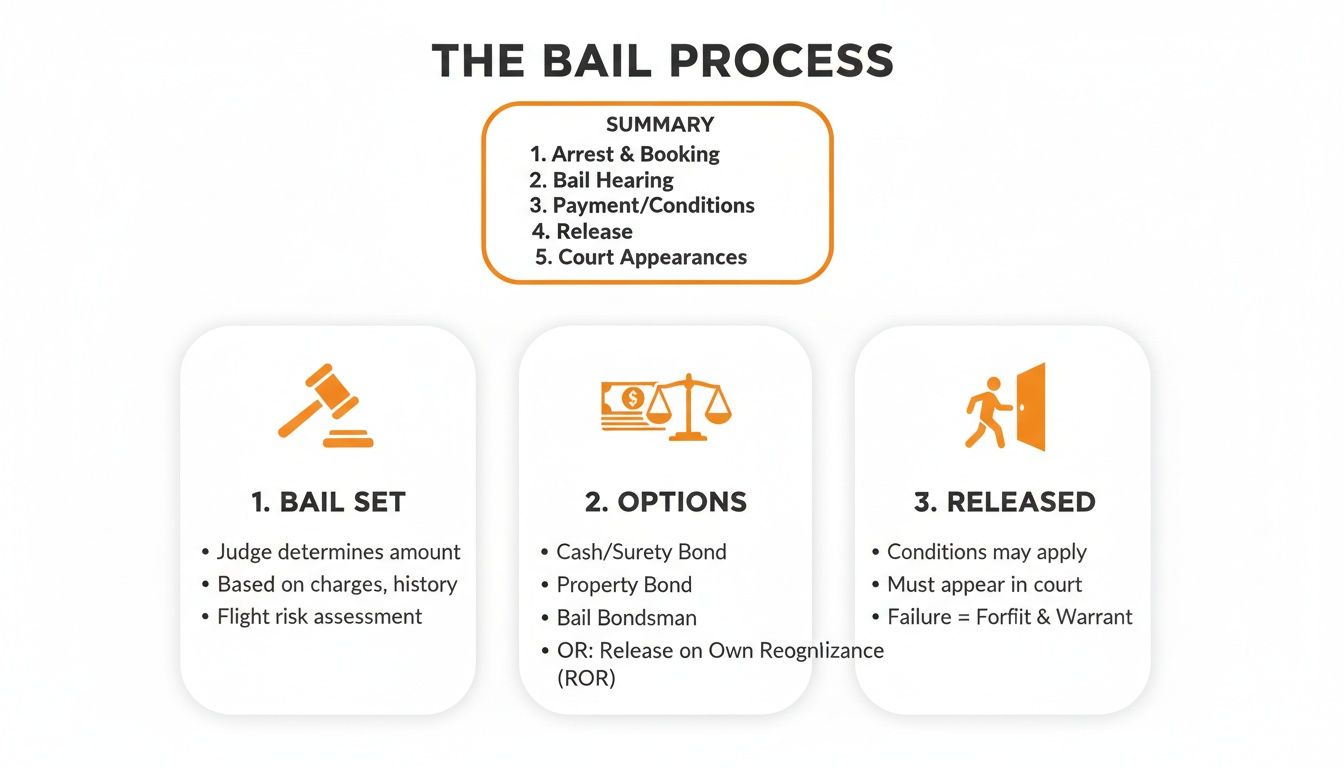
When someone is arrested, the immediate goal is securing their release from jail. This process begins with understanding bail. In Georgia, a judge sets a bail amount, which acts as a financial promise that the person charged will appear for their future court dates.
Once that amount is set, you generally have two options.
Paying in Full vs. Using a Bail Bond
The first option is to pay the full bail amount directly to the court. This is known as a cash bail. However, bail can be set at thousands, or even tens of thousands, of dollars. Most families do not have that kind of cash readily available for an emergency.
This is where a bail bond company provides a solution. Instead of paying the entire bail amount, you pay a much smaller, non-refundable fee called a premium. This fee is typically a percentage of the total bail, which makes securing a release financially manageable for most people.
Once the premium is paid, we post a surety bond with the court for the full bail amount. This bond is our company's legal and financial guarantee to the court. As long as the individual makes all their required court appearances, the bond is resolved when the case concludes. If they fail to appear, our company becomes responsible for the entire bail amount.
Think of a bail bondsman as your guide through a complicated system. We handle the detailed paperwork, communicate with the court and jail staff on your behalf, and provide the financial guarantee. Our experience with the local Forsyth and Hall County jails means we can manage the process correctly and efficiently.
A Simple Example of How Bail Bonds Work
Here’s a practical look at the difference. If a judge sets bail at $10,000, a cash bail would require you to deliver $10,000 to the court. This is a significant financial burden.
With a bail bond, you would pay a premium—often around 10-15%—which would be between $1,000 and $1,500. This makes an otherwise difficult situation far more manageable.
The bail bond system is a fundamental part of how our state's justice system operates. To understand the specific rules and what to expect, you can read our guide on how bail works in Georgia. Having the facts can bring some peace of mind during a challenging time.
Why Working With a Local Bondsman Helps
When you need to get someone out of jail in Forsyth or Hall County, you are not just looking for a financial service—you are looking for a guide. An experienced, local bondsman provides critical expertise that can make a significant difference in how quickly and smoothly the release process unfolds.
Every jail has its own procedures. The process at the Forsyth County Detention Center in Cumming may differ from the one in Alpharetta or Johns Creek. A professional bonding company that works with these facilities regularly understands the specific paperwork, the correct offices for filing, and how to avoid common mistakes that cause frustrating delays.
Comparing Your Options: Cash Bail vs Bail Bond
Deciding how to post bail is a major financial choice. This table provides a clear comparison to help you understand the key differences between paying the full bail amount in cash and using a bail bond service.
| Feature | Paying Cash Bail Directly to Court | Using a Bail Bond Company |
|---|---|---|
| Upfront Cost | 100% of the full bail amount is required. | A non-refundable premium, typically 10-15% of the total bail amount. |
| Financial Risk | High. Your entire cash amount is at risk if the defendant misses a court date. | Lower. Your financial liability is limited to the premium, unless the defendant fails to appear in court. |
| Asset Liquidation | Often requires draining savings or taking out large loans to raise the full amount. | Avoids the need to liquidate assets, making it a more accessible option for most families. |
| Refundability | The full cash amount is returned (minus any court fees) after the case concludes, provided all court dates were met. | The premium paid to the bonding company is non-refundable. It is the fee for the service provided. |
| Expert Guidance | None. You are responsible for navigating the court and jail system on your own. | You receive the support and expertise of a licensed agent who understands local procedures. |
| Accountability | The defendant is solely responsible for appearing in court. | The bonding company has a vested interest in ensuring the defendant attends all court dates and can help with reminders. |
| Speed and Convenience | Can be slow and complicated, requiring you to physically go to the court or jail. | Fast and efficient. Much of the process, including paperwork and payment, can often be handled over the phone. |
Ultimately, using a bail bond service allows families to secure a loved one's release for a fraction of the total cost while gaining an experienced ally to help navigate the system with respect and discretion.
The Role and Responsibilities of a Co-signer
One of the first questions people ask concerns the role of a co-signer, also known as an indemnitor. This is a critical role in the bail bond process. A co-signer is a responsible adult who signs the bail bond agreement, effectively vouching for the defendant.
By signing, the co-signer accepts a specific set of responsibilities.
The primary role of a co-signer is to financially guarantee that the defendant will appear for all required court dates. If the defendant fails to appear, the co-signer is legally responsible for paying the full bail amount to the bonding company.
This is a serious commitment, so it's vital to understand the agreement. The responsibilities include:
- Financial Guarantee: You are responsible for the entire bail amount if the defendant does not go to court.
- Ensuring Court Attendance: You agree to help ensure the defendant is aware of their court dates and attends them.
- Maintaining Communication: You must maintain open communication with both the defendant and the bonding company until the case is officially closed.
Being a co-signer is a significant act of trust. We make it a priority to walk every potential co-signer through the agreement, line by line, ensuring they are clear about their role before moving forward. The person guiding you through this is the bail bond agent. You can learn more about what a bail bond agent does to better understand who you will be working with. By providing clear explanations, we help you make an informed decision without pressure.
Understanding the Jail Release Timeline
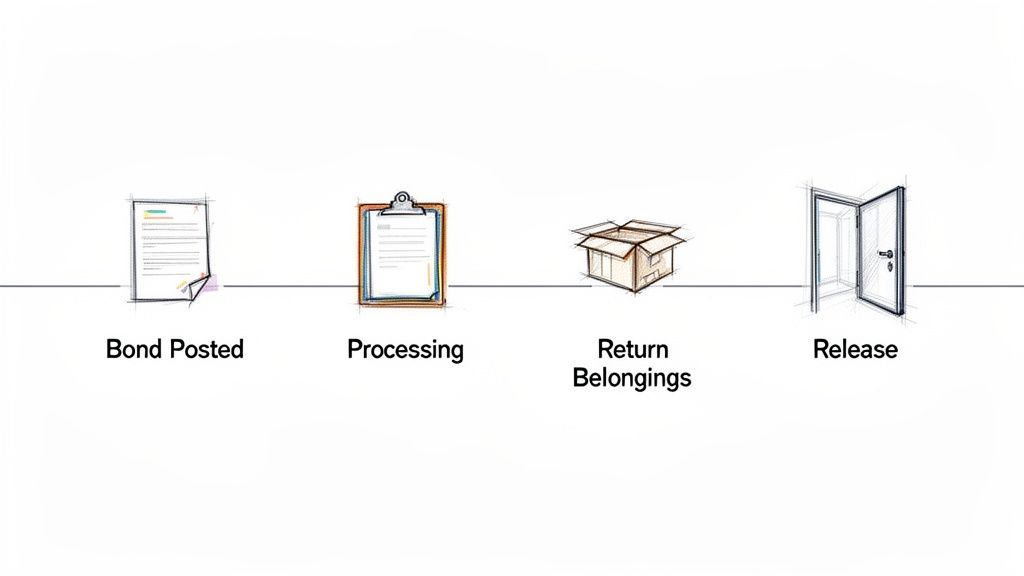
One of the most difficult parts of this process is waiting. After a bond is posted, many families expect their loved one to be released immediately. It's a common misunderstanding, and it's important to know that the release process is not instant.
Once our bondsman submits the paperwork and the jail accepts it, the detention center begins its own internal release procedure. This is a methodical, step-by-step process handled entirely by jail staff, and it moves at their pace.
What Happens Inside the Jail After a Bond Is Posted?
The time between posting the bond and your loved one's release is dedicated to the jail’s required protocols. Every person being released must go through these steps to ensure accuracy and security.
Here is a general overview of what happens inside the facility:
- Final Paperwork Verification: Jail staff review all documents one last time, including the bond, any court orders, and identity verification.
- Return of Personal Property: They gather all personal belongings taken during intake, such as a wallet, phone, and keys, and prepare them for return.
- Final Signatures: The person being released must sign documents, typically confirming receipt of their property and acknowledging their release conditions.
- Identity Confirmation: A final check is performed to ensure the correct person is being released.
Our job is to file the bond paperwork correctly and promptly to initiate this process. After that, the timeline is in the hands of the detention center staff.
Factors That Influence Release Time
So, how long does it actually take? There is no exact answer, but release typically occurs within a few to several hours after the bond is posted. Several factors, all of which are outside of our control, can affect the wait time.
We understand that every minute feels like an eternity when you are waiting. Knowing what is happening behind the scenes can help ease some of that stress. A delay does not usually mean something is wrong; it often just means the facility is busy.
Here are a few factors that can affect the release timeline:
- Jail Staffing Levels: The number of officers on duty at any given time can make a difference. Shift changes, in particular, may cause a temporary slowdown.
- Jail Activity: If many new arrests are being processed or other releases are happening simultaneously, it creates a queue. Individuals are processed in order.
- Time of Day: Posting a bond late at night or on a weekend can sometimes result in a longer wait, as there may be fewer staff members on duty.
- System and Warrant Checks: The jail must run a final check for any other active warrants or holds from other jurisdictions before releasing anyone.
We are always transparent about the process. We will post the bond as quickly as possible, but the final release timeline depends on the internal operations at the Forsyth or Hall County facilities. Having this understanding from the start helps set realistic expectations while you wait.
Responsibilities After Release on a Bail Bond
Securing someone's release from jail is a significant relief, but it is just the first step. Once they are home, both the defendant and the co-signer have ongoing responsibilities. Understanding these obligations is key to ensuring a smooth process until the case is officially closed.
The entire bail bond agreement is based on one clear promise: the defendant will appear for every single court date.
The Primary Obligation: Court Appearances
Missing a court date is not a minor issue; it has immediate and serious consequences for everyone involved. It is a direct violation of the legal agreement made with the court and the bonding company.
When a defendant fails to appear, several things happen automatically:
- The Bond is Forfeited: The judge revokes the bond, meaning the court now requires the full bail amount to be paid.
- A New Warrant is Issued: The court issues a new warrant for the defendant's arrest, often for a "Failure to Appear" charge, which adds another legal problem.
- The Co-signer Becomes Liable: The financial responsibility for the full bail amount now falls directly on the co-signer, as guaranteed in the signed agreement.
This creates a new, stressful situation for everyone. Our goal is to help you avoid this outcome. We provide reminders and maintain open lines of communication about court dates to help everyone stay informed.
The most important thing to remember is that a bail bond guarantees a court appearance. As long as every court date is met, the process works as intended. If a date is missed, the entire agreement is broken.
Understanding the Co-signer's Continuing Role
If you co-signed the bond, your involvement continues until the court officially closes the case, which can sometimes take months. Your ongoing duties are straightforward but critical.
- Maintain Communication: Stay in regular contact with the defendant to ensure they are aware of their court schedule. It is also crucial to inform the bonding company if your contact information—or the defendant's—changes.
- Encourage Compliance: Your reminders and support are essential in helping the defendant meet their obligations.
- Be a Point of Contact: If we are unable to reach the defendant, we will contact you. Being responsive helps us resolve small issues before they become larger problems.
Other Conditions of Release
In some cases, a judge may impose additional conditions that the defendant must follow while out on bond. These conditions are not optional and are just as important as attending court. Violating them can also lead to the bond being revoked.
Common conditions may include:
- Regular check-ins with the bonding company.
- Abstaining from drugs or alcohol.
- Adhering to a curfew.
- No contact with certain individuals (a no-contact order).
- Remaining within a specific geographic area, such as Forsyth County or the state of Georgia.
When we arrange the bond, we make sure to clearly explain any special conditions the court has set. Our goal is to provide all the information and support needed for a successful outcome, where every obligation is met and the case can move forward smoothly.
Frequently Asked Questions About Bail Bonds in Georgia
When you receive an unexpected call about an arrest, it is natural to feel stressed and have questions. Most people have never navigated this process before. As a local Georgia bonding company, we have helped hundreds of families in Forsyth and Hall Counties work through this situation. Here are calm, straightforward answers to the questions we hear most often.
What information do I need to start the process?
To begin, we only need three pieces of information to locate the individual in the system. Having these details ready when you call allows us to work efficiently. All we need is the person’s full legal name, their date of birth, and the name of the jail where they are being held (for example, the Forsyth County Detention Center). With these details, we can provide you with the next steps.
Can the bail bond be handled over the phone?
Yes. In nearly all cases, we can manage the entire process over the phone and through email. We understand that arrests happen at all hours, and our goal is to make the process as simple as possible. We can explain the application, handle paperwork with electronic signatures, and process payment remotely. Our team is available 24/7 to provide assistance whenever you need it.
How long does release from jail usually take?
This is the most common question, and the answer depends on the jail's internal procedures. After you complete the paperwork with us, we can typically post the bond at the facility very quickly. The subsequent waiting period is determined by the jail staff.
Once we post the bond, the jail begins its own "out-processing." This is a methodical process that runs entirely on their schedule.
The release could take anywhere from a couple of hours to several hours, depending on factors like staffing levels and how busy the facility is. We manage our part of the process with urgency, but the final release time is in the hands of the jail.
What happens if someone misses a court date?
Missing a court date is a serious issue with immediate consequences for both the defendant and the co-signer. When a court date is missed, the judge forfeits the bond. This triggers a new warrant for the defendant's arrest and makes the co-signer legally responsible for paying the full bail amount. It is critical that every court appearance is attended. We provide court date reminders to help ensure this obligation is met.
Who is eligible to be a co-signer?
A co-signer, or indemnitor, is the person who guarantees that the defendant will appear in court. To become a co-signer, you generally need to meet a few basic requirements: be at least 21 years old, have a verifiable source of income, and provide a valid, government-issued photo ID. Being a co-signer is a significant responsibility, and we will take the time to explain the agreement and answer all your questions before you sign.
Navigating the bail bond process in Forsyth County, Cumming, or surrounding areas like Hall County, Alpharetta, and Johns Creek can feel complicated. You do not have to figure it out alone. The team at Best Bonding Forsyth is here to provide clear answers and fast, professional help with respect and discretion.
If you need help in Forsyth or Hall County, call and we’ll explain what to do. We can start everything over the phone and guide you step by step. Visit us online at https://bestbondingforsyth.com.