
When a friend or family member is arrested in Forsyth County or Hall County, the moments that follow are often filled with stress and unanswered questions. The most important thing to know is that there is a clear, manageable path forward.
If you need help with bail bonds in Forsyth County, GA, or the surrounding communities, our team is available 24/7. You are not alone in this, and there are straightforward steps you can take right now.
Need immediate help in Forsyth or Hall County? Call now for clear steps to start the process. Our team is available 24 hours a day to provide calm, professional guidance.
Your First Questions About Georgia Bail Answered
Let’s start with the basics. In Georgia, bail is not a punishment. It is a financial agreement with the court that allows someone to be released from jail while they wait for their trial, with the promise that they will show up for all their court dates.
For most families, paying the full bail amount in cash is not practical. That's where a bail bond comes in—it’s the most common way to secure a release without having to provide the entire sum yourself.
What to Do Right Now
Navigating the system can feel overwhelming. Focusing on these simple steps can help you regain a sense of control.
- Gather Key Information: You will need the person's full name, date of birth, and the jail where they are being held (such as the Forsyth County Jail or Hall County Detention Center).
- Confirm Charges and Bail Amount: This information usually becomes available a few hours after booking. We can help you find this if you are unsure.
- Contact a Local Bail Bonding Company: An experienced, local company understands the specific procedures in Forsyth County, Cumming, and surrounding North Metro Atlanta communities. We can answer your questions and manage the paperwork.
This flowchart breaks down the core steps from arrest to release.
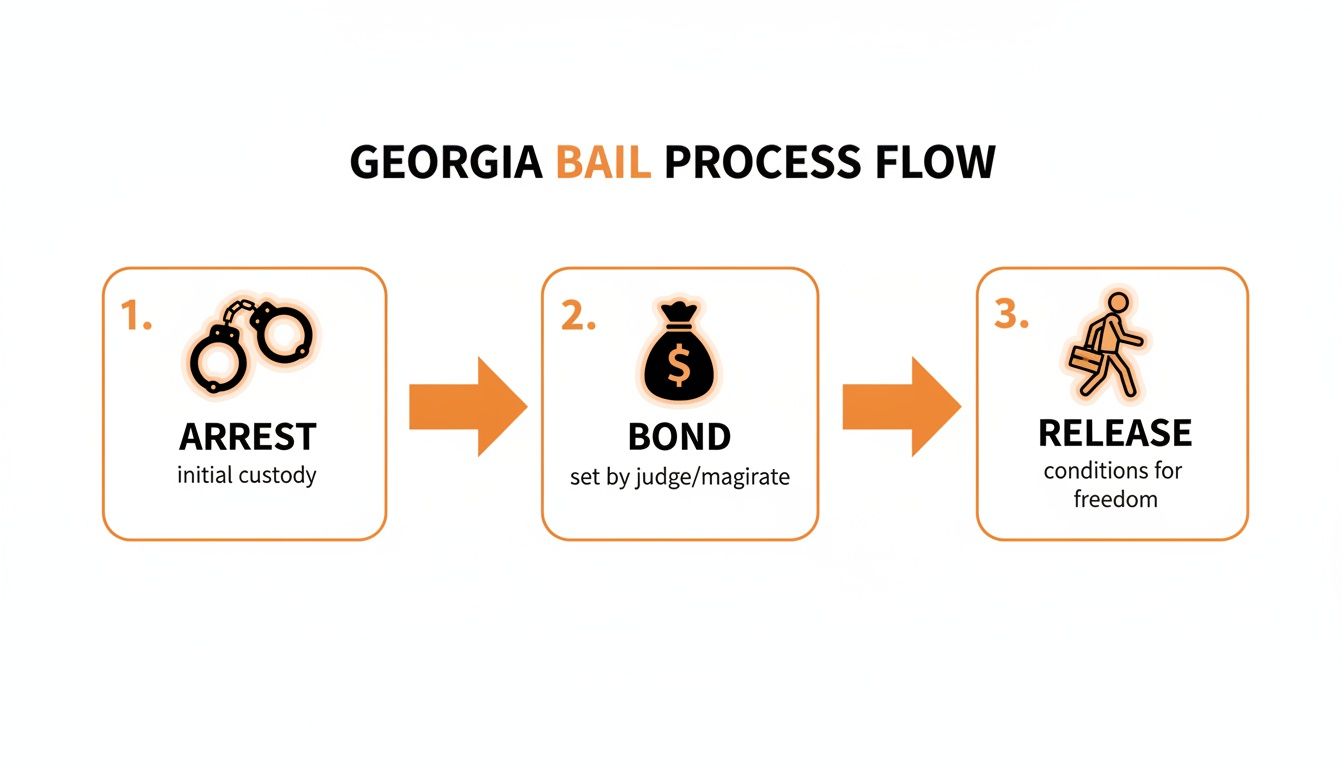
Posting a bond is the critical step between being in jail and returning home. Our role at Best Bonding is to make that step as simple and efficient as possible.
You can learn more about the specifics of the process by reading our guide to Georgia bail bonds. We are available 24/7 to provide calm, clear guidance and start the release process.
The Arrest and Booking Process in Forsyth County
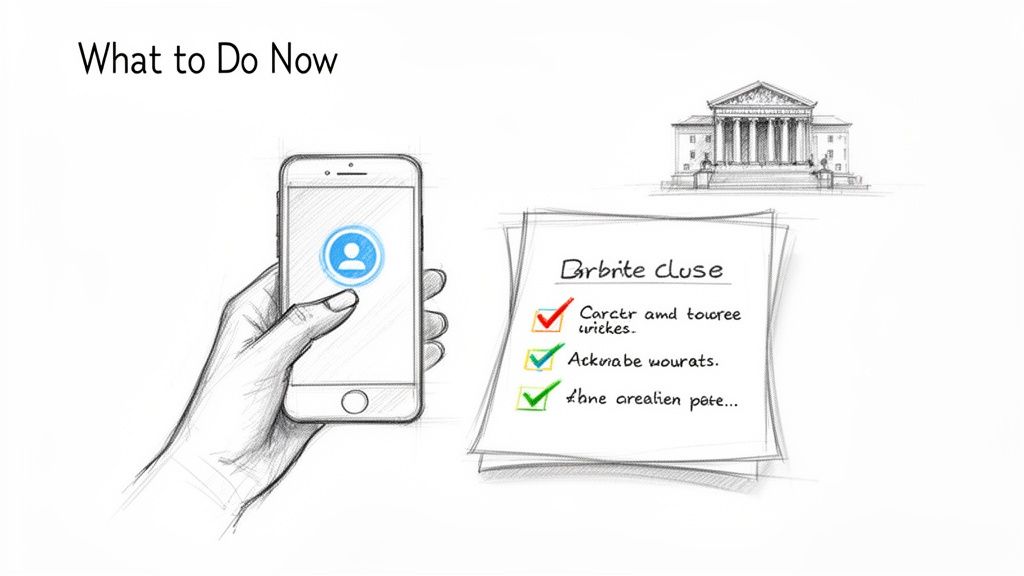
To understand how bail works, it helps to know what happens immediately after an arrest. This part of the process can be intimidating, but it is a standard, step-by-step procedure in Georgia’s justice system, including right here in Forsyth County.
After an arrest, the individual is taken to a local facility like the Forsyth County Jail in Cumming. This is where the booking process begins, which is the official creation of an arrest record. It is a methodical, administrative process.
What Happens During Booking
During booking, law enforcement officials record the person's information. It is a routine but critical step where they gather necessary details.
Here’s what that typically includes:
- Recording Personal Information: They will note the person's full name, date of birth, and address.
- Taking Fingerprints: Fingerprints are taken and checked against a national database.
- Capturing a Mugshot: A photo is taken for the official record.
- Collecting Personal Property: Items like a wallet, phone, or keys are cataloged and stored safely until release.
This process can take a few hours, depending on how busy the jail is. It is normal to experience a delay in getting information during this time.
The First Appearance or Bond Hearing
Once booking is complete, the next major step is the first appearance or bond hearing. This is where a judge or magistrate formally reviews the case and makes initial decisions, including whether to set bail and for how much.
It is important to remember that bail is not a form of punishment. It serves as a financial guarantee to the court, ensuring the person will appear for all future court dates.
In Georgia, a judge considers several factors to balance an individual's right to pretrial release with public safety interests when setting a bail amount.
The judge will look at a few key things:
- The seriousness of the alleged offense.
- The person’s criminal history, if any.
- Ties to the community, such as a job or family.
- Whether the person is considered a flight risk.
For some minor offenses, a preset bail amount may apply. For most charges, however, a judge must make the decision at this first hearing. The bail amount set here is what starts the next phase of the process. For a more detailed look, see our guide on how to bail someone out of jail.
As soon as the bail amount is set, you can begin working on their release. This is where a professional bonding company becomes a valuable resource, helping you navigate the requirements to bring your loved one home.
Understanding the Different Types of Bail Bonds
After a judge sets a bail amount, the next question is how to pay for it. In Georgia, there are a few distinct paths, and understanding each one is important.
For most families in Forsyth and Hall County, working with a bail bonds company is the most common and accessible option.
Surety Bonds (Working with a Bail Bondsman)
This is the most common way to secure a release. A surety bond is an agreement between the court, the person who was arrested, and a licensed bail bondsman from a company like Best Bonding.
Instead of paying the full bail amount to the court, you pay a smaller, non-refundable fee—the premium—to the bonding company. We then post a bond for the full amount, guaranteeing to the court that the defendant will attend all court dates.
- How it Works: You pay a percentage of the total bail amount to a bondsman.
- Key Advantage: It makes release financially possible without needing tens of thousands of dollars in cash immediately.
- Who it's For: Most families who cannot, or prefer not to, tie up a large sum of money for an extended period.
A surety bond transfers the financial risk from your family to the bonding company. This is the service we provide, guiding families through the paperwork and process 24/7.
Cash Bonds
A cash bond requires paying the entire bail amount directly to the court in cash. If bail is set at $10,000, you or your family must deliver $10,000 to the jail or clerk of court.
This money is held as a deposit. If the defendant appears at every court date until the case is resolved, the court returns the cash, often minus administrative fees. If a court date is missed, the entire amount is forfeited. The main challenge is having a significant amount of cash available.
Property Bonds
A less common option is a property bond, which uses real estate as collateral. The property must be in Georgia and have a clear value of at least double the bail amount.
The process for a property bond is complex and slow, requiring an appraisal, title search, and approval from the sheriff or clerk of court. Because this can take weeks, it is rarely used when a timely release is the priority.
A property bond involves extensive documentation and verification, making it a much slower process than a surety bond. It is an option, but one that delays a person's return home.
Recent legal changes have also shifted how bail works in Georgia. In 2023, Senate Bill 63 was signed into law, which now requires judges to set cash bail for an additional 30 charges that might have previously allowed for release without a financial requirement. This makes accessible bond options more critical than ever. You can find more information about these criminal justice reforms in Georgia.
Release on Recognizance (OR) Bonds
Finally, there is a Release on Recognizance (OR) bond. In this case, a judge decides to release someone based solely on their written promise to appear in court. No money is required.
This option is typically reserved for people charged with minor, non-violent offenses who have strong community ties and little or no criminal history. An OR bond is granted at the judge's discretion and cannot be requested through a bonding company.
For anyone in Forsyth County, Cumming, Hall County, or the surrounding areas, a surety bond remains the most reliable and immediate way to bring someone home.
How a Bail Bonding Company Secures a Release
Working with a bail bonding company simplifies a confusing and stressful situation into a series of clear, manageable steps. Instead of facing the court and jail system alone, you partner with an experienced professional who understands how to secure a release efficiently.
The First Steps and What We Need
The process begins with a confidential phone call. We will ask for basic information to get started. Do not worry if you do not have all the answers—we can help you find what is missing.
To act quickly, it is helpful to have this information ready:
- Full Name and Date of Birth: The complete legal name and birthdate of the person arrested.
- Jail Location: The facility where they are being held, such as the Forsyth County Jail in Cumming or the Hall County Detention Center in Gainesville.
- The Charges: If you know the specific charges, that is helpful, but we can verify this.
- Bail Amount: The total bail amount set by the judge.
With these details, we can confirm the person's status, verify the bond amount, and prepare the necessary paperwork.
The Role of the Co-Signer
Nearly every bail bond agreement involves a co-signer, also known as an indemnitor. This person is a crucial partner in the process and is usually a family member, friend, or colleague willing to take financial responsibility for the bond.
By co-signing, you guarantee that the defendant will appear for all required court dates. If they fail to appear, the co-signer becomes responsible for paying the full bail amount to the bonding company. We take the time to ensure you fully understand the agreement before you sign.
Here is a simple checklist of the information needed from both the defendant and the co-signer.
Information Needed to Start the Bail Bond Process
| Information Category | Specific Details Needed |
|---|---|
| Defendant Information | Full legal name, date of birth, jail location, booking number (if known), charges. |
| Co-signer Information | Full legal name, address, phone number, employment information, valid ID (like a driver's license). |
| Bail Details | The total bail amount set by the court. |
Having these items ready helps expedite the process, but our team is here to guide you in gathering everything required.
Understanding the Financial Agreement
One of the first questions people ask is, "How much does this cost?" A bail bond makes getting out of jail affordable because you pay a non-refundable fee, which is a standard percentage of the total bail, instead of the full amount.
For example, if bail is set at $10,000, the fee you pay to us would be a fraction of that, typically between 10% to 15% in Georgia. This fee, the premium, allows us to take on the full financial risk and post the entire $10,000 bond with the court on your behalf.
This premium is our service fee for managing the entire process: completing and filing paperwork, navigating local jail procedures, and guaranteeing the full bail amount so your loved one can return home.
Once the agreement is finalized and the premium is paid, we act immediately. A licensed agent goes to the jail—whether in Forsyth County, Hall County, Alpharetta, or Johns Creek—to "post" the bond. This action officially informs the jail that the financial requirement for release has been met.
From that point, the facility begins its own release process. While a bail bond agent completes their part quickly, the final release timeline depends on how busy the jail is.
Responsibilities After Being Released on Bond
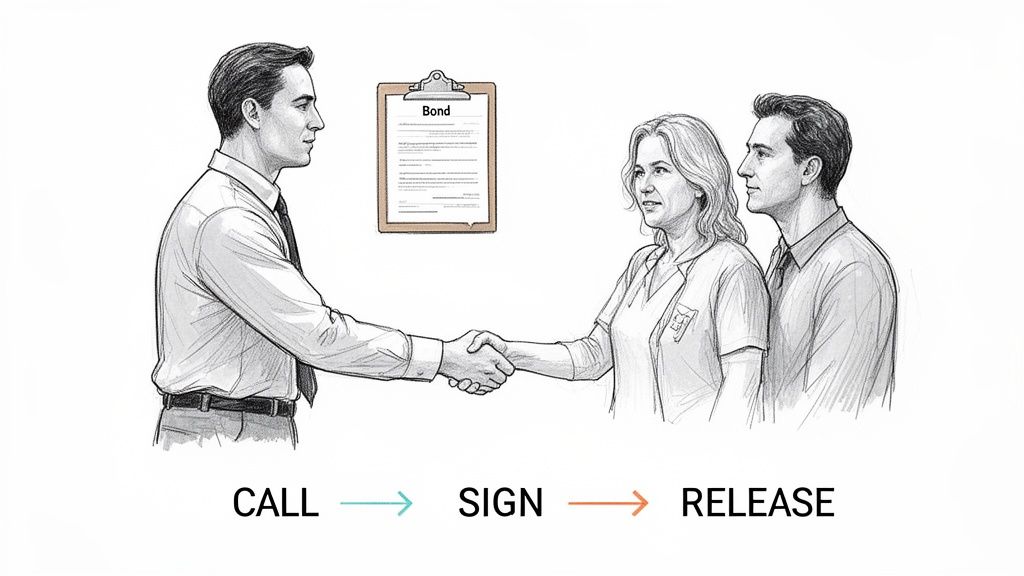
When a loved one is released from jail, it is a moment of relief, but it is important to remember the process is not over. A bail bond is a serious promise to the court and comes with specific responsibilities for both the defendant and the co-signer.
Understanding these expectations is the best way to move through the legal process smoothly and avoid future complications.
The Core Responsibility: Attending All Court Dates
The single most important rule is that the defendant must attend every required court date. This is not optional; it is the foundation of the bail agreement.
Missing a court hearing can trigger immediate and serious consequences. Attending on time, every time, is essential.
Other Common Conditions of Release
In addition to court appearances, a Georgia judge may impose other conditions of release. These are not punishments but rules intended to ensure accountability while the case is ongoing.
Some common conditions include:
- Regular Check-ins: The defendant may need to call or visit the bail bonding company on a set schedule.
- Travel Restrictions: The court might prohibit leaving the county or the state of Georgia without permission.
- No Contact Orders: A judge may order the defendant to avoid contact with certain individuals involved in the case.
- Compliance with Laws: The defendant cannot be arrested for a new offense while out on bond.
These conditions are legally binding, and following them is just as important as attending court.
The responsibilities of a bond agreement are straightforward. By understanding and following these rules, you can ensure the process moves forward without unnecessary stress or financial risk.
The Consequences of a Failure to Appear
When someone misses a court date, it is called a Failure to Appear (FTA). This action breaks the bond agreement and starts a chain reaction.
Here is what happens next:
- The Bond is Forfeited: The court cancels the bond, and the full bail amount becomes due.
- A New Arrest Warrant is Issued: A judge issues a bench warrant for the defendant's immediate re-arrest.
- The Co-signer Becomes Liable: Because the agreement was broken, the co-signer is now responsible for paying the entire bail amount to the bonding company.
The impact of an FTA extends beyond the family. It costs Georgia taxpayers over $1,000 per month to house an individual in jail, and each failure-to-appear adds approximately $1,500 in new administrative costs. For more on the statewide impact, you can explore research on Georgia's criminal justice system.
Our goal is to help you avoid this situation. We provide clear reminders and support to ensure everyone understands their obligations.
Common Questions About the Georgia Bail Process
When you are dealing with the stress of an arrest, questions are natural. Getting clear answers can provide a sense of calm and control. Here are some of the most common questions we hear from families in Forsyth County, Hall County, and nearby communities.
Our goal is to provide helpful, general information based on our experience so you know what to expect.
How Quickly Can Someone Be Released After a Bond Is Posted?
This is often the first question on everyone's mind. Once we post the bond at the jail, our part of the process is complete. From that point, the release timeline is determined by the jail staff.
The release is an administrative process that can take several hours, depending on how busy the jail is and its internal procedures. We can provide a realistic time frame based on our local knowledge of the Forsyth and Hall County jails, but it is important to know there is always a processing period after the bond is submitted.
What Happens to the Money I Pay for the Bail Bond?
The fee you pay to a bail bonding company is a premium. This is a non-refundable service fee that allows us to take on the full financial risk of the entire bail amount on your behalf.
It is payment for our professional service, which includes handling all paperwork, navigating the jail system, and guaranteeing the full bond amount to the court. This promise assures the court that the defendant will appear for hearings, allowing them to return home while their case proceeds.
Can the Entire Bail Bond Process Be Handled Over the Phone?
Yes, in most cases, we can manage the entire bonding process remotely. We understand this is a difficult time, and you may not be able to come to our office in Cumming, especially if you are in another part of North Metro Atlanta or out of state.
We can manage all necessary paperwork and payments securely over the phone and via email. This allows us to start the release process immediately, saving you time and stress.
Our team is ready to guide you through every step without you needing to leave your home.
What Is the Primary Responsibility of a Co-signer?
The role of a co-signer, or indemnitor, is a serious commitment. The co-signer's primary responsibility is to guarantee that the defendant attends all required court dates.
By co-signing, you accept financial liability for the full bail amount. If the defendant misses court, the co-signer is legally required to pay the entire bond amount to us. We always take the time to ensure every co-signer fully understands this responsibility before anything is signed.
What Happens if We Can't Afford the Bail Bond Fee?
We understand that the bail bond premium can be a financial strain for many families. The best first step is to call and discuss your situation with us. Depending on the details of the case, such as the bond amount and co-signer qualifications, we can sometimes offer flexible payment options.
Our focus is on finding a solution that works for you. A confidential conversation with our team is the best way to see what is possible.
If you need immediate help in Forsyth County, Cumming, Hall County, or the surrounding North Metro Atlanta area, the team at Best Bonding is available right now. We provide calm, clear explanations and can start the process over the phone to bring your loved one home.
We can start everything over the phone and guide you step by step.