
Dealing with the court system can be stressful, and one term that often causes confusion is "bail forfeiture." Simply put, bail forfeiture is what happens when a defendant misses a required court appearance. When this occurs, the court is legally entitled to keep the money or property that was promised to ensure the defendant's release.
This isn't just a legal technicality; it's a serious financial event that directly affects the family and friends who co-signed the bond. If you need help understanding the bail process in Forsyth County, GA, our team is here to provide clear, calm guidance.
Understanding Bail Forfeiture and Key Responsibilities
A bail bond is essentially a contract with the court. The defendant, the co-signer, and the bail bond company all agree to one central promise: the person who was arrested will appear at all required court dates. Bail forfeiture is the consequence of breaking that promise.
A missed court date sets off a chain reaction. An arrest warrant is typically issued for the defendant, and the co-signer becomes financially responsible for the entire bail amount. It’s a common issue; national studies show a significant number of defendants fail to appear for court, as you can see in these court appearance trends from brennancenter.org.
To prevent this, everyone involved must understand their role. The fee paid to a bonding company is only one part of the process. Knowing your responsibilities is just as important. If you're looking for more information on costs, you can learn about how much bail costs in our guide.
Key Roles In The Bail Bond Process
Understanding each person's responsibility is the first step in preventing forfeiture. Each party has a distinct role in ensuring all court obligations are met.
| Party Involved | Primary Responsibility |
|---|---|
| The Defendant | To attend every required court hearing on time and follow all conditions of release set by the court. |
| The Court | To set the bail amount, schedule hearings, and declare the bond forfeited if the defendant fails to appear. |
| The Bondsman | To post the bond for the defendant's release and help the defendant and co-signer stay informed of court dates. |
| The Co-Signer | To financially guarantee the full bond amount and help ensure the defendant attends all court dates. |
When each person fulfills their duties, the process can proceed smoothly. However, if the defendant fails to appear, the consequences affect everyone involved.
The Bail Forfeiture Process Step By Step
When someone misses a court date, it begins a formal legal process. It isn't instantaneous, and knowing the steps can make a stressful situation more manageable. Georgia law outlines a specific sequence of events, providing opportunities to address the issue.
The process starts the moment the defendant is not present for their scheduled hearing. From there, a series of legal actions and notifications begins.
The Initial Failure To Appear
The entire bail forfeiture process is triggered by a single event: a Failure to Appear (FTA). When the defendant’s name is called in court and they are not present, the judge can take immediate action.
The first step is usually the issuance of a bench warrant. This is a direct order for the defendant's immediate arrest. Once the warrant is active, any interaction with law enforcement will likely result in the defendant being returned to custody. At the same time, the judge will declare the bail bond forfeited.
This diagram shows how a missed court date leads directly to a forfeiture order.
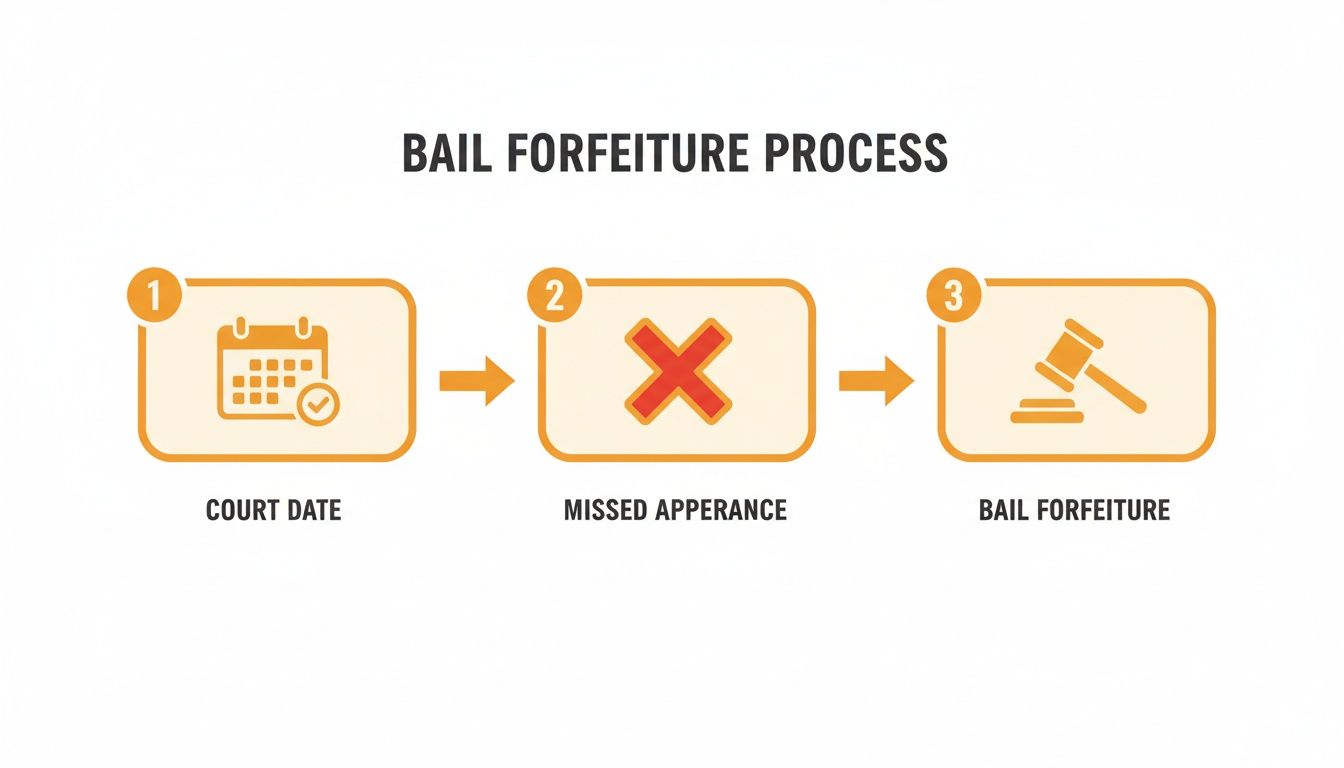
As you can see, attending court is the most important part of the bail agreement.
Formal Notice And The Grace Period
After the judge declares the bond forfeited, the next step is to make it official. The court clerk is required to send a formal notice, called a scire facias, to both the bail bond company and the co-signer. This legal document is the official notification that the bond agreement was broken and the court is now demanding the full bail amount.
In Georgia, this notice is critical because it starts a time-sensitive countdown. It is a serious warning that the clock is ticking to resolve the issue before it becomes final.
Once the notice is sent, a crucial window of opportunity opens. Georgia law provides a "grace period" where the situation can still be rectified. This is the time to act. During this period, the bondsman will work to locate the defendant and return them to custody, or in some cases, a motion can be filed to reinstate the bond if there was a legitimate reason for missing court.
If the issue is not resolved within this timeframe, the process moves to a final judgment. The court will issue a judgment against the bonding company and, in turn, the co-signer for the total bail amount, making the debt legally enforceable.
Understanding The Consequences Of A Forfeited Bond
When a bond is forfeited, it leads to serious legal and financial consequences for everyone involved. Navigating this situation can feel overwhelming without clear guidance.
For the person charged, the most immediate problem is a bench warrant for their arrest. Any contact with law enforcement, such as a traffic stop, will lead to being taken back into custody. Additionally, the original charges remain, and the court will likely add a new charge for "Failure to Appear," complicating the legal situation further.
The Financial Impact On The Co-Signer
While the defendant faces legal issues, the co-signer faces a significant financial problem. The contract signed to secure the bond was a legally binding promise. When a bond is forfeited, the co-signer becomes responsible for paying the full bail amount to the bonding company.
If the bond was for $10,000, the co-signer is now obligated to pay that entire amount. The bonding company has the legal right to use any pledged collateral to cover this debt. This can include:
- Property Liens: A lien can be placed on a home or land used as collateral.
- Seizure of Assets: The company can take ownership of vehicles, jewelry, or other valuables used to secure the bond.
- Legal Action: A civil judgment may be pursued to collect the money through measures like wage garnishment.
This is the reality of the agreement signed by the co-signer. The financial risk shifts entirely to them. To understand this better, our guide explaining what happens to bail money breaks it down further.
Long-Term Effects And Future Challenges
A bail forfeiture has lasting effects. For the defendant, a "Failure to Appear" on their record can make it much harder and more expensive to secure a bond in the future. Judges and bonding companies may view them as a higher risk, potentially leading to higher bail amounts or even denial of bail.
This is why working with a reliable, local bail bond company from the beginning is so important. Data suggests that defendants who use a commercial bondsman are less likely to miss court. However, forfeitures can still happen. The key is to take all court obligations seriously to prevent these long-term consequences.
How You Can Proactively Avoid Bail Forfeiture
Bail forfeiture is a serious and stressful situation, but it is almost always preventable. Avoiding it requires a few proactive steps right after release from jail. It comes down to treating the bail agreement seriously and maintaining open lines of communication.
By taking a few manageable steps, you can significantly lower the risk of a missed court date and the financial and legal difficulties that follow.
Establish Clear Communication Channels
The single most important factor in preventing forfeiture is consistent communication with your bail bond agent. Your bondsman is a key partner who is just as invested as you are in a successful outcome.
Immediately after release, prioritize the following:
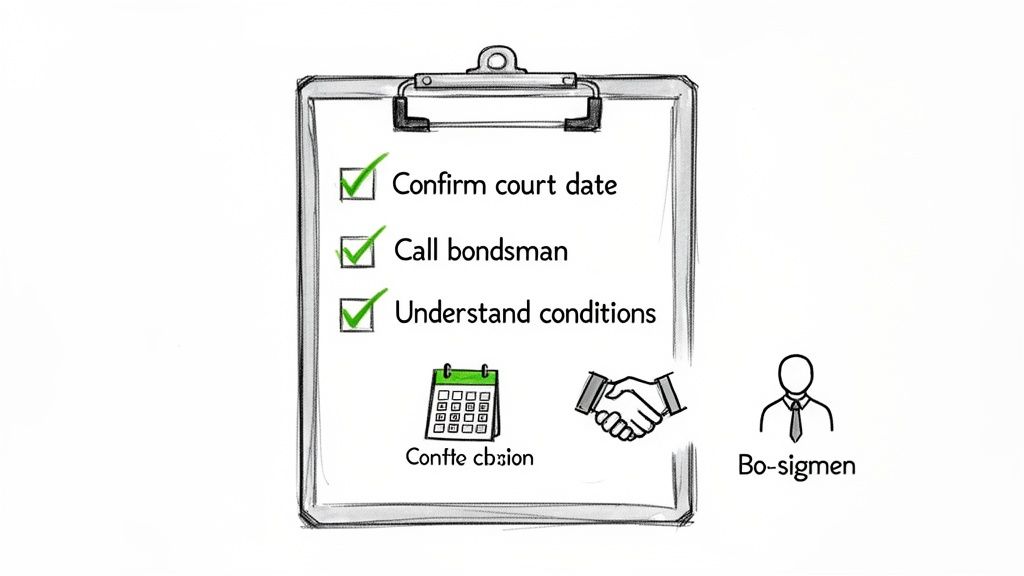
- Confirm Contact Info: Ensure your bondsman has the correct, up-to-date phone numbers and addresses for both the defendant and the co-signer.
- Set Up Check-Ins: Understand the required check-in schedule. We work with clients to make this simple, often just requiring a quick phone call.
- Report Any Changes: If you move, change your phone number, or get a new job, inform your bondsman right away.
Open dialogue is your best defense against misunderstandings. A simple phone call can prevent a significant financial problem.
Diligently Track All Court Obligations
Court schedules can be complex and may change with little notice. It is the defendant’s responsibility to know when and where they need to be. Do not rely on memory alone.
To stay on top of every court appearance:
- Verify Every Single Date: As soon as you receive a court date, it's a good practice to call the Forsyth County Clerk of Court's office (or the relevant court) to confirm the date, time, and courtroom.
- Create Reminders: Add all court dates to a phone calendar with multiple reminders—for a week before, a few days before, and the morning of the hearing.
- Understand All Your Conditions: Review the bond agreement carefully. Besides court appearances, there may be other conditions of release, such as travel restrictions or mandatory check-ins, that must be followed.
Failing to meet any of these obligations puts the bond at risk. By staying organized and in communication, you can ensure all requirements are met.
What To Do Immediately If A Court Date Is Missed
Realizing you or a loved one missed a court date can cause immediate stress. In this moment of uncertainty, the worst thing you can do is nothing. Your actions in the next few hours are critical.
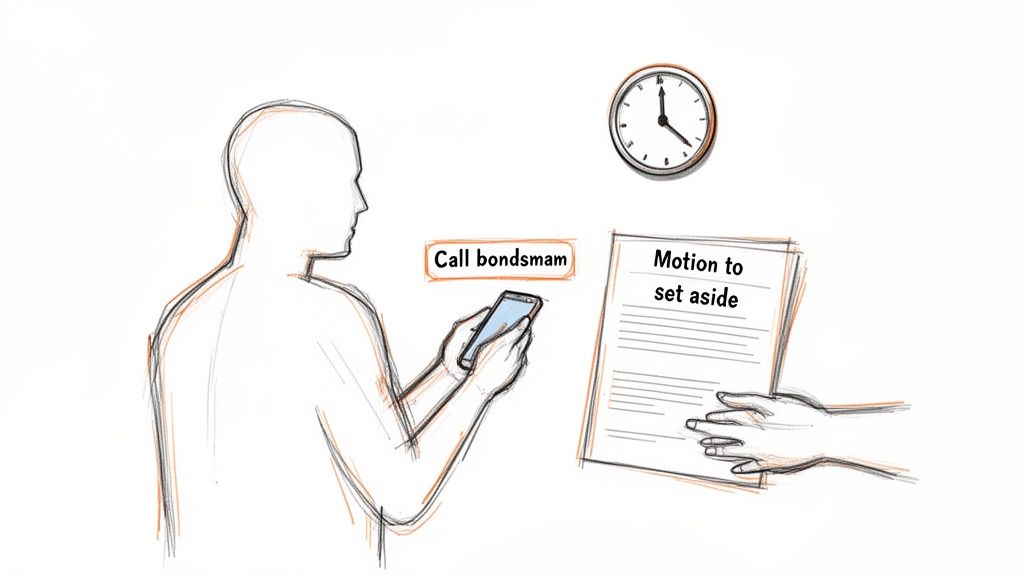
The most important first step is to contact your bail bond company immediately. Do not wait or try to handle it alone. An honest, prompt call to your bondsman is the best move to start working on a solution.
Exploring Potential Remedies
Once you are on the phone with us, we can explain the potential paths forward from a bonding perspective. While we are not attorneys and cannot provide legal advice, we have experience with these procedures. Generally, there are two main ways to address a forfeiture: getting it set aside or arranging for the defendant to be returned to custody.
The right path depends on the specific details of the situation. For a more complete overview, you can learn more about what happens if you miss court in our detailed guide.
Filing A Motion To Set Aside The Forfeiture
If there was a legitimate, provable reason for missing court, it may be possible to ask the judge to set aside the forfeiture. This generally requires assistance from a legal professional.
Valid reasons often include circumstances such as:
- A documented medical emergency for the defendant.
- A clerical error by the court, such as sending the notice to an incorrect address.
- The defendant was already incarcerated in another facility when the hearing occurred.
Proof is essential. This could include a doctor's note, hospital records, or official incarceration documents.
Time is critical. Georgia law provides a specific and short window to file these motions. Waiting too long can close this option permanently, making the financial consequences unavoidable.
The Option Of Surrendering The Defendant
If there is no legally sound reason for the absence, the most direct way to stop the forfeiture process is for the defendant to surrender to the authorities. By returning the defendant to custody, the primary purpose of the bond—ensuring their court appearance—is addressed.
This action stops the financial clock and can prevent a final judgment against the co-signer. While it means the defendant returns to jail, it protects the co-signer from having to pay the full bail amount. Your bondsman can explain how this process works in local jurisdictions like Forsyth or Hall County.
We're Here To Help You Navigate The Georgia Bail Process
Facing a potential bail forfeiture is incredibly stressful, but you don't have to navigate it alone. At Best Bonding Forsyth, we are a local partner here to guide you through the process with calm, experienced support.
Our focus is on providing clear, straightforward help. We avoid legal jargon and offer simple explanations so you always know what’s happening and what to expect next, especially when dealing with the court systems here in Forsyth and Hall Counties.
Local Support When You Need It Most
Legal issues don't follow a 9-to-5 schedule, and neither do we. Our team is available 24/7 to answer your questions and provide the help you need, day or night. We have helped many families in Cumming, Alpharetta, and Johns Creek through these exact situations, and we bring that experience to every call.
We are here to help you stay on track and avoid the anxiety of a potential forfeiture. Our local knowledge of North Metro Atlanta means we understand the court procedures and timelines that are most relevant to your case.
Our goal is to provide clarity and a sense of control. When you understand the process and have a reliable partner, you can face the situation with confidence and make informed decisions for your family.
If you’re concerned about making court dates or have questions about how the bail process works in Georgia, please call us. We will walk you through everything with the patience, respect, and professionalism you deserve.
Common Questions About Bail Forfeiture In Georgia
When a court date is missed, many questions and concerns arise. Below are straightforward answers to the questions we hear most often from families here in Forsyth County, Cumming, and surrounding North Georgia communities. Our goal is to provide clarity so you know what to do next.
What Happens If I Honestly Forgot My Court Date?
It can happen. If you missed court due to an honest mistake, it is important to act quickly. Do not wait and hope the issue resolves itself.
Your first two calls should be to your bail bondsman and your attorney. Explain what happened. Your bondsman can help you understand the next steps from a bonding perspective, whether that involves trying to get the bond reinstated or arranging for you to safely address the new warrant. Acting quickly shows the court it may have been a mistake rather than an intentional absence.
As A Co-Signer, Am I Responsible For The Full Bail Amount?
Yes. When you co-sign a bail bond, you make a legally binding promise to the court that the defendant will appear. If they do not, you are financially responsible for the full value of the bail bond.
This is the serious financial reality of co-signing. The bonding company will look to you to pay the forfeited amount as outlined in your contract. It is a significant responsibility, which is why we always recommend you only co-sign for someone you trust to meet their legal obligations.
A bail bond agreement is a serious financial commitment. The co-signer's guarantee allows the defendant to be released, and that guarantee comes with significant responsibility.
Can A Bail Forfeiture Be Reversed In Georgia?
In certain specific situations, a bail forfeiture can be reversed or "set aside." This requires filing a formal legal motion with the court and providing a valid, documented reason for the defendant's absence.
Valid reasons are typically circumstances beyond anyone's control, such as a documented medical emergency requiring hospitalization or a verifiable clerical error made by the court. Timing is very important, as there are strict deadlines for filing these motions. The best course of action is to speak with your bondsman and a lawyer right away to explore any available options.
How Does A Bondsman Help Prevent Forfeiture?
A good, local bondsman acts as a partner in the process. We do more than just post the bond. We work proactively to help ensure things go smoothly.
We provide courtesy reminders for upcoming court dates, help make sure everyone understands the conditions of release, and serve as a point of contact for questions. By keeping communication open, we help minimize the risk of a missed court date and the associated difficulties.
If you need clear answers and immediate help with the bail process in Forsyth County, Hall County, or the surrounding areas, call Best Bonding Forsyth. We can start everything over the phone and guide you step by step. Get in touch by visiting https://bestbondingforsyth.com.