
When a friend or family member is arrested in Forsyth County, your first concern is getting them home. This often brings up an immediate, practical question: what happens to the bail money you pay? The answer depends entirely on how you choose to pay it.
Understanding this from the start can bring a sense of control during a stressful time. For families in Cumming, Alpharetta, and the surrounding areas, this guide will provide clear, calm answers.
If you need help now, the most important thing is to get clear guidance.
What to Do Right Now
- Confirm the Bail Amount: Find out the exact bail amount set by the court.
- Gather Key Information: You will need the person's full name and date of birth.
- Understand Your Options: Decide if paying cash bail to the court or using a bail bond is the right choice for your family.
- Call for a Clear Explanation: A quick call to an experienced bonding company can clarify your next steps.
At Best Bonding, we are available 24/7 to walk you through this process calmly and with respect. We can start everything over the phone and guide you step by step.
Understanding Your Two Main Bail Payment Options in Georgia
After an arrest in Forsyth County, a judge sets a bail amount. This is a financial guarantee that the person accused will appear for all their court dates. To secure their release, you must decide how to cover that guarantee.
This single choice determines whether the money you pay is a refundable deposit held by the court or a non-refundable fee for a professional service.
Let’s compare the two paths side-by-side.
Bail Payment Options at a Glance
| Payment Type | Who You Pay | Is the Money Refundable? | Typical Amount |
|---|---|---|---|
| Cash Bail | The Forsyth County Court | Yes, minus court fees and fines, after the case is closed. | The full bail amount (e.g., $10,000 on a $10,000 bail). |
| Bail Bond | A Bail Bonding Company | No, the premium is a fee for the bonding service. | A percentage of the full bail (e.g., 10-15%). |
As you can see, the path you choose directly affects your immediate out-of-pocket cost and whether you get the funds back later on.
Path 1: Paying the Full Cash Bail
A cash bail is exactly what it sounds like. You pay the entire amount—for example, $10,000—directly to the court. The court holds these funds as a security deposit.
As long as the defendant attends every court appearance until their case is fully resolved, that money is returned to the person who paid it. The court will typically deduct any administrative fees or fines first, but the majority of it is refunded. It is a straightforward financial agreement between you and the legal system.
Path 2: Using a Bail Bond
The second option, using a bail bond, is the more common approach, especially when the full bail amount is a significant financial burden.
Instead of paying the court the full $10,000, you work with a licensed bondsman, like our team at Best Bonding. You pay us a smaller percentage of the total bail, which is called a premium. This premium is our non-refundable fee for providing the service—we are the ones guaranteeing the full bail amount to the court on your behalf.
The flowchart below provides a clear visual of how this decision works.
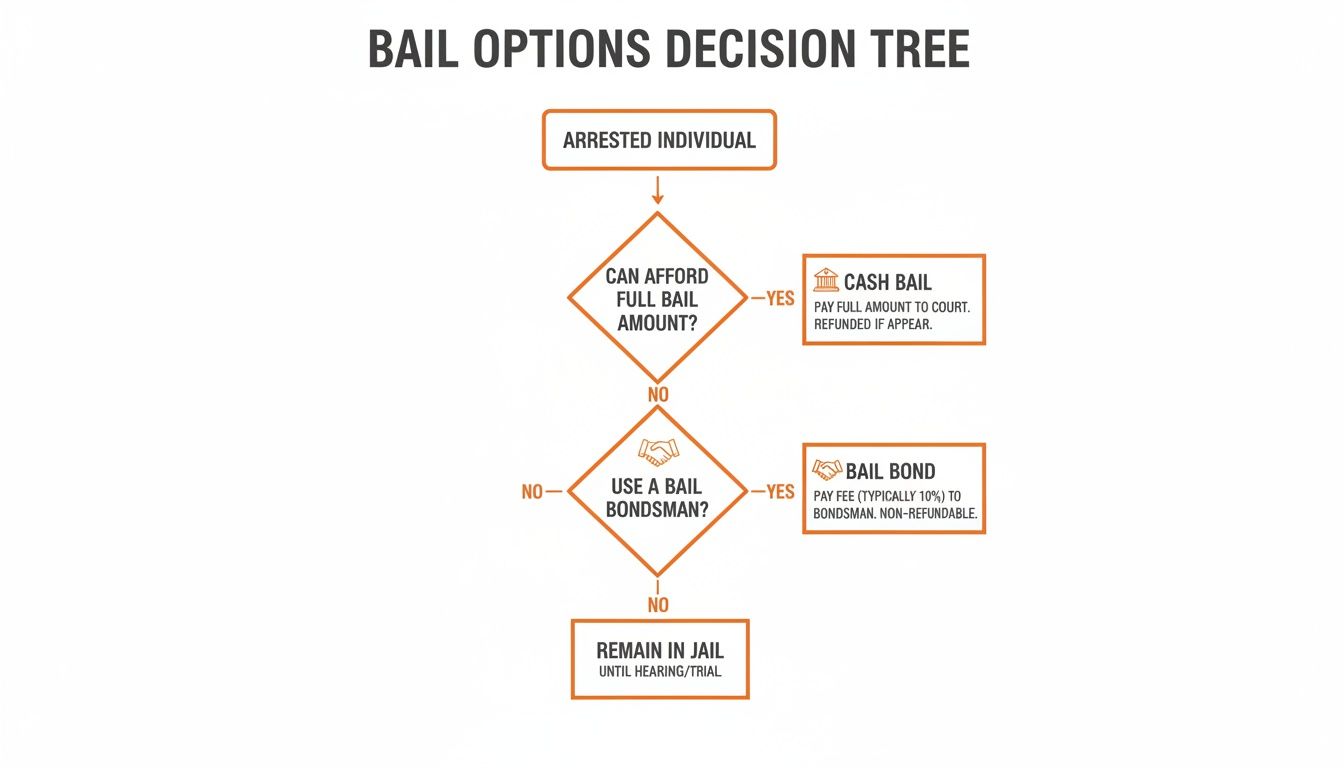
This choice directly shapes your upfront cost and what happens to your money in the long run. If you want to dive deeper into how this works, you can learn more about our bail bond payment options to determine what makes the most sense for your situation.
The Journey of a Full Cash Bail Payment
When you decide to pay the full bail amount in cash, you are dealing directly with the court system. It's a direct path, but it is important to understand exactly what happens to your money. Think of it less as a fee and more as a security deposit—a promise, held in dollars, that the defendant will attend all court dates.
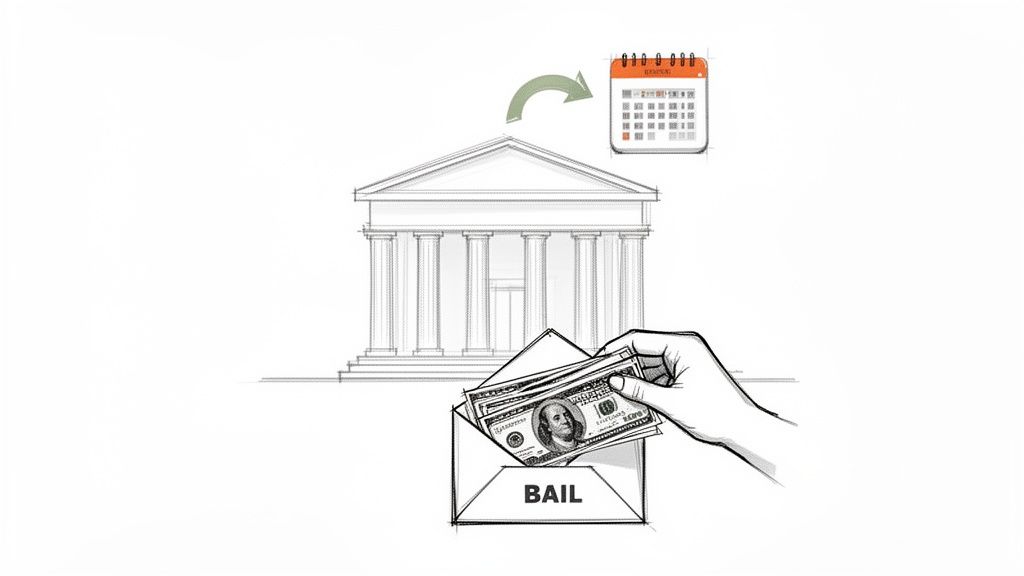
Here in Georgia, that payment is held by a local government entity, such as the Forsyth County Clerk of Courts, in a designated account. Your money remains there for the duration of the legal proceedings, which could be several months or even longer.
Conditions for Getting Your Cash Bail Back
Getting your cash bail returned depends on one simple, non-negotiable rule: the defendant must attend every required court appearance. From the initial arraignment to the final sentencing hearing, their presence is mandatory.
If they comply with the court's schedule, the refund process will begin as soon as the case is closed. The outcome of the case—whether found guilty, not guilty, or if charges are dismissed—does not matter. The purpose of the bail money was to ensure they appeared, and once that obligation is met, the funds are ready to be returned.
How and When the Money Is Returned
Once the case is officially concluded, the court clerk begins the refund process. It's important to know this is not instantaneous.
Typically, you can expect a wait of several weeks to a couple of months. The refund is almost always issued as a check and mailed to the person who originally paid the bail.
Remember: The court system operates on its own timeline. Patience is an important part of the process, as the refund must go through several administrative steps before the funds are released.
Understanding Potential Deductions
One of the first questions families ask is, "Will I get the full amount back?" The answer is usually no. In most situations, the court will subtract certain fees from your original payment before sending the check.
These deductions are standard. Court rules often allow for deductions ranging from a flat $25–$150 processing fee to a small percentage of the total bail. For a $10,000 felony bail, for example, the person who paid might receive back between $9,700 and $9,975 after local fees are deducted. To get a broader view of these costs, you can explore insights on bail bond services market sizes.
Common deductions include:
- Administrative Court Fees: A standard charge for the paperwork involved in processing the bail payment and the subsequent refund.
- Fines or Restitution: If the defendant is found guilty and ordered to pay fines or victim restitution, the court might use the bail money to cover those costs first.
Knowing about these potential deductions upfront helps set realistic expectations for the final amount you will receive.
How a Bail Bond Premium Works Instead
For most families in Forsyth County and the Cumming area, coming up with the full cash bail amount is a significant financial challenge. When a judge sets bail at several thousand dollars, it can feel out of reach. That's where a bail bonding company offers a more manageable solution through a surety bond.
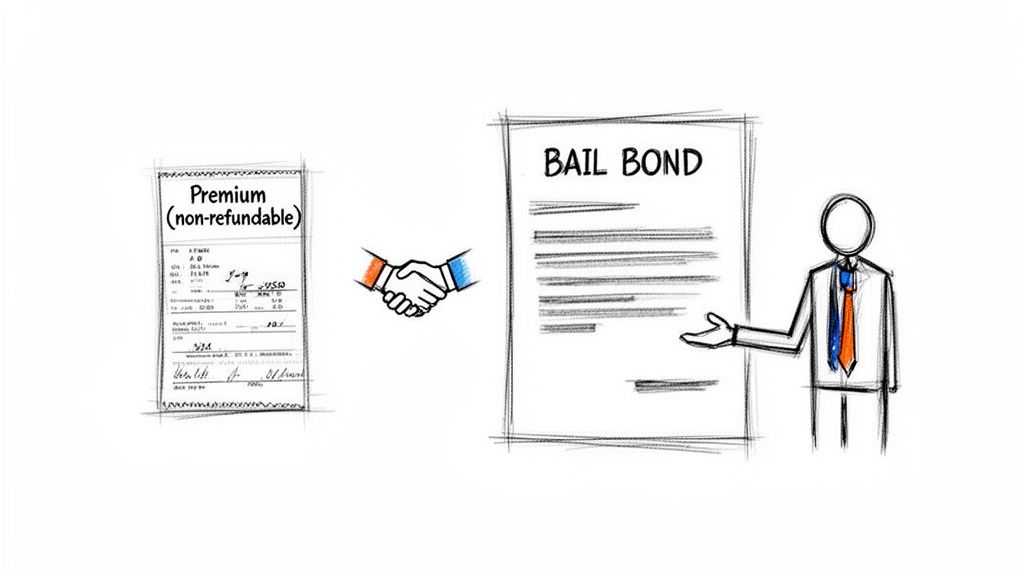
Instead of paying the court the entire bail amount, you pay a much smaller percentage to a bail agent. This payment is known as the premium.
The Premium Is a Non-Refundable Service Fee
Think of the premium as the professional fee you pay for the bonding company's service and for them taking on a major financial risk. By accepting this fee, the company guarantees the full bail amount to the court, which is what allows your loved one to be released from jail.
It is essential to understand that this premium is non-refundable. It is earned by the bail agent the moment they post the bond for their immediate help, the administrative work involved, and the financial liability they have shouldered for you.
The premium is the cost of transferring the full bail risk from your shoulders to the bonding company. This fee remains with the company whether the charges are dropped, the person is found guilty, or they are found not guilty.
Bail bonds are a core part of how the justice system operates. The U.S. bail bond services industry was estimated to generate around $3.5 billion in revenue in 2025, supported by over 20,000 different businesses. The premiums people pay are what allow these companies to exist and help families. You can get a sense of the scale of the bail bond services industry from IBISWorld.
How the Premium Amount Is Determined
In Georgia, the premium is typically a set percentage of the total bail, usually between 10-15%. So, if bail is set at $10,000, your premium would likely be between $1,000 and $1,500. This makes getting someone out of jail far more attainable than paying the entire $10,000 in cash.
The exact percentage can depend on the specifics of the case. For a clear idea of what to expect, it's helpful to understand how much a bail bond costs in Georgia. When you work with a local bondsman in Forsyth or Hall County, you can expect a straightforward, upfront explanation of all costs involved. No surprises.
Understanding Collateral and When It Is Returned
For larger bail amounts or in higher-risk situations, a bonding company in Forsyth or Hall County may require more than just the non-refundable premium. This additional security is called collateral.
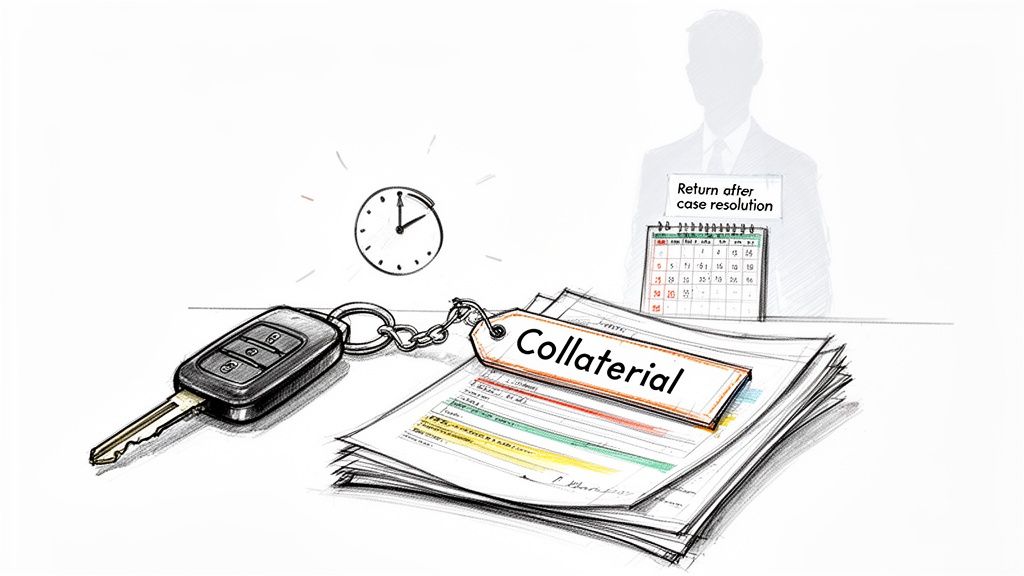
It is crucial to understand that collateral is not a payment. Think of it as a temporary deposit—a tangible asset you pledge to the bonding company to guarantee the full bail amount. This protects the company from a major financial loss if the defendant does not appear in court.
What Qualifies as Collateral
What can you use for collateral? It needs to be a significant asset with a clear value that could cover the entire bond if necessary. While every situation is different, here are some common forms of collateral:
- Real Estate: The deed to a house or a piece of land.
- Vehicle Titles: The title for a car, truck, or motorcycle that is fully paid off.
- Valuable Items: In some cases, items like fine jewelry or other high-value personal property might be accepted.
This security gives the bonding company the assurance it needs to post a large bond that might otherwise present too much risk.
How Collateral Is Returned
This is the most important part for any co-signer to remember: your collateral is 100% returnable. It is a temporary hold, not a permanent transaction.
The return of your collateral is directly tied to the defendant fulfilling all of their court obligations. Once the case is completely closed and all legal responsibilities are met, the process to return your assets begins.
The conditions for getting your property back are straightforward. The defendant must attend every court date until a judge officially closes the case. This could be because charges were dropped, they were found not guilty, or after they have completed sentencing.
As soon as the court notifies the bonding company that all obligations have been met and the bond is exonerated (cleared), the company will begin the process of returning your property. This means releasing a lien on real estate or returning a physical car title. The exact timing can vary, but any professional bonding company will handle this promptly upon receiving official clearance from the court.
What Happens if a Court Date Is Missed
Appearing in court is not just a suggestion—it is the most important part of the agreement when someone is out on bail. A missed court date, known as a Failure to Appear (FTA), sets off a chain reaction with serious and immediate financial consequences for everyone involved. It is a direct violation of the agreement made with the court.
The moment a defendant fails to appear, a judge almost always issues a bench warrant for their arrest. At the same time, the bail is officially forfeited. This means the financial guarantee—whether it was your cash or a surety bond from an agency—is now a debt owed in full to the court.
The Immediate Financial Fallout of a Forfeiture
What happens next depends entirely on how bail was posted. Understanding the difference is vital, especially if you co-signed for a friend or family member and put your own money or property at risk.
Here is how it breaks down in each scenario:
- If You Paid Cash Bail: The entire amount you paid to the court is now forfeited. If you posted $10,000 in cash, the court keeps all of it. You will not get a refund, even if the defendant is located later and the case is resolved.
- If You Used a Bail Bond: The bonding company is now responsible for paying the full bail amount to the court. The non-refundable premium you paid them is now the least of their worries—and yours. The bonding company will immediately turn to the co-signer to recover this new debt.
A missed court date transforms a bail agreement from a promise into an immediate debt. For a co-signer, this is the moment the financial risk becomes real, highlighting the profound importance of ensuring every court date is met without fail.
The Role of the Co-Signer and Collateral
When you co-sign for a bond in Forsyth or Hall County, you are not just vouching for someone's character—you are accepting full financial responsibility for the bond. If the defendant misses court and the bond is forfeited, you are legally obligated to pay the entire bail amount back to the bonding company.
This is where collateral plays a critical role. If you used a car title or property deed to secure the bond, the bonding company now has the legal right to take ownership of that asset to cover what they owe the court. The forfeiture process is a sobering reminder of the serious commitment a co-signer makes. It is a promise that rests completely on the defendant's reliability to appear for every court date.
Navigating the Process with a Local Guide
Trying to understand the complexities of bail money by yourself, especially under stress, can feel overwhelming. The rules, timelines, and financial implications are a lot to process at once. This is where having an experienced, local guide makes a world of difference.
At Best Bonding, our role is about more than posting a bond. We are here to bring clarity and provide steady support to families throughout Forsyth County, Cumming, and Johns Creek. We take the time to answer your questions and walk you through every step, ensuring you feel confident about what is happening.
Your Local Partner for Clear Answers
When you are trying to understand where your bail money goes, you need direct, honest answers from someone who knows the local system. Our team is on call 24/7 to provide that calm guidance. We focus on explaining things in plain English, not confusing legal terms.
Our commitment is to be a respectful and professional partner. Instead of facing confusion and uncertainty alone, you get a clear path forward. We help you understand your options and responsibilities from the very beginning.
The most valuable service a bonding company can provide is clarity. Knowing exactly what to expect financially and procedurally allows you to focus on supporting your family member.
We have helped hundreds of families in the North Metro Atlanta area through this exact situation. We understand what you're going through and are ready to offer the patient support you need right now. For more detailed information, our guide on how to bail someone out of jail in Georgia provides a helpful overview of the entire process.
If you need immediate help and clear, step-by-step instructions, our team is ready to answer your call.
If you need help in Forsyth or Hall County, call and we’ll explain what to do.
Answering Your Questions About Bail Money
When you're focused on getting a loved one home, questions about your money are natural. It's a confusing and stressful time, so we want to provide clear answers to some of the most common questions we hear from families here in Georgia.
If the Charges Are Dropped, Do I Get My Bail Bond Premium Back?
No, the bail bond premium is non-refundable. The premium is the fee paid to the bail bond company for their service, which involves taking on the full financial risk with the court and guaranteeing the defendant's appearance.
That premium is considered earned the moment the bond is posted and your loved one is released. It covers the work we do and the liability we assume, regardless of the case's outcome—whether the charges are dismissed or proceed to trial.
How Long Does It Take to Get Cash Bail Back?
This is a common point of frustration for those who pay cash bail. If you paid the full amount directly to the court, you will get it back, but it is not an immediate process.
Once the case is officially closed in Forsyth County (or any other Georgia jurisdiction), the administrative process begins. It can take anywhere from a few weeks to a couple of months for the court to process the refund, deduct any applicable fees or fines, and mail a check to the person who originally paid.
What Happens to the Bail Money if They’re Found Guilty?
As long as the defendant appeared for every court date, the outcome of the case does not change the bail agreement. Whether they are found guilty or not guilty is separate from the purpose of bail, which is solely to ensure their appearance in court.
If you paid cash bail, the money will be returned to you after sentencing, minus any fines or court costs. If you used a bail bond, our service is complete once the case is closed, and the non-refundable premium you paid is not affected by the verdict.
The core purpose of bail is to ensure someone appears for court. The final verdict—guilty or not—does not alter the fundamental rules of how a cash bail refund or bond premium is handled.
What Are My Payment Options for the Bond Premium?
We understand this is an unexpected expense and that you need practical solutions. Like most reputable bonding companies in the Cumming and Alpharetta area, we accept all major credit cards to make the process as simple as possible.
Every family's financial situation is different. We are always willing to discuss flexible payment options to help you manage the cost without adding more stress. The best approach is to call us so we can discuss a plan that works for you.
If you need help navigating the bail process in Forsyth County, Hall County, or the surrounding communities, Best Bonding is here day or night to give you clear answers and immediate support. Call now to get your questions answered and start the process over the phone.