
When you get a call that a friend or family member has been arrested, it can be a confusing and stressful moment. It's difficult to know what to do next. The most important thing to remember is that there is a clear process for securing their release, and it usually involves two main options: paying cash bail directly to the court or using a bail bond company to post a bond for them.
Understanding the difference between these paths is the first step toward making a calm, informed decision during a difficult time. If you need help with bail bonds in Forsyth County, GA, our experienced team is available to guide you.
What to Do Right Now
Before you can choose the best path forward, you need a few key pieces of information. This isn't legal advice, but a practical checklist based on our experience helping hundreds of families in Forsyth, Hall, and surrounding North Metro Atlanta communities.
- Confirm Their Location: Find out exactly which jail is holding them. Is it the Forsyth County Jail in Cumming, the Hall County Jail, or another local facility?
- Gather Personal Details: You will need their full legal name and date of birth.
- Ask About the Charges: If possible, find out the specific charges they are facing.
- Find Out the Bail Amount: The most crucial detail—has the court set the bail amount?
Having this information ready will make the next steps much smoother, whether you are speaking with the court or a bonding company. For a more detailed guide, see our page on how to bail someone out of jail in Georgia.
The most critical action you can take is to remain calm and methodical. Gathering accurate information is the foundation for an efficient release process.
With these details, you can now evaluate your two main options for securing their release: paying the full cash bail yourself or working with a bail bondsman.
| Aspect | Cash Bail | Bail Bond |
|---|---|---|
| Who You Pay | The full bail amount is paid directly to the court or jail. | You pay a smaller, non-refundable fee to a bonding company. |
| Upfront Cost | 100% of the set bail amount. | A percentage of the total bail amount, typically 10-15%. |
| Refundability | The full amount is returned after the case concludes (minus court fees). | The fee paid to the bonding company is non-refundable. |
If you need help navigating this process for bail bonds in Forsyth County or Cumming, GA, we are available 24/7. Call now to get clear next steps and start the process.
Understanding the Core Difference Between Bail and Bond
When a judge sets a bail amount, the terms can be confusing. Many families use "bail" and "bond" interchangeably, but they represent two very different ways to secure someone's release from jail. Understanding this distinction is the first step to making a clear, confident decision.
The difference is quite simple.
Bail is the full dollar amount set by the court. To be released on bail, someone must pay that entire sum directly to the court or detention center.
A bail bond is a type of surety bond. It's a contract between you and a licensed bail bond company, like Best Bonding. Instead of paying the full bail amount, you pay us a smaller, non-refundable fee. We then post the full bail amount with the court on your behalf, guaranteeing the person charged will appear for their court dates.
The Two Paths to Release
Think of it as choosing between a direct, significant payment to the court or hiring a professional service to handle the financial guarantee for you. This choice directly impacts how much you pay upfront and what happens to that money after the case is resolved.
This visual outlines the important first steps after an arrest, which always begins with gathering information to evaluate your options.
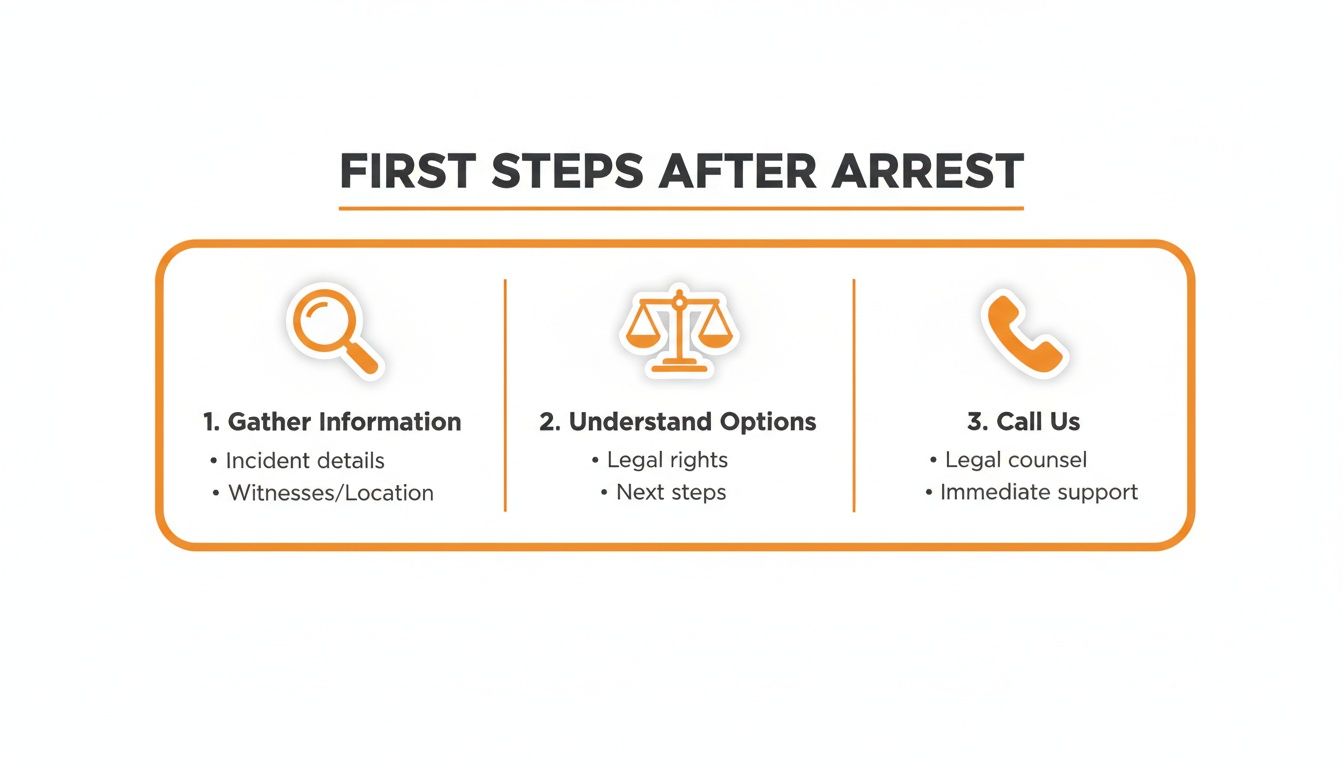
After getting the facts, you must weigh your options—and that is what the bail versus bond decision is all about.
Bail vs. Bond At a Glance
Let's break down the main differences between paying cash bail and using a surety bond from a company like ours. This table clarifies who gets paid, the cost, and whether you get your money back.
| Aspect | Cash Bail | Surety Bond (Bail Bond) |
|---|---|---|
| Who You Pay | The full bail amount is paid directly to the Forsyth County court or jail. | A non-refundable fee (a percentage of the bail) is paid to a bail bond company. |
| Upfront Cost | 100% of the total bail amount. | A smaller fraction of the total bail, typically 10-15% in Georgia. |
| Refundability | The court returns the entire amount once the case is over (if all dates are met). | The fee paid to the bonding company is a service premium and is non-refundable. |
The choice is between tying up a large amount of your own money with the court or paying a smaller service fee to a bonding company to achieve the same result: release from custody.
The fundamental choice is between committing a large sum of personal capital to the court or paying a smaller, non-refundable service fee to a bonding company to achieve the same result.
For most families we have worked with in Forsyth and Hall Counties, the high cost of bail makes paying the full amount themselves very difficult. A bail bond provides a more accessible path to bringing a loved one home quickly without draining savings or selling assets.
How Does a Bail Bond Work?
When a judge sets a high bail amount, most families do not have thousands of dollars available to give to the court. This is where a bail bond becomes the most practical option for securing someone's release from jail without financial hardship. The purpose of a bond is to make release affordable and prompt.
A bail bond agent guides you through this process, handling the paperwork and coordinating with the court and jail. The use of bail bonds has become more common over time. For example, between 1990 and 2009, the reliance on private bonds for felony defendants more than doubled from 24% to 49%. This is why having a local Forsyth County bonding company you can trust is so important.
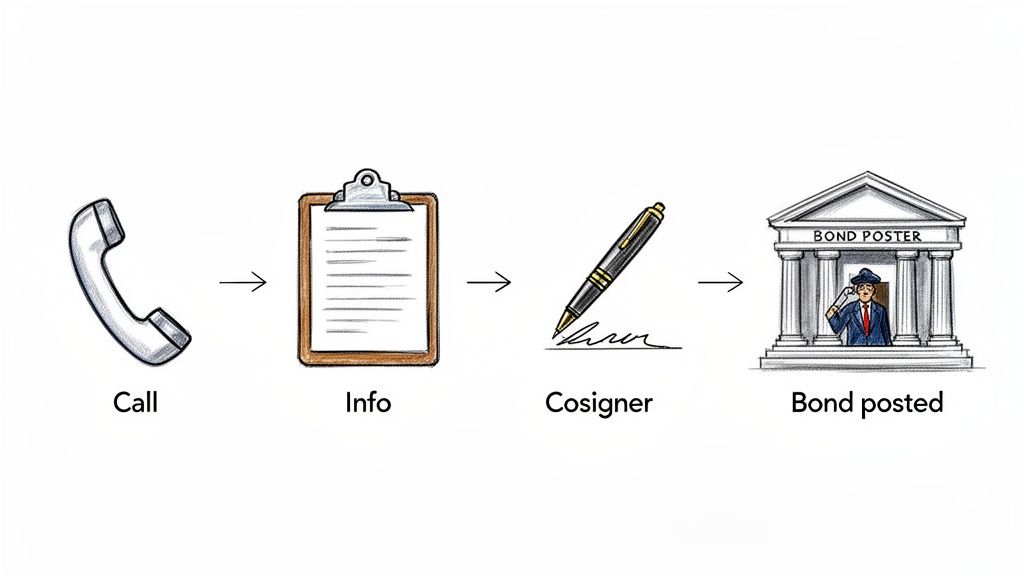
The Step-by-Step Bonding Process
From the outside, the system can seem complicated, but it truly comes down to a few simple steps. We have guided hundreds of families in Forsyth and Hall County through this process with a calm, steady approach.
Here is how it typically works:
- Contact Us: It starts with a simple, confidential phone call. We are here 24/7 to answer your questions and explain the next steps.
- Provide Information: We will need some basic details about the person in custody, such as their full name and where they are being held.
- Arrange for a Co-signer: A co-signer—often a family member or friend—agrees to financially guarantee that the defendant will appear in court. This is a standard part of the bond agreement.
- Pay the Fee: You will pay a non-refundable fee, which is a small percentage of the total bail amount. This is our payment for posting the full bond.
- We Post the Bond: Once the paperwork is complete and the fee is paid, our agent goes to the jail to post the bond, which officially begins the release process.
This entire process can often be handled over the phone. This provides speed and convenience when you need it most, allowing you to arrange everything without leaving home.
We manage the administrative details so you can focus on being there for your loved one. To learn more, feel free to read our complete guide on Georgia bail bonds.
The Financial Realities of Choosing Bail or a Bond
When it comes to securing someone's release, the decision between posting cash bail and using a bail bond almost always comes down to the financial impact. Understanding the real-world cost of each option is key to making a practical choice for your family during a stressful time.
The Cost of Cash Bail
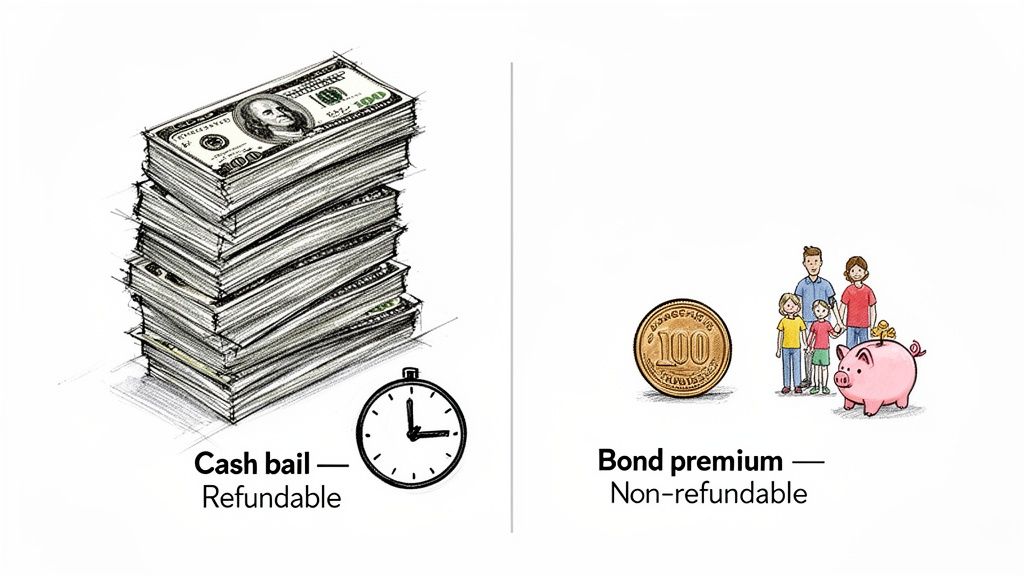
Paying the entire bail amount in cash has one primary advantage: the money is refundable. After the case is concluded and all court dates have been attended, the court returns the full amount, minus any applicable fees or fines.
However, there is a major drawback. Your funds are tied up with the court for the entire duration of the case, which could be months or even years. This can place a significant financial strain on a family, locking up capital that may be needed for legal defense, household expenses, or other necessities.
The Value of a Bail Bond
A bail bond works differently. You pay a bail bond company a non-refundable premium, which is a percentage of the total bail amount. This fee covers the bonding company's service of posting the full bail for you, allowing your loved one to be released without you having to deplete your savings.
The trade-off is clear: you pay a smaller, manageable fee that is non-refundable. In exchange, you protect your family's financial stability and bring your loved one home promptly. It keeps your own funds available for other important expenses.
A Practical Cost Comparison
To make the bail vs bond difference perfectly clear, let’s consider a common scenario in Georgia.
- Bail Amount Set by Court: $10,000
- Option 1: Cash Bail: You would need to provide the full $10,000 and pay it directly to the Forsyth County court. That money is held until the case is fully resolved.
- Option 2: Bail Bond: You would pay a bonding company a non-refundable premium, which is a fraction of the total bail. This fee is significantly less than the full bail, allowing for a quick release while keeping your savings intact.
For a better understanding of potential costs, you can learn more about how much bail costs in Georgia in our detailed guide.
Choosing a bail bond allows a family to secure a loved one's freedom for a fraction of the total bail amount, preserving critical financial resources for legal representation and household stability.
This financial flexibility can be a lifeline. The median felony bail nationally was $10,000 in 2015, while the median annual income for an individual in pretrial detention was just $15,109. This data highlights why accessible bail bond services are so vital in communities like Forsyth County. They bridge the financial gap and provide a path to pretrial release.
Common Types of Bonds Available in Georgia
While our focus at Best Bonding is on providing surety bonds, it is helpful to understand the other options a judge might consider. Knowing the different ways to secure a release can give you a clearer picture of what to expect in Forsyth and Hall Counties.
Each type of bond serves the same purpose: to guarantee that the person accused will appear for all court hearings. However, the method for providing that guarantee differs.
Surety Bonds
This is the most common path and the service we provide 24/7. A surety bond is a contract between you and a licensed bonding company like ours. You pay a non-refundable fee, and we guarantee the full bail amount to the court on your behalf. This makes release much more affordable, as it does not require a large sum of cash.
Cash Bonds
As the name implies, a cash bond requires paying the entire bail amount directly to the court or jail. This money is held as a deposit and will be returned—minus court fees—once the case is concluded, provided all court dates were attended. The primary challenge is having the full cash amount available immediately.
Property Bonds
In some situations, Georgia courts may allow a property bond. This is a less common and more complicated process. It involves using real estate you own as collateral for the release. The property must have sufficient equity to cover the entire bail amount, and the court will place a lien on it until the case is closed.
A property bond is not a fast process. It requires appraisals, title searches, and significant paperwork. For anyone needing a quick release, a surety bond is almost always the more direct and efficient option.
Release on Own Recognizance (ROR)
A judge may occasionally decide to release someone on their own recognizance (ROR), which is a written promise to appear in court without any money changing hands. This option is typically reserved for individuals with minimal or no criminal history and strong ties to the community, such as a steady job and local family.
Navigating the Release Process in Forsyth County
Once a bond is posted, the first question is always, "How long until they are released?" This is a normal question, and understanding the process can help reduce anxiety. Posting the bond is a major step, but it is the beginning of the final stage.
After our agent delivers the bond paperwork to the jail, the facility's staff takes over. The release process is an internal administrative procedure handled entirely by the detention center. It involves verifying paperwork, checking for other warrants, and processing the individual's personal property. These steps are outside of a bonding company's control.
What to Expect at Local Jails
With years of experience working with the systems in Forsyth County, Cumming, and Hall County, we can provide a realistic idea of the timeline. The time it takes can vary depending on how busy the jail is, staffing levels, and the time of day the bond was posted. Sometimes release occurs within a few hours, but it can take longer.
We cannot guarantee an exact release time—no one can. What we can do is monitor the process from our end and keep you informed. Our role is to explain what is happening so you are not left waiting without information.
A Steady Partner in the Process
We understand that waiting is the most difficult part of this experience, which is why we prioritize clear and honest communication. We will provide our best assessment based on our knowledge of local facilities so you can make plans. Consider us your steady, experienced guide, from the first phone call until your loved one is back home.
If you need help starting this process in Forsyth County or the surrounding North Metro Atlanta area, we are here to provide clear, simple steps. We can start everything over the phone and guide you step by step.
Your Questions Answered: Navigating Bail Bonds
When you are dealing with an arrest, it is natural to have many questions. Here are some calm, straightforward answers to the most common concerns we hear from families in Forsyth and Hall County. Our goal is to provide clarity and confidence during a difficult time.
How do I start the bail bond process?
The quickest way is to call us. We are available 24/7 because we know these situations do not happen on a 9-to-5 schedule. When you call, we will ask for a few basic details and can then walk you through the next steps, often starting the paperwork right over the phone.
What information do you need to post a bond?
To get started quickly, we typically need the following:
- The full legal name of the person arrested.
- Their date of birth.
- The name of the jail where they are being held (e.g., Forsyth County Jail).
- The charges, if you know them.
With this information, our agents can locate the individual in the system and confirm the bail amount.
How long does release usually take after the bond is posted?
The timeline can vary. Once we post the bond, the release process is managed by the jail staff. This part of the process is out of our control and depends on factors like how busy the facility is. It can be as quick as a few hours, but it may take longer. With our experience in Cumming, Alpharetta, and Gainesville, we can give you a realistic idea of what to expect and will keep you updated.
What happens if someone misses their court date?
Attending every court date is the most important condition of a bond agreement. If a court date is missed, the court will likely issue a warrant for the person's arrest, and the full bail amount becomes due. It is critical to contact us and the court immediately if there is any possibility of missing a scheduled appearance.
If you need immediate help or have more questions, Best Bonding is here to provide clear guidance. We can handle everything over the phone and walk you through it step by step. Call us now for immediate assistance at https://bestbondingforsyth.com.